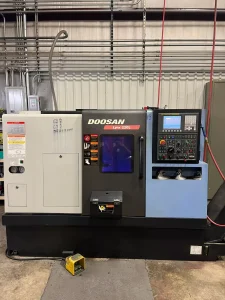
What is Vertical-Spindle Rotary Table Surface Grinder?

A Vertical-Spindle Rotary Table Surface Grinder is a precision grinding machine used in metalworking and grinding sectors for producing flat, smooth, and accurate surfaces on metallic workpieces. It is particularly suited for high-precision applications, such as machining flat surfaces, thin plates, or components requiring tight tolerances. Below is a detailed technical explanation tailored to the metalworking and grinding industries:OverviewThe machine features a vertical spindle (the axis of the grinding wheel is oriented vertically) and a rotary table that holds and rotates the workpiece. The grinding wheel, mounted on the vertical spindle, moves downward to remove material from the workpiece, which is secured on the rotating table. This configuration is ideal for grinding circular or annular parts, as the rotary motion ensures uniform material removal across the surface.Key Components
- Vertical Spindle:
- The spindle holds the grinding wheel and is driven by a motor, typically with high precision to minimize vibration.
- The grinding wheel is usually a segmented or cup-shaped abrasive wheel, designed for surface grinding.
- Spindle speed is adjustable, typically ranging from 1,000 to 3,600 RPM, depending on the material and wheel type.
- Rotary Table:
- A circular, magnetically or mechanically clamped table that rotates the workpiece during grinding.
- The table is driven by a motor, with speeds typically ranging from 10 to 100 RPM, adjustable for different workpiece sizes and material properties.
- The table is mounted on a robust base to ensure stability and precision during operation.
- Grinding Wheel:
- Made of abrasive materials like aluminum oxide, silicon carbide, or diamond, depending on the workpiece material (e.g., steel, cast iron, or non-ferrous metals).
- The wheel’s diameter and grit size are selected based on the desired surface finish and material removal rate.
- Feed System:
- The vertical feed (Z-axis) controls the depth of cut, typically in increments as small as 0.001 mm for precision grinding.
- The rotary table provides continuous or incremental rotation, ensuring uniform grinding across the workpiece surface.
- Coolant System:
- A flood or mist coolant system is used to dissipate heat, reduce thermal distortion, and flush away debris, improving surface finish and extending wheel life.
- Control System:
- Modern machines use CNC (Computer Numerical Control) for automated operation, allowing precise control of spindle speed, table rotation, and feed rate.
- Manual or semi-automatic controls are common in older or simpler models.
Working Principle
- The workpiece is clamped onto the rotary table, often using a magnetic chuck for ferrous materials or mechanical fixtures for non-ferrous materials.
- The table rotates continuously or incrementally, depending on the grinding mode (continuous or plunge grinding).
- The vertical spindle lowers the grinding wheel to make contact with the workpiece, removing material through abrasive action.
- The combination of the table’s rotation and the wheel’s vertical motion ensures uniform material removal, producing a flat surface with high dimensional accuracy and surface finish (typically Ra 0.2–0.8 µm).
- Coolant is applied to manage heat and debris, ensuring consistent grinding performance.
Types of Grinding Operations
- Continuous Grinding: The table rotates continuously while the wheel grinds, ideal for large, flat surfaces or annular parts.
- Plunge Grinding: The wheel is fed vertically into the workpiece at specific points, suitable for grinding slots, grooves, or segmented surfaces.
- Face Grinding: The entire face of the grinding wheel contacts the workpiece, maximizing material removal for flat surfaces.
Applications in Metalworking
- Precision Flat Surfaces: Used for grinding bearing surfaces, machine bases, or large plates requiring high flatness and parallelism.
- Annular Components: Ideal for grinding circular parts like gears, flanges, or thrust washers.
- Tool and Die Manufacturing: Produces precise surfaces on molds, dies, and fixtures.
- Automotive and Aerospace: Grinds components like turbine blades, engine parts, or transmission components with tight tolerances.
- Large Workpieces: Suitable for grinding large, flat components due to the rotary table’s ability to handle sizable parts.
Advantages
- High Precision: Achieves tight tolerances (e.g., ±0.002 mm) and excellent surface finishes.
- Efficiency: The rotary table allows continuous grinding, reducing cycle times for circular or annular parts.
- Versatility: Can handle a wide range of materials, from soft aluminum to hardened steels, with appropriate wheel selection.
- Uniform Material Removal: The rotary motion ensures even grinding, minimizing surface imperfections.
Limitations
- Workpiece Size: Limited by the table diameter, typically ranging from 300 mm to 2,000 mm.
- Complex Geometries: Less suitable for intricate shapes compared to CNC surface grinders with linear tables.
- Setup Time: Requires precise fixturing for non-magnetic or irregularly shaped workpieces.
- Wheel Wear: Segmented or cup wheels may require frequent dressing to maintain accuracy.
Technical Specifications (Typical)
- Table Diameter: 300–2,000 mm, depending on the machine size.
- Spindle Power: 5–50 kW, based on material and grinding requirements.
- Surface Finish: Ra 0.2–0.8 µm (with fine-grit wheels).
- Tolerances: ±0.001–0.005 mm for high-precision models.
- Coolant Flow: 20–100 L/min to manage heat and debris.
Comparison with Other Grinders
- Vs. Horizontal-Spindle Surface Grinder: The vertical-spindle rotary table grinder is better for circular parts and larger workpieces, while horizontal-spindle grinders are more versatile for complex shapes.
- Vs. Cylindrical Grinder: Cylindrical grinders focus on external or internal cylindrical surfaces, whereas vertical-spindle rotary table grinders are designed for flat surfaces.
- Vs. Double-Disc Grinder: Double-disc grinders grind both sides of a workpiece simultaneously, while vertical-spindle rotary table grinders focus on single-sided grinding with higher precision for flatness.
Industry RelevanceIn the metalworking and grinding sectors, vertical-spindle rotary table surface grinders are critical for applications requiring high flatness, parallelism, and surface finish. They are widely used in industries like aerospace, automotive, and tool manufacturing, where precision and repeatability are paramount. Advances in CNC technology and abrasive materials have further enhanced their capabilities, making them a staple in modern machining shops.