What is Pharmaceutical Precise Capsule Weighing System?
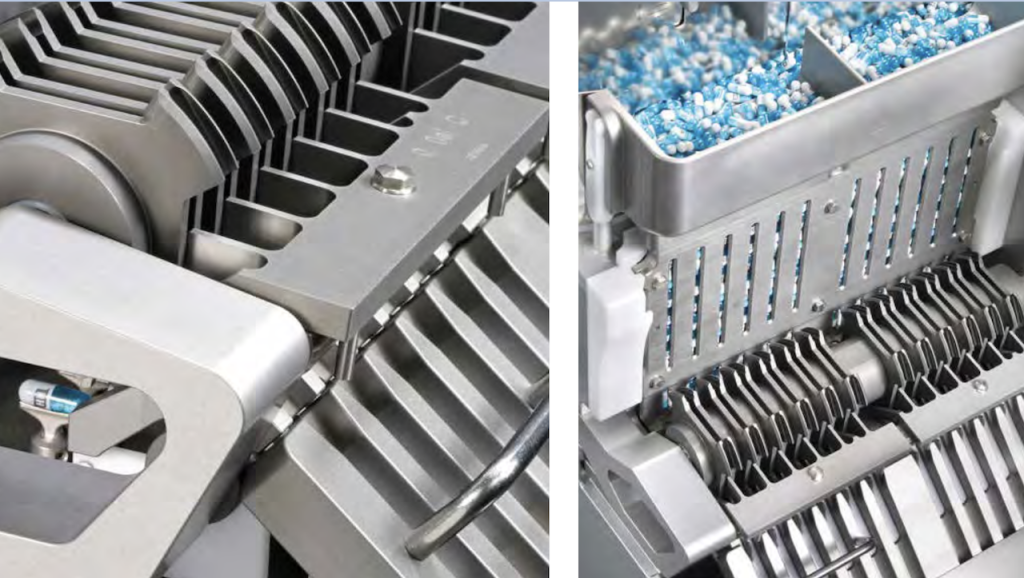
A Pharmaceutical Precise Capsule Weighing System, commonly referred to as a capsule checkweigher or capsule weighing module, is an automated, high-precision gravimetric inspection device integrated into pharmaceutical manufacturing lines. It is specifically designed to perform 100% in-line weight verification of hard-shell capsules (e.g., gelatin or vegetarian capsules) during the filling and packaging process. This system ensures that each capsule contains the exact dosage of active pharmaceutical ingredients (APIs), excipients, powders, pellets, liquids, or combinations thereof, thereby preventing underfilling (underdosing) or overfilling (overdosing), which could compromise therapeutic efficacy, patient safety, and regulatory compliance.In the pharmaceutical sector, where dosage accuracy is paramount for solid oral dosage forms like capsules, these systems address variability introduced by factors such as powder flow inconsistencies, machine tolerances in filling equipment, or environmental conditions (e.g., humidity affecting powder density). They operate at high speeds (up to 200,000 capsules per hour) while maintaining weighing accuracies down to ±0.5 mg, making them essential for Good Manufacturing Practices (GMP), United States Pharmacopeia (USP) guidelines (e.g., USP <41> for balances and <1251> for analytical weighing), and FDA regulations. By integrating feedback loops, these systems not only reject defective capsules but also adjust upstream filling processes in real-time, optimizing yield and reducing waste.Technical Explanation for the Pharmaceutical SectorCore Components and Working PrincipleThe system employs gravimetric weighing technology, which measures mass based on gravitational force using high-resolution load cells or electromagnetic force compensation (EMFC) sensors. Unlike volumetric filling methods (which rely on volume and can vary due to material density fluctuations), gravimetric weighing directly quantifies mass, providing traceability and compliance with pharmacopeial standards.Key technical components include:
- Capsule Feeding and Handling Mechanism:
- Capsules are transported via a conveyor or rotary system with positive guidance (e.g., mechanical tracks or vacuum-assisted holders) to prevent tilting, jamming, or cross-contamination. For instance, systems like the Anritsu Capsule Checkweigher use specialized feeders that handle fragile capsules at speeds up to 150,000 per hour without damage.
- Pre-dedusting modules (e.g., air jets or brushes) remove residual powder from capsule exteriors to avoid false weight readings from adhered particles. This is critical in cleanroom environments (ISO Class 5–8) to maintain sterility and accuracy.
- Weighing Sensor and Transducer:
- The core is a high-precision weigh cell or force balance sensor (e.g., strain gauge or piezoelectric transducers) with resolutions as fine as 0.1–1 mg and linearity over a range of 50–500 mg per capsule (typical empty capsule weight: 50–150 mg; filled: 100–1,000 mg).
- Weighing occurs in a static or semi-static mode: Capsules are momentarily paused or stabilized on the sensor platform (e.g., via a pocket wheel) for 10–50 ms to allow signal settling. Advanced systems like METTLER TOLEDO’s pharma checkweighers detect variations as subtle as 0.5 mg, equivalent to the weight of a single API particle.
- Calibration is automated and traceable, often using internal reference weights compliant with USP <41>, ensuring repeatability (standard deviation <0.1 mg) and minimizing drift from temperature/humidity (typically controlled to 20–25°C and 40–60% RH).
- Data Acquisition and Control System:
- Integrated microprocessors or PLCs (Programmable Logic Controllers) process signals from the weigh cell using analog-to-digital converters (ADCs) with 16–24 bit resolution for noise-free data.
- Software algorithms apply statistical process control (SPC), including:
- Tolerancing: Capsules are classified as “good” (within ±2–5% of target weight, e.g., ±10 mg for a 200 mg fill), “reject” (out-of-spec), or “feedback” (near-spec for process adjustment).
- Feedback Loop: Via protocols like ASB (Automatic Self-Braking) or OPC UA, the system signals upstream fillers (e.g., dosators in capsule filling machines like Bosch GKF or Harro Höfliger Modu-C) to adjust dosing parameters, such as piston stroke or auger speed, in real-time.
- Integration with MES (Manufacturing Execution Systems) or ERP enables batch documentation, audit trails, and serialization for track-and-trace compliance (e.g., EU FMD or DSCSA).
- Rejection and Sorting Mechanism:
- Defective capsules are pneumatically or mechanically ejected (e.g., via air blasts or pushers) into reject bins, with 100% diversion accuracy. Systems ensure no good capsules are erroneously rejected (false positive rate <0.1%).
- For dual verification, some models weigh both empty and filled capsules separately to detect filling anomalies like cap-body misalignment.
Performance Specifications
- Throughput: 10,000–200,000 capsules/hour, scalable for medium-to-high-volume production (e.g., KKE 2600 by Syntegon at 156,000/hour).
- Accuracy and Precision: ±0.5–2 mg standard deviation; compliant with 21 CFR Part 11 for electronic records.
- Materials and Hygiene: Constructed from 316L stainless steel with polished surfaces (Ra <0.8 μm) for CIP/SIP (Clean-In-Place/Steam-In-Place) compatibility. IP65+ ingress protection against dust/moisture.
- Power and Interfaces: 110–240 VAC, with Ethernet/IP or Profibus for line integration.
Applications in Pharmaceutical Manufacturing
- Dosage Form Production: Used post-filling in capsule machines for APIs like antibiotics, vitamins, or biologics. For example, in powder-filled capsules, it verifies micro-dosing (e.g., 1–5 mg APIs) where volumetric errors could exceed 10%.
- Quality Assurance: Detects issues like incomplete fills from powder bridging or overfills from machine wear, reducing batch rejection rates by 20–50%.
- Regulatory Compliance: Supports validation per IQ/OQ/PQ (Installation/Operational/Performance Qualification). Data logging ensures audit-readiness for inspections, with features like open-flap detection or missing insert alerts (e.g., for patient leaflets, ~0.1 g sensitivity).
- Efficiency Gains: Reduces manual sampling (from AQL to 100% inspection), minimizes recalls (costing millions), and integrates with serialization for anti-counterfeiting.
Advantages and Challenges
- Advantages: Enhances yield (95–99%), ensures patient safety by averting sub-potent/super-potent products, and supports nutraceutical extensions (e.g., probiotics). ROI is achieved via waste reduction and compliance avoidance.
- Challenges: High initial cost ($50,000–$500,000); requires validation for cleanroom use; sensitive to vibrations (mitigated by isolation mounts).