What are Top 50 CNC Machined Parts in Aerospace sector?
Top 50 CNC Machined Parts in Aerospace:
The Role of CNC Machine Tools in High-Precision Aerospace Manufacturing
The aerospace industry represents the pinnacle of precision engineering, where safety, performance, and reliability are non-negotiable. At the heart of this industry lies CNC machining, a manufacturing technology that enables the production of complex, high-tolerance components from advanced aerospace materials. From commercial aircraft to satellites, rockets, and UAV platforms, metalworking with CNC machine tools is fundamental to modern aerospace manufacturing.
This article provides a comprehensive technical overview of the top 50 CNC machined parts used in aerospace, explaining why CNC machining is indispensable and how advanced manufacturing processes support demanding aerospace applications.
1. CNC Machining in Aerospace: Technical Foundations
Aerospace components typically require:
- Extremely tight dimensional tolerances
- Complex multi-axis geometries
- High surface integrity
- Certified traceability and repeatability
- Machining of difficult materials such as titanium alloys, Inconel, stainless steels, and aerospace aluminum
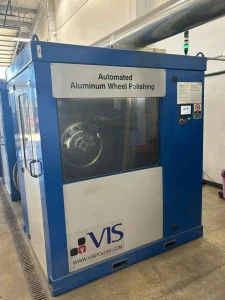
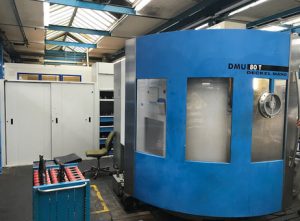
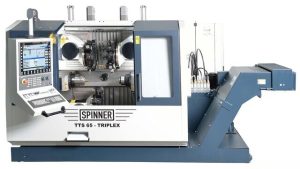
To meet these requirements, aerospace manufacturers rely on 5-axis CNC machining centers, CNC turning centers, mill-turn machines, and high-precision grinding systems. These machine tools enable simultaneous multi-axis interpolation, allowing complex components to be machined in a single setup—critical for both accuracy and efficiency.
2. Engine and Propulsion System Components
Aerospace engines operate under extreme temperatures, pressures, and rotational speeds. CNC machining ensures consistency and performance for the following critical parts:
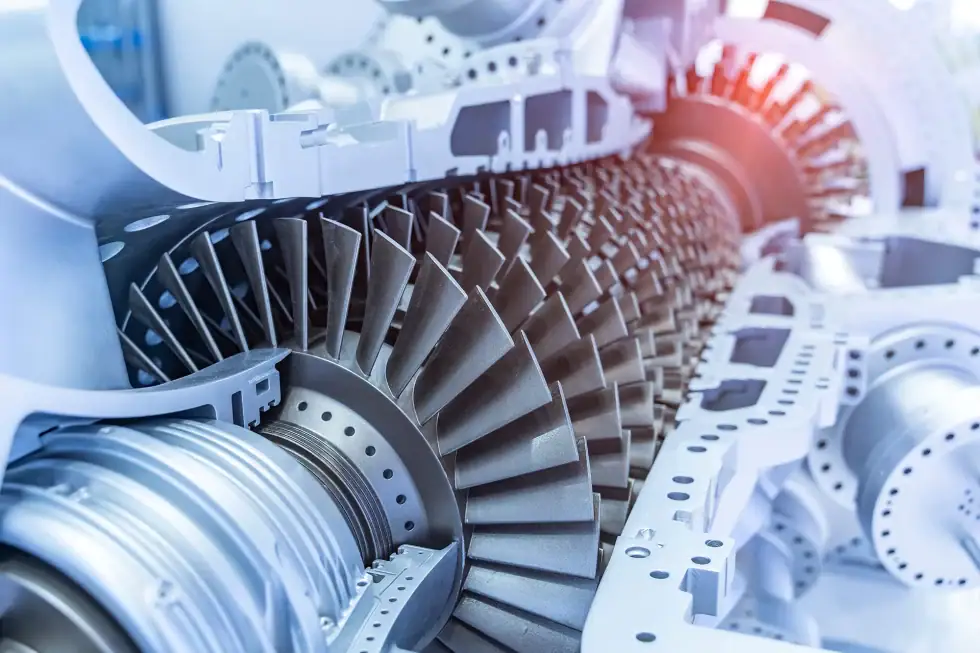
- Turbine blades and airfoil components, requiring 5-axis machining for complex aerodynamic profiles
- Aircraft engine turbine discs and engine compressor discs, machined from forged titanium or nickel alloys
- Engine casings, which house rotating assemblies with micron-level concentricity requirements
- Engine mounts and propulsion system brackets, designed to withstand vibration and thermal expansion
- Fuel nozzles, fuel injection system components, and valve bodies, often produced on multi-axis mill-turn centers
- Engine exhaust nozzles, exhaust components, and high-temperature engine seals, requiring heat-resistant alloys and precise surface finishes
In space and rocket applications, CNC machining is equally vital for rocket nozzle components, where internal contours directly affect propulsion efficiency.
3. Structural and Airframe CNC Machined Parts
Aircraft and spacecraft structures depend on lightweight yet rigid components. CNC machining enables optimal material usage while maintaining strength:
- Wing spars and wing ribs, often machined from aluminum billets or titanium forgings
- Structural fuselage parts, where large-format CNC machining centers are used
- Aircraft brackets, aerospace bushings, and aerospace connectors, produced in high volumes with consistent accuracy
- Landing gear components, landing gear struts, and landing gear components, which demand exceptional fatigue resistance
- Composite material fasteners, precision-machined to integrate metal and composite structures
- Spacecraft structural brackets and satellite structural parts, where weight optimization is critical
4. Flight Control and Actuation Systems
Flight safety depends heavily on precise mechanical motion systems. CNC machining ensures repeatability and durability for:
- Control surface hinges and flight control rods
- Actuator housings and actuation system parts
- Precision ball screws, often ground after CNC turning and milling
- Aerospace pistons and pump housings, typically machined from hardened alloys
These components frequently require secondary processes such as honing, grinding, and surface coating after CNC machining.
5. Hydraulic, Cooling, and Fluid Management Parts
Hydraulic and thermal systems are essential for aircraft and spacecraft operation. CNC machining enables complex internal channels and leak-free performance:
- Hydraulic manifolds, produced using multi-axis drilling and milling
- Cooling system parts and heat exchanger parts, often featuring intricate internal passages
- Cabin pressure components, which must withstand repeated pressurization cycles
- Oxygen system components, requiring contamination-free machining processes
6. Avionics, Navigation, and Electronics Enclosures
Sensitive electronic systems must be protected from vibration, temperature variation, and electromagnetic interference:
- Avionics enclosures, avionics panel supports, and instrument panel beads
- Radar system housings, navigation system housings, and antenna mounts
- Aerospace bearings and aerospace gear assemblies, supporting electromechanical subsystems
CNC machining ensures dimensional accuracy while maintaining shielding and thermal management properties.
7. Interior, Cabin, and Human Interface Components
Although less visible, CNC machining also plays a role in aircraft interiors and cockpit systems:
- Cockpit control levers, requiring ergonomic precision
- Cabin interior fittings, machined for durability and aesthetics
- Flap track fairings, combining aerodynamic function with structural integrity
8. UAV and Advanced Aerospace Applications
Unmanned and next-generation aerospace platforms depend heavily on CNC machining:
- UAV (Unmanned Aerial Vehicle) components, where compact size and weight are critical
- Aerospace bearings, aerospace connectors, and aerospace bushings for lightweight assemblies
These applications increasingly use hybrid manufacturing, combining CNC machining with additive manufacturing for optimized designs.
9. CNC Machine Tools and Metalworking Technologies Used
To manufacture these 50 aerospace components, the industry relies on:
- 5-axis vertical and horizontal machining centers
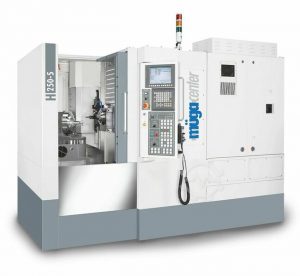
- CNC turning and mill-turn machines
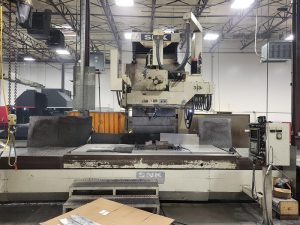
- High-precision CNC grinding machines
- Advanced CAM software for toolpath optimization
- In-process probing and automated quality control
Material removal strategies, tool coatings, and cutting parameters are carefully engineered to prevent work hardening and thermal distortion.
10. CNC Machining as the Backbone of Aerospace Manufacturing
From turbine blades and engine casings to satellite structural parts and UAV components, CNC machining remains the backbone of aerospace manufacturing. The combination of advanced metalworking techniques, high-performance CNC machine tools, and precision engineering allows manufacturers to meet the aerospace industry’s uncompromising standards.
As aerospace designs continue to evolve—becoming lighter, stronger, and more complex—the role of CNC machining will only grow. Whether producing landing gear components, hydraulic manifolds, avionics enclosures, or rocket nozzle components, CNC machining will remain essential for innovation, safety, and performance in aerospace manufacturing.
11. Fuel Nozzles
Fuel nozzles are among the most precision-critical CNC machined parts in aerospace engines. Their function is to atomize fuel uniformly and deliver it to the combustion chamber under extreme pressure and temperature conditions. These components are typically machined from stainless steel, Inconel, or nickel-based superalloys.
CNC machining enables:
- Ultra-fine internal passages
- Multi-axis drilling and milling
- High surface finish requirements to prevent carbon buildup
Fuel nozzles are often produced on 5-axis CNC machining centers and mill-turn machines, followed by EDM or laser drilling for micro-holes. Any deviation can negatively impact combustion efficiency and emissions.
12. Titanium Fasteners
Titanium fasteners are widely used throughout aircraft and spacecraft structures due to their exceptional strength-to-weight ratio and corrosion resistance. These include bolts, screws, studs, and specialty aerospace fasteners.
CNC turning and thread milling are essential for producing consistent geometry, controlled preload characteristics, and fatigue resistance. Tight tolerances are critical, especially in load-bearing assemblies such as wings, fuselage joints, and engine mounts.
Advanced CNC lathes with live tooling allow:
- Complex head geometries
- Precise thread profiles
- Repeatable aerospace-grade quality
13. Control Surface Hinges
Control surface hinges connect movable flight surfaces such as ailerons, elevators, and rudders to the airframe. These parts must maintain smooth motion under aerodynamic loads while resisting wear and vibration.
They are commonly CNC machined from aluminum alloys, stainless steel, or titanium, using multi-axis milling to achieve precise bore alignment and surface flatness. Any misalignment can result in control surface binding or increased wear.
Post-machining processes such as reaming, honing, and surface coating are often applied.
14. Heat Exchanger Parts
Heat exchanger parts are vital for thermal management in aircraft and spacecraft systems, including engine oil cooling, avionics cooling, and environmental control systems.
These components feature:
- Thin walls
- Complex internal flow paths
- Tight dimensional tolerances
CNC machining is used to create precision plates, housings, and manifolds, often followed by brazing or welding. High-speed CNC milling ensures dimensional stability while minimizing thermal distortion during machining.
15. Oxygen System Components
Oxygen system components support crew life-support systems and must meet extremely strict cleanliness and safety standards. Typical parts include valves, regulators, housings, and fittings.
CNC machining is preferred because it allows:
- Burr-free internal geometries
- Smooth surface finishes
- Consistent repeatability for certification
Materials often include aluminum alloys and stainless steels compatible with high-purity oxygen environments.
16. Antenna Mounts
Antenna mounts provide mechanical support and precise alignment for communication, navigation, and radar antennas. These components must withstand vibration, wind loads, and temperature fluctuations.
CNC machining enables lightweight yet rigid designs through pocket milling and structural optimization. Aluminum and titanium are commonly used, with 5-axis machining allowing complex mounting interfaces in a single setup.
17. Satellite Structural Parts
Satellite structural parts are designed to be extremely lightweight while maintaining stiffness and dimensional accuracy. Any unnecessary mass directly affects launch costs.
CNC machining allows:
- Thin-wall structures
- Integrated mounting features
- Tight tolerance control
These parts are typically machined from aluminum alloys or titanium using high-precision CNC machining centers with in-process probing.
18. Aerospace Bushings
Aerospace bushings are critical wear components used in rotating joints, landing gear assemblies, and control mechanisms. They ensure smooth motion while absorbing loads.
CNC turning is used to achieve exact inner and outer diameters, concentricity, and surface finish. Materials include bronze, steel, and composite-lined metals depending on application requirements.
19. Flap Track Fairings
Flap track fairings are aerodynamic structures that cover flap mechanisms while minimizing drag. These parts combine structural and aerodynamic functions.
CNC machining enables precise contouring of aerodynamic surfaces, often using 5-axis milling to maintain surface continuity. Lightweight aluminum alloys are commonly used to balance strength and weight.
20. Cabin Pressure Components
Cabin pressure components include valves, housings, and structural elements responsible for maintaining safe cabin pressurization.
These parts experience repeated pressure cycles, making fatigue resistance critical. CNC machining ensures consistent wall thickness, smooth sealing surfaces, and accurate interfaces for sensors and actuators.
21. Instrument Panel Beads
Instrument panel beads are structural reinforcements integrated into cockpit panels. Though small, they play a significant role in stiffness and vibration control.
CNC milling is used to form precise bead geometries directly into panels, ensuring consistency and repeatability across production batches.
22. Cockpit Control Levers
Cockpit control levers are human–machine interface components that require ergonomic precision and mechanical reliability.
CNC machining allows:
- Complex contoured shapes
- Tight pivot tolerances
- High-quality surface finishes for tactile feel
Aluminum and steel alloys are commonly used.
23. Exhaust Components
Exhaust components operate under extreme thermal and mechanical loads. These parts are often machined from Inconel or heat-resistant stainless steels.
5-axis CNC machining is used to produce complex geometries that optimize exhaust flow while maintaining structural integrity.
24. Structural Fuselage Parts
Structural fuselage parts form the backbone of aircraft structures. These include frames, ribs, and load-bearing sections.
Large-format CNC machining centers are used to machine these components from aluminum or titanium billets with minimal material waste.
25. Radar System Housings
Radar system housings protect sensitive electronics while maintaining precise alignment.
CNC machining ensures:
- Accurate mounting features
- EMI shielding integrity
- Robust vibration resistance
26. Aerospace Connectors
Aerospace connectors are precision-machined mechanical interfaces used in electrical and fluid systems.
CNC turning and milling provide exact tolerances essential for reliability in harsh operating environments.
27. Landing Gear Struts
Landing gear struts are among the most heavily loaded aircraft components.
CNC machining is used to achieve:
- High-strength profiles
- Accurate bore alignment
- Smooth load-bearing surfaces
28. Flight Control Rods
Flight control rods transmit mechanical motion from actuators to control surfaces.
These parts are CNC machined to ensure straightness, concentricity, and fatigue resistance.
29. Valve Bodies
Valve bodies are complex components with internal passages that regulate fluid flow.
Multi-axis CNC machining allows precise internal geometries and leak-free performance.
30. Engine Exhaust Nozzles
Engine exhaust nozzles control thrust and engine efficiency.
5-axis CNC machining enables complex internal contours critical to propulsion performance.
31. Aircraft Engine Turbine Discs
Turbine discs are high-speed rotating components machined from forged superalloys.
CNC machining ensures dimensional accuracy and balance, which are essential for safe engine operation.
32. Propulsion System Brackets
Propulsion system brackets support engines and auxiliary systems.
CNC machining allows optimized geometry that balances strength and weight.
33. Pump Housings
Pump housings are used in fuel, oil, and hydraulic systems.
CNC machining ensures tight clearances and proper sealing surfaces.
34. Rocket Nozzle Components
Rocket nozzle components directly influence thrust efficiency.
CNC machining produces smooth internal contours critical for high-performance propulsion.
35. Precision Ball Screws
Precision ball screws are used in aerospace actuation systems.
CNC turning and grinding ensure accurate lead, surface finish, and durability.
36. Avionics Panel Supports
Avionics panel supports maintain alignment of electronic systems.
CNC machining provides lightweight yet rigid structural support.
37. Fuel Injection System Components
These components regulate fuel delivery in engines and auxiliary systems.
CNC machining enables precise flow control and repeatable performance.
38. Cooling System Parts
Cooling system parts manage thermal loads in engines and avionics.
Complex internal channels are produced using advanced CNC machining strategies.
39. Aerospace Pistons
Aerospace pistons are used in actuators and hydraulic systems.
CNC machining ensures tight tolerances and wear resistance.
40. Actuation System Parts
These parts convert electrical or hydraulic energy into mechanical motion.
CNC machining ensures consistent performance and reliability.
41. Wing Ribs
Wing ribs define airfoil shape and structural integrity.
CNC machining allows precise shaping while minimizing weight.
42. Aerospace Bearings
Aerospace bearings support rotating assemblies under high loads.
CNC machining ensures exact geometry prior to heat treatment and grinding.
43. Aerospace Gear Assemblies
Gear assemblies transmit power in aerospace systems.
CNC machining ensures correct tooth geometry and alignment.
44. Composite Material Fasteners
These fasteners join composite and metal structures.
CNC machining ensures controlled preload and compatibility.
45. Engine Compressor Discs
Compressor discs are critical rotating engine components.
CNC machining ensures balance, strength, and dimensional accuracy.
46. Spacecraft Structural Brackets
Structural brackets in spacecraft must be extremely lightweight.
CNC machining enables topology-optimized designs.
47. Navigation System Housings
These housings protect sensitive navigation electronics.
CNC machining ensures precise mounting and shielding.
48. Cabin Interior Fittings
Cabin interior fittings must meet both structural and aesthetic requirements.
CNC machining ensures consistent quality and finish.
49. High-Temperature Engine Seals
Engine seals prevent gas leakage in high-temperature zones.
CNC machining ensures accurate sealing profiles.
50. UAV (Unmanned Aerial Vehicle) Components
UAV components demand compact, lightweight, and precise designs.
CNC machining supports rapid production of structural and mechanical parts optimized for performance.