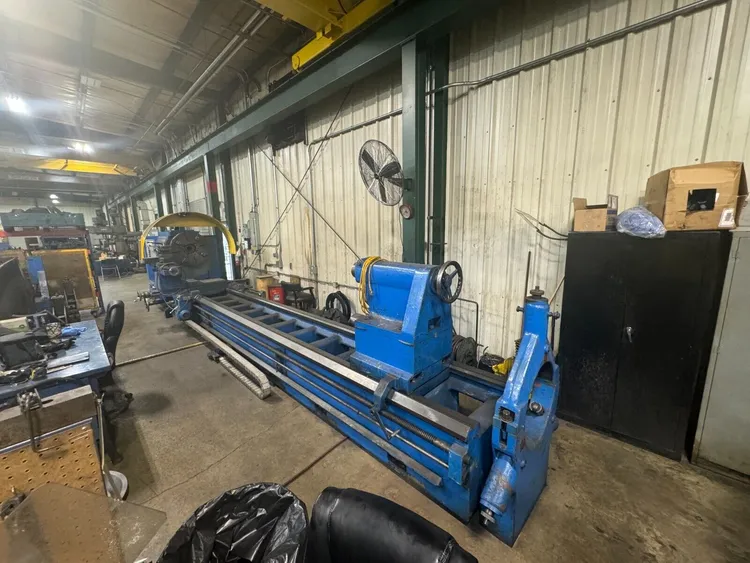
Maximize ROI: Professional Tips for Purchasing a Pre-Owned, Used, Secondhand, Pre-Owned GEMINIS-GE-1600-S Conventional Lathe 6.6 Meters made in Spain
Below is a professional, buyer-level guide written for serious manufacturers and machine dealers.
Maximize ROI: Professional Tips for Purchasing a Pre-Owned GEMINIS GE-1600-S Conventional Lathe (6.6 m) – Made in Spain
Buying a large-capacity conventional lathe like the GEMINIS GE-1600-S (6.6 meters) can be an excellent ROI decision—if it is evaluated correctly. Experienced buyers focus less on headline price and more on mechanical condition, application fit, and lifetime operating cost.
This guide reflects how professional workshops, shipyards, energy-sector suppliers, and heavy industry subcontractors evaluate such machines.
1. Start with Application & ROI Fit (Before Inspecting the Machine)
Before inspecting the lathe itself, define why you need it:
- Shaft length requirements up to 6.6 m
- Typical workpiece diameter and weight
- Materials: carbon steel, alloy steel, forged shafts
- Tolerance expectations (roughing vs semi-finish vs finish)
- Production type: repair work, low-volume heavy turning, job shop
A GE-1600-S is ideal when rigidity, long-bed stability, and torque matter more than CNC automation. If your work requires frequent profile changes or tight contouring, CNC may offer better ROI.
2. Core Machine Overview – GEMINIS GE-1600-S
Manufacturer: GEMINIS
Machine Type: Heavy-duty conventional lathe
Country of Origin: Spain
Between Centers: approx. 6,600 mm
Swing Over Bed: ~1,600 mm (model dependent)
Typical Use: Long shafts, rollers, marine parts, energy-sector components
This model is known for high structural rigidity, wide guideways, and long-term mechanical durability when properly maintained.
3. Critical Mechanical Inspections (Where ROI Is Won or Lost)
Bed & Guideways (Highest Priority)
- Inspect front and rear V-ways for wear steps
- Check for regrinding or hand-scraping history
- Measure straightness along full 6.6 m travel
- Uneven wear near the headstock is common and costly to correct
Rule: A worn bed kills accuracy—and resale value.
Headstock, Spindle & Bearings
- Listen for bearing noise at low and high RPM
- Check spindle radial and axial runout
- Inspect oil circulation and temperature rise
- Confirm spindle brake function (if equipped)
Large spindle bearing replacement is expensive and time-consuming—price accordingly.
Tailstock & Alignment
- Verify tailstock quill condition and taper integrity
- Check tailstock alignment over full bed length
- Inspect hydraulic or manual clamping system
Misalignment on a 6.6 m machine directly affects shaft straightness.
4. Gearbox, Feeds & Drive System
- Test all spindle speeds and feed ranges
- Listen for gear noise under load
- Check feed shafts, clutches, and engagement smoothness
- Inspect lead screw and feed rod wear
Heavy lathes live or die by their gearbox health.
5. Electrical & Safety Systems (Often Overlooked)
- Verify main motor condition and insulation
- Inspect control cabinet wiring and contactors
- Confirm emergency stops and braking systems
- Check lubrication interlocks and alarms
Older European machines are mechanically excellent but may need electrical refreshing—budget for it.
6. Typical Technical Specifications to Verify (On-Site)
Always confirm against the actual machine, not brochures:
| Item | Typical Range (GE-1600-S class) |
|---|---|
| Distance Between Centers | ~6,600 mm |
| Swing Over Bed | ~1,600 mm |
| Swing Over Cross Slide | ~1,100–1,200 mm |
| Spindle Bore | Large (model-specific) |
| Spindle Speeds | Multi-step geared |
| Main Motor Power | High-torque AC motor |
| Bed Type | Hardened / induction-hardened |
| Tailstock | Heavy-duty, MT taper |
| Machine Weight | Very high (foundation required) |
7. Tooling, Accessories & Value Adders
ROI improves significantly if the machine includes:
- Steady rests (fixed and traveling)
- Faceplate(s)
- Large 3-jaw / 4-jaw chucks
- Follow rest
- Threading gears
- Original manuals and wiring diagrams
Accessories can be hard to source later for large lathes.
8. Transport, Installation & Foundation Costs
For a 6.6 m conventional lathe:
- Professional rigging is mandatory
- Foundation flatness and load rating must be verified
- Transport permits may be required
- Installation and leveling time is non-trivial
These costs often exceed expectations—include them in ROI calculations.
9. Parts Availability & Long-Term Support
Before buying, confirm:
- Availability of spindle bearings
- Gearbox components
- Seals, pumps, lubrication parts
- Local or EU-based service capability
Machines from established European builders retain value because parts can still be sourced.
10. Pricing Strategy & Negotiation Logic
Professional buyers negotiate based on:
- Bed condition and alignment data
- Spindle health test results
- Missing accessories
- Electrical modernization needs
A cheaper machine with hidden wear is not a bargain.
11. When the GE-1600-S Makes Excellent ROI
This lathe excels when:
- Turning long, heavy shafts
- Repair and remanufacturing work
- Low-volume, high-mass components
- Workshops needing torque and rigidity over automation
It is not ideal if:
- High part variety and tight profiles dominate
- CNC repeatability is mandatory
- Floor space is limited
Final Buyer Checklist (Print This)
- Bed wear measured over full length
- Spindle runout verified
- Gearbox tested under load
- Tailstock alignment confirmed
- Accessories inventoried
- Transport & foundation budgeted
- Parts availability confirmed
If all boxes are checked, a pre-owned GEMINIS GE-1600-S can deliver decades of reliable service and strong ROI.