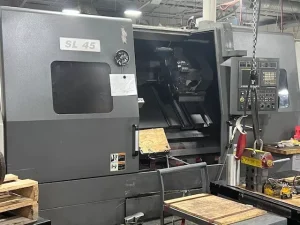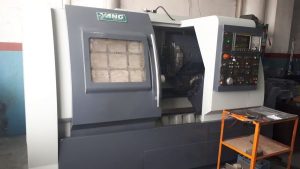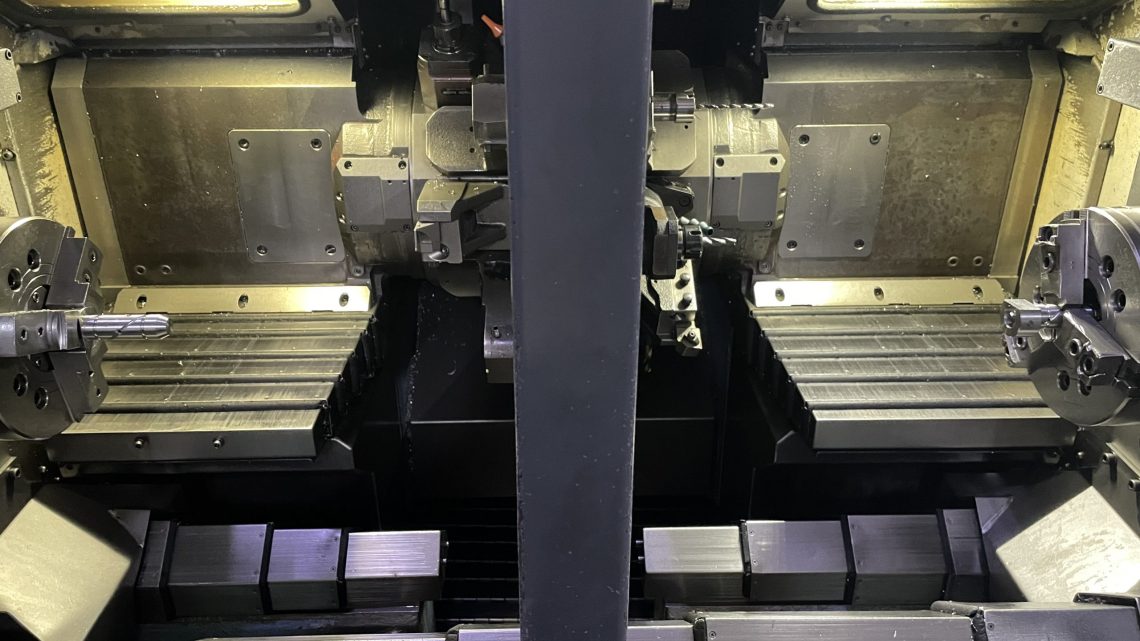
Performance Matters: How to Choose a Reliable Pre-Owned, Used, Surplus, Secondhand Mazak Multiplex 620 Twin Spindle Double Turret made in Japan without Regret
Here’s a professional buyer-focused guide on choosing a pre-owned, used, surplus, second-hand Mazak Multiplex 620 Twin Spindle Double Turret CNC Machine — without regret. It’s written from the perspective of experienced shop owners and technical buyers who care about performance, reliability, and long-term ROI.
Performance Matters: How to Choose a Reliable Pre-Owned Mazak Multiplex 620 Twin Spindle Double Turret
Buying a used Mazak Multiplex 620 is a serious investment. This is a heavy-duty CNC multitask machine — and its performance depends on condition, maintenance history, and application fit. A poorly chosen used machine will cost far more in downtime, repair, and lost production than its purchase price.
Below are practical steps to evaluate a used Multiplex 620 with clear ROI in mind.
1. Understand the Machine’s Intended Application
Before inspecting the machine, clarify your production needs:
- Part size & complexity: long shafts, turned and milled features, tight tolerances
- Materials: steel, stainless, alloy, high-temp alloys
- Volume: low-medium batch vs production throughput targets
- Fixtures & tooling: availability of twin spindle tooling and turrets
The Multiplex 620 is ideal for:
- Turn-mill shaft work
- Automotive and aerospace parts
- High mix / medium batch production
- Jobs that require simultaneous twin-spindle operation
If your application doesn’t leverage both spindles or the double turret, a simpler machine might produce a better ROI.
2. Verify Core Specifications Against Your Needs
Confirm that the machine’s key specs match your requirements. Typical important specs include:
| Specification | Why It Matters |
|---|---|
| Spindle size & speed | Determines max workpiece diameter and cycle time |
| Twin spindle synchronization | Critical for reduction of cycle time |
| Turret configuration & tools | Affects number of operations without changeover |
| Travel ranges (X/Y/Z) | Defines part envelope |
| Control type & options | Determines compatibility with your CAM and fixture setup |
Ask the seller to provide the MAZAK tag / spec sheet or serial number. Cross-verify on Mazak documentation if possible.
3. Inspect Mechanical Wear & Geometry
This is where most used buyers go wrong — skipping mechanical inspection.
✔ Spindle Health
- Check for noise, vibration, and run-out using test bars
- Inspect spindle bearing seals, lubrication, and temperature behavior
✔ Guideways & Ball Screws
- Inspect for wear steps, surface damage, and backlash
- Measure actual travel vs nominal
✔ Twin Spindle Synchronization
Misalignment between spindles or worn bearings on one side kills accuracy and throughput.
✔ Turret & Tooling Condition
- Test turret indexing at full speed
- Verify torque and clamp force
- Check tool change speed and repeatability
4. Control, Electronics & Software
CNC electronics are often more expensive to repair than mechanical parts.
✔ Control Unit
- Verify the version (Mazatrol Matrix, SmoothX, etc.)
- Check for corrupted parameters or alarm histories
✔ Wiring & Power Components
- Ensure no excessive cable wear
- Inspect servo drives, contactors, and PLC modules
✔ Software Compatibility
- Make sure post-processors are available for your CAM
- Confirm offline programming integration
5. Check History & Documentation
Pro buyers never buy blind:
- Maintenance records
- Service logs (spindle rebuilds, guide way recoating)
- Warranty transfers (if available)
- List of replaced parts
Machines with no documentation are high-risk.
6. Perform On-Site Test Cuts
A cold machine test means little. Demand:
- Real parts or representative test samples
- Measures for surface finish, true position, and repeatability
- Check features produced in one setup
Bring your fixtures and tools if possible.
7. Parts Availability & Service Network
Even a strong machine becomes a liability if:
- Parts are rare or expensive
- No local service support
- Long lead times for critical components
Verify:
- Spindle bearings
- Servo motors
- Turret components
- CNC boards & displays
8. Total Cost of Ownership (TCO)
The purchase price is only the beginning:
| Cost Category | Notes |
|---|---|
| Transport & Rigging | Mazak Multiplex machines are heavy and bulky |
| Installation & Leveling | Precision foundations matter |
| Training & Fixtures | Onboarding programmers & operators |
| Software & CAM Integration | Post-processors, probing, macro libraries |
| Spare Parts Inventory | Critical spares advised |
Plan for unexpected repairs after purchase.
9. Price Evaluation & Negotiation
Savvy buyers base offers on:
- Measured geometric test results
- Mechanical and electrical condition
- Remaining life on wear items
- Cost of immediate repairs
A low sticker price with high reconditioning cost is no bargain.
10. Closing the Deal — Contracts & Terms
Be sure to include:
- Acceptance tests with criteria
- Right to reject on delivery if conditions are worse
- Delivery timeline and penalties
- Initial spare parts inclusion
A strong contract protects your investment.
Quick Buy Checklist
✔ Spindle run-out measured
✔ Ball screw backlash checked
✔ Twin-spindle synchronization verified
✔ Control tested thoroughly
✔ Test cuts with real tooling
✔ Documentation complete
✔ Parts availability confirmed
✔ Full cost budgeted
Summary — Performance Matters
A Mazak Multiplex 620 can dramatically increase throughput and minimize setups if:
- It’s mechanically sound
- Electronics and software are intact
- It matches your production needs
- You inspect and price it professionally
Never buy based on price alone — evaluate performance, availability, and long-term reliability first.