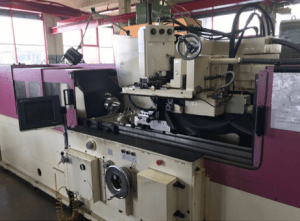
Make the Right Move: Proven Steps to Evaluate a Used, Second-Hand, Surplus, Pre-Owned KAPP NILES KS 2003 Spline Shaft Grinding Machine made in Germany
Below is a practical, step-by-step guide for evaluating a used / second-hand / surplus / pre-owned KAPP NILES KS 2003 Spline Shaft Grinding Machine (made in Germany). These are the steps experienced manufacturers follow to make a smart purchase — not just a guess.
Make the Right Move: Evaluate a Used KAPP NILES KS 2003 Spline Shaft Grinder
1. Define Your Application Requirements
Before inspecting the machine, clarify what you need:
- Workpiece dimensions: maximum length, diameter, and spline profile range
- Material types: steel, alloy, carburized steel
- Production volume: prototype vs high-volume
- Expected tolerance & surface finish capability (e.g., Ra 0.4–0.8)
If this grinder won’t deliver the required accuracy or capacity, the purchase won’t pay back.
2. Review Machine History & Documentation
Ask for:
Machine records
- Date of manufacture
- List of previous owners
- Maintenance logs & service history
Operational history
- Total operating hours
- Average workload per shift
- Any crash or overload events
Condition always outweighs price — a poorly maintained but cheap machine costs more later.
3. Check Technical Specifications Match Your Need
Verify the key specs of the KS 2003 against your application:
Typical specs to check:
- Maximum spline length
- Maximum workpiece diameter
- Grinding wheel size & speed
- Spindle configuration
- Coolant system robustness
- Control system status
If the seller cannot provide clear specs, don’t proceed.
4. Inspect Mechanical Condition
A hands-on inspection is essential.
Spindle & Bearings
- Check run-out with test bar
- Listen for noise / vibration
- Inspect bearing wear
Grinding Wheel Head
- Smooth movement on all axes
- Absence of chatter
- Proper lubrication
Leadscrews & Guides
- Measure backlash
- Check wear on linear guides
- Inspect protective bellows
5. Evaluate the Control & Electronics
Even a great mechanical package is useless without solid control:
Control logic & panel
- Confirm the controller brand & age
- Check for spare parts availability
Cables & cabling
- Look for wear or heat damage
Batteries / memory
- Ensure no data loss risk
Software
- Is the original spline grinding software still available?
- Are updates possible?
6. Inspections and Test Cuts
Never buy sight unseen.
Perform:
- Cold axis movement test
- Live spindle test
- Grinding simulation with actual parts
- Surface finish measurement after test grind
Compare the part to your required tolerances — this is the true test.
7. Verify Parts & Service Support
Before closing the deal:
- Are spare parts still manufactured for this model?
- Can local service technicians repair HSK spindles or linear guides?
- Are manuals and parts diagrams available?
If parts are imported with long lead times, downtime will cost you more than the machine.
8. Evaluate Total Ownership Cost
Beyond purchase price:
- Shipping & rigging
- Installation & grounding
- Operator training
- Tooling and wheel inventory
- Software upgrades
- Warranty & service contracts
Calculate payback period with realistic throughput assumptions.
9. Negotiate Based on Condition
Experienced buyers quote based on:
- Real measured tolerances
- Wheel head alignment
- Spindle condition
- Age of wear components
- Control / software condition
Use inspection evidence to justify pricing — not emotions.
10. Contract & Terms
Include in purchase agreement:
- Guarantee of condition at delivery
- Test acceptance criteria
- Terms for rejection / refund
- Spare parts package or initial consumables
KAPP NILES KS 2003 — What Makes It Valuable
These spline shaft grinders are known for:
- Precision spline grinding
- High rigidity grind spindle
- Stable accuracy over long production runs
- German engineered durability
But only if:
- Maintenance was consistent
- Controls are in good shape
- Critical wear parts are still accurate
Checklist to Take On-Site
Use this when inspecting:
Mechanical
✔ Spindle run-out
✔ Axis backlash
✔ Linear guide condition
✔ Coolant system condition
✔ Guards & safety systems
Control & Electronics
✔ Panel power-up time
✔ Alarm history
✔ Memory / battery status
✔ Availability of manuals
Grinding Test
✔ Test part dimensions
✔ Surface finish
✔ Repeatability
Documentation
✔ Serial number check
✔ Service history
✔ Parts list / wiring diagrams
Final Decision Metrics
Ask yourself:
- Does it deliver required accuracy?
- Will it sustain planned production volume?
- Can I service it locally?
- Are consumables readily available?
- Does the total cost fit ROI?
If the answer is yes on each, you’re ready to buy with confidence.