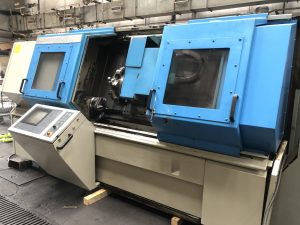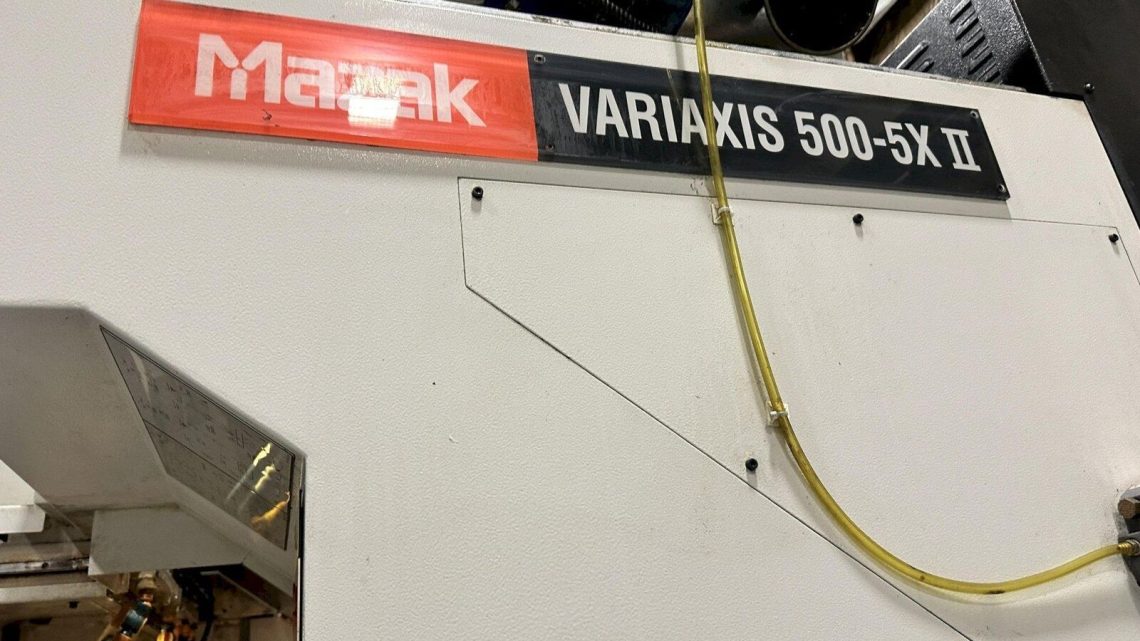
Industrial Insights: How to Spot Quality in Pre-Owned, Used, Secondhand, Surplus CNC Equipment Before Purchase Mazak Variaxis 500-5X II CNC 5 Axis Machining Center made in Japan
Below is a systematic checklist and guidance on *how to spot quality — and risk — when buying a pre-owned / used / surplus CNC machine, illustrated in context with a machine like the Mazak Variaxis 500-5X II (a 5-axis machining center made in Japan). Use this as a decision guide, and adapt to local conditions, transport, spare parts, and your intended usage.
Why extra care is needed with used CNC machines
Buying a large CNC (especially a 5-axis machine) is a significant investment. Many hidden problems (wear, misalignment, electrical aging, software obsolescence) can surface only under load. A seemingly “cheap” used machine with hidden defects can cost more in downtime, repairs, and lost precision than buying near-new or refurbished.
A good inspection can separate a reliable machine from a liability.
Key characteristics of the Mazak Variaxis 500-5X II (as a benchmark)
Before inspection, be very familiar with the original specifications. These will serve as reference points. Some known specs for the Variaxis 500-5X II:
- Travels: approx. X = 510 mm, Y = 510 mm, Z = 460 mm
- Spindle: up to 12,000 rpm, BT/CAT-40 taper, power ~22 kW (or ~30 HP in some markets)
- Table size: approx. 500 × 400 mm
- Max table load: ~300 kg
- Tool magazine: ~30–60 tools depending on variant
- 5 axes: A (tilt) from –120° to +30°, C full 360° rotation, simultaneous contouring capability
- Cooling / through-spindle coolant, chip conveyor etc.
Having those figures in hand helps you spot deviations during inspection (e.g. reduced travel, reduced spindle RPM, issues with axes travel limits, etc.).
Pre-visit preparation
Before going to see the machine:
- Request documentation / history
- Maintenance logs, service records, parts replaced.
- Operating hours (spindle hours, axis motion hours) — not just total “powered-on” hours.
- Original drawings, manuals, electrical schematics, CNC control manuals.
- Calibration / alignment reports if available.
- Ask for a video or demo in advance
- Spindle at speed, all axes in motion, tool change, probing cycle, typical machining job if possible.
- Listen for unusual sounds over the phone/video.
- Bring measuring instruments
- Dial indicators, test bars, gauge blocks, edge finder, indicators or small portable CMM if feasible.
- Vibration meter / stethoscope can help detect bearing noise.
- Arrange for an expert or local technician
- If you are not extremely experienced, bring someone (mechanical or controls specialist) to aid in evaluating.
- Check spare parts availability in your region
- For Mazak, check whether key spares (spindle bearings, drives, servo motors, control modules) are easily sourced in Türkiye or via your supply chain.
- Transport / installation preparation
- Know the machine weight, foundation requirements, crane / rigging capability, and required services (power, cooling, utilities).
On‐site inspection: What to check & red flags
Here is a structured checklist. For each item, I note what to look for, how much tolerance is acceptable, and what red flags mean.
| System / Part | What to Inspect / Test | Acceptable / Good Signs | Red Flags / Warning Signs |
|---|---|---|---|
| Visual / Exterior | Check the general condition of the machine: castings, covers, paint, guards, panels. | Clean, well-maintained exterior; intact covers and way guards. | Cracks in casting, missing covers, signs of collision, weld repairs, rust/corrosion, damaged covers. |
| Way covers / bellows / guards | Move axes manually, inspect the way covers for wear, deformation, tears. | Way covers slide smoothly, no large dents, even wear. | Tears, wrinkling, sagging, missing sections, damage to slide surfaces. |
| Ball screws / lead screws / linear guides | With power off, try to move each axis manually (jog) and see for backlash, binding, looseness. Use dial indicator to measure backlash or runout. | Minimal backlash within spec, smooth motion, no binding in stroke. | Excessive backlash, binding in sections, humpiness in motion, unexpected stiffness or looseness, scoring or pitting on screws. |
| Spindle & bearings | Run the spindle at varying speeds and listen. With test bar or gauge, check runout. Check bearing noise/heat. | Smooth, quiet operation, minimal runout (e.g. < a few microns), no excessive vibration. | Grinding noises, knocking during speed ramp-up, high bearing temperature, large runout or wobble. |
| Tool changer / carousel / ATC | Run full tool change cycles, test with loaded magazine, check for alignment, latching, indexing. | Fast, smooth changes, no jamming, precise alignment. | Tool change failures, misalignments, slow or erratic indexing, dropped tools, wear marks. |
| Rotary axes (A / C axes / trunnion) | Move rotary axes through full range; check limits, backlash in rotary, run tests of simultaneous movement. | Smooth tilt/rotation, accurate indexing, no binding or sloppiness, synchronized motion without collision. | Excessive rotary backlash, binding near extremes, gear tooth wear, servo overshoot, cage rubs. |
| CNC Control / Electronics / Wiring | Inspect wiring, connections, cabinet cleanliness, drives, fans, PLC boards. Power the machine, load CNC, check alarms, offsets, program memory, I/O status. | Clean panel, orderly wiring, all fans working, no burnt or corroded terminals, control boots cleanly, no error status. | Corroded wires, burnt connectors, missing covers, broken fans, ambiguous alarm codes, firmware mismatch, missing backups. |
| Servo drives / motors / amplifiers | Power up each axis, run homing, acceleration/deceleration tests, full traverse travel at rapid speeds. | Smooth acceleration, no overshoot, no fault messages, axes move full travel, motors do not overheat. | Servo faults, unstable motion, thermal issues, drive trips, inability to reach full speed. |
| Cooling / lubrication systems | Check coolant tank, filters, coolant quality, pumps, piping, high-pressure system (through-spindle coolant if equipped). Check the lubrication (auto lube or manual) for axis bearings / guides. | Clean coolant, filters maintained, pumps working, no leaks, lubrication flow intact, no contamination, proper pressure. | Leaks, dirty coolant, clogged filters, damaged pump, poor or no lubrication, rust or corrosion in coolant tank. |
| Chip handling / waste / environment systems | Chip conveyor, chip auger or conveyors, tank, filtration, wash-out nozzles, mist collector. | Working conveyors, no jamming, functioning chip removal, no severe chip backing up, dust/mist controls adequate. | Stalled conveyors, missing motors, chips piled in areas, chip clogging, broken components. |
| Accuracy / repeatability tests | Run test cuts (e.g. square, circle, hole pattern) and measure with calibrated instruments or a CMM. Do positional checks at different points in the envelope. | Consistent tolerances (as per original specs or within tolerable limits), repeatability within small deviations. | Larger than acceptable deviations, thermal drift, nonlinearity across travel, inconsistent results across the work envelope. |
| Thermal stability / warm-up behavior | Run machine for some time, then measure drift, thermal expansion, stability of axes over time. | Stable behavior after warm-up, readings not drifting significantly. | Large drift, significant dimensional changes over time, instability in temperature-sensitive areas. |
| Software, CNC programs & control options | Check if CNC has up-to-date firmware, available options, probing cycles, macro functions, tool center point (TCP) control, 5-axis compensation, compatibility with your CAM system. | All options installed and working, no error in features, ability to load / run your existing programs. | Missing license options, unsupported features, inability to load programs, control obsolescence, patchy software support. |
| Documentation, drawings, spares & manuals | Confirm presence of original manuals, wiring diagrams, parts lists, calibration certificates. | Complete set of documentation, ability to get spares. | Missing control manuals, missing electrical schematics, lack of parts info, unknown custom mods. |
| Load / stress test | If possible, run the machine under load (actual cutting) with a typical workpiece. Monitor for chatter, thermal drift, vibration, tool performance. | Stable under load, no unexpected alarms, consistent surface finish, no odd noise or behavior. | Excess vibration, chatter, tool breakage, inconsistent finishes, servo overload, overheating. |
| Alignment / reference geometry | Check squareness, levelness, axis orthogonality using precision measurement equipment. | Machine meets tolerances (often within microns) or can be re-calibrated within spec. | Out-of-spec geometry, wear-induced tilt, significant misalignment requiring expensive repair. |
In short: test everything at full stroke, under loaded conditions, through the machine’s full envelope, not just at one or two points.
Also refer to a published “7-step guide” to inspecting used CNC machines.
From a forum thread (user advice):
“Make sure it runs and doesn’t make abnormal sounds … Ask for them to set up a test part and see it run … spindle hours, way covers, spindle taper clean, tool holders marred?”
Another useful advice: inspect paint wear / removal in places (if a particular part ran always in the same position) — that may hint at repetitive stress or deburring on that region.
Specific considerations & pitfalls for 5-axis / Mazak Variaxis machines
Because the Variaxis 500-5X II is a 5-axis, trunnion / tilt / rotary machine, there are extra sources of complexity and failure modes:
- Trunnion / tilt mechanism: The A-axis or rotary tilt mechanism must be solid. Wear in the tilt bearings or gear teeth can lead to inaccuracy, backlash, or vibrations in complex 5-axis moves.
- Rotary table / C-axis runout: When the C-axis spins, check for wobble, runout, and stability.
- Simultaneous 5-axis contouring: Run a path (e.g. a curved surface) that exercises all axes simultaneously to detect sync issues or axis interference.
- Tool center point (TCP) or kinematic compensation: The machine must have proper compensation (software or mechanical) for tilts, pivoting, to maintain position control — verify that this is installed and working.
- Collision risk: In 5-axis machines, collisions are more possible due to complex movements. Inspect the collision sensors, software limits, tool path safety features.
- Thermal coupling between axes: The tilt mechanics can induce heat or thermal drift; displacement in one axis may affect the other axes more than in a 3-axis machine.
- Control support: Ensure the Mazatrol / Matrix control (or variant) is supported, and you are comfortable operating and programming it. Some older Mazak control versions may not interface easily with your CAM environment.
- Spare parts for rotary / tilt drives: These parts tend to be more specialized and expensive; ensure availability.
- Foundation / rigidity: Because trunnion machines are more mechanically complex, the stiffness of base, bearings, and foundation matters more.
How to interpret findings & make a go/no-go decision
- Tolerance for wear: Some wear is expected, especially in older machines. The key is whether the wear is within re-calibration and repair limits (i.e. you can adjust backlash, replace way covers, refurbish spindles).
- Cost of remediation: If the spindle bearings are bad, or the trunnion tilt is worn, repair may cost tens of thousands of dollars. Compare cost of repairs to value of machine. Ask for quotes on needed repairs.
- Risk buffer: A machine with minimal issues, documented service history, and clean electronics is worth a premium. A “cheap” machine with uncertainty may become very expensive later.
- Spare parts / vendor support: If you cannot get critical spares locally (e.g. spindle bearings, servo motors, tilt gearboxes), that’s a risk.
- Software / control obsolescence: A machine may be mechanically sound but have outdated or unsupported control software, making future programming or repairs difficult.
- Operating life left: Evaluate remaining useful life. If spindle hours, axis hours, etc. are high, you are buying a machine closer to major overhaul.
- Resale / backup value: Even if not perfect, if parts are usable separately (e.g. the control, drives, spindle) the machine could still have salvage value.
When serious issues (e.g. large spindle bearing wear, misaligned axes, unrepairable electronics) are found, it may be better to walk away unless price reflects full repair cost.
Additional tips & best practices
- Negotiate based on defects: use inspection findings to reduce price or ask vendor to fix defects before handover.
- Bring a “packet of test coupons” (small standard parts) that the vendor must machine for you to prove performance.
- Always request a “bill of sale” that includes machine condition, known defects, and “as-is / agreement” terms.
- Ensure there is a commissioning or acceptance period after delivery, during which you test and verify performance before final acceptance.
- Transport and reinstallation often introduce new alignment shifts; always plan to re-level and re-calibrate after move.
- If possible, bring your own “reference gauge / block / master part” and have the seller run it in your presence.
- Insurance / guarantees: see whether the seller gives limited warranty on certain subsystems or parts.