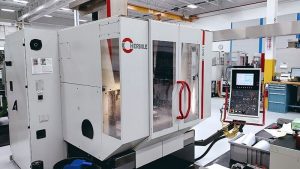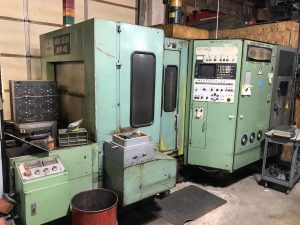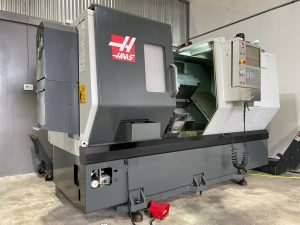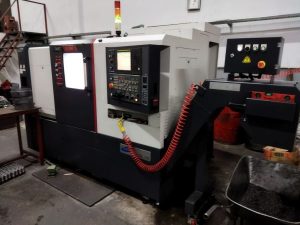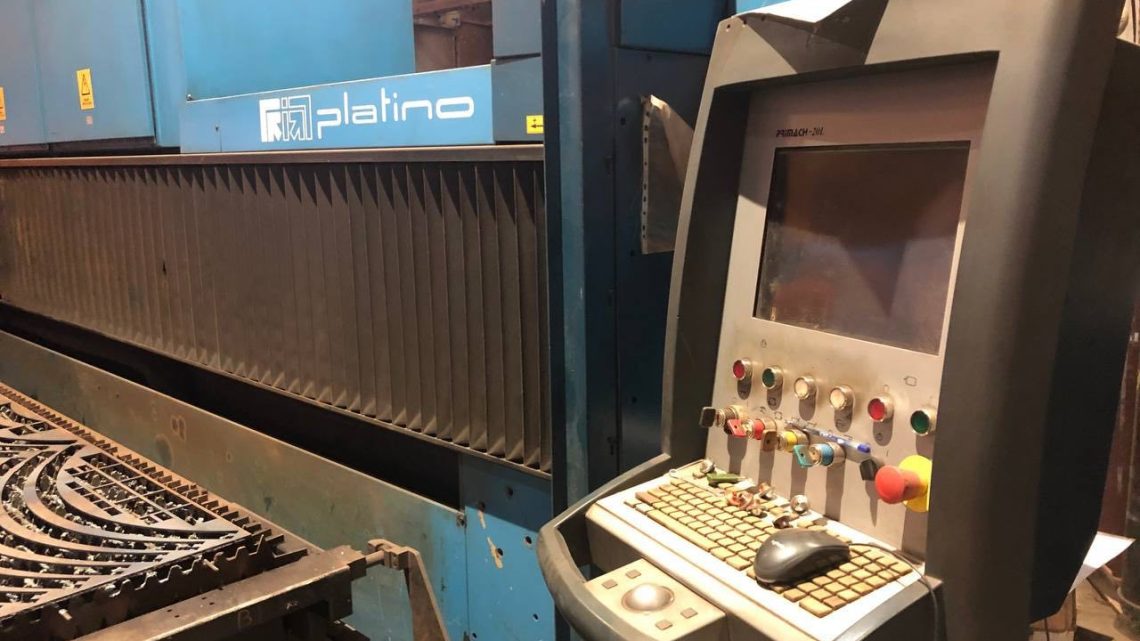
From Factory Floor to Your Workshop: Evaluating a Pre-Owned , Used , Secondhand, Surplus CNC Machines Before Purchase Prima Power Platino CP3500 CNC Laser cutting made in Italy
Here’s a structured, technical buyer’s evaluation guide for a Prima Power Platino CP3500 CNC Laser Cutting Machine (Made in Italy) — designed to help you assess a pre-owned, used, secondhand, or surplus unit before purchasing.
0. Machine Overview (Baseline Specs)
The Prima Power Platino CP3500 is a 2D flat sheet CNC laser cutting system. Its main highlights:
- Laser type: CO₂ resonator, 3.5 kW power output
- Cutting capacity:
- Mild steel up to ~20 mm
- Stainless steel up to ~10–12 mm
- Aluminum up to ~8–10 mm
- Working area (Platino series): ~3,000 × 1,500 mm table
- Cutting head: Automatic focus, capacitive height sensing
- Axes: X, Y, Z CNC-controlled, with linear drives
- Origin: Prima Industrie (Prima Power), Italy
This system was designed as a robust all-rounder for sheet metal fabricators — but CO₂ lasers require careful inspection due to consumable and alignment sensitivity.
1. Pre-Visit Preparation & Information to Request
Before you even see the machine in person, ask the seller for:
- Resonator (laser source) history
- Hours of operation (critical for CO₂ tubes and optics)
- Service or rebuild records for the resonator
- Replacement of turbo blowers, RF modules, or optics
- Service & maintenance records
- Dates of preventive maintenance (mirrors, lenses, beam path cleaning)
- Gas supply system servicing (chillers, filters, valves)
- Alignment reports
- Cutting performance history
- Materials and thicknesses typically processed
- Duty cycle (light vs heavy production use)
- Control / electronics details
- CNC controller type (Siemens, proprietary Prima)
- Software version, available licenses, and compatibility with CAD/CAM
- Spare parts & consumables
- Spare lenses, mirrors, nozzles, bellows
- Filters, chiller spares
- Operational logs
- Alarms, faults, downtime logs from the control system
2. On-Site Inspection Checklist
When visiting the machine, inspect systematically:
A. Mechanical & Structural
- Machine bed / table: flatness, wear, burned spots, slag buildup.
- Drive system (X, Y, Z): backlash, smooth travel, abnormal noise.
- Rails & linear guides: check for wear, pitting, contamination.
- Beam delivery path (tubes, mirrors, bellows): cleanliness, leaks, alignment integrity.
B. Laser Resonator & Optics
- Resonator (CO₂ tube): check hours, noise, efficiency (power vs consumption).
- Mirrors / lenses: inspect for scratches, pitting, coatings wear.
- Beam alignment: verify spot quality, stability across work area.
- Assist gas system: leaks, regulator condition, flow stability.
C. CNC & Electrical Systems
- Control panel: error logs, alarms, button/switch integrity.
- Servo drives / motors: check for overheating, vibration.
- Cables & connectors: look for burns, insulation damage.
- Cooling / chiller unit: verify proper operation, water quality, filter status.
D. Functional Tests
- Axis homing & jogging: smooth, accurate, no lost motion.
- Cut test: run sample parts at various thicknesses — check edge quality, dross, kerf width, taper.
- Focus control: verify auto-focus responsiveness.
- Piercing performance: quick, stable, no excessive spatter.
- Gas changeover: check O₂, N₂, compressed air switching reliability.
3. Performance Metrics to Compare
During tests, measure against expected benchmarks:
- Positioning accuracy: ±0.05 mm typical
- Repeatability: ±0.03 mm typical
- Cut edge quality: minimal dross, smooth finish on stainless/aluminum
- Piercing time: within OEM spec (~2–4 sec mild steel, depending on thickness)
- Cutting speed: compare actual vs Prima Power performance charts
4. Red Flags & Deal-Breakers
Walk away (or heavily discount) if you see:
- Resonator near end-of-life with no rebuild history
- Burned or damaged beam path components
- Excessive backlash in X/Y axes or misalignment in cutting table
- Frequent CNC error logs, obsolete controller with no support
- Weak chiller or unstable assist gas system
- Seller refuses to run a cutting demo
5. Negotiation & Risk Management
- Use resonator hours as a major bargaining chip (rebuilds are expensive).
- Ask for spare optics and consumables to be included.
- Budget for installation, alignment, and calibration at your shop.
- If control is obsolete, factor retrofit cost.
- Request a trial acceptance cut with your material before closing deal.
Summary: The Prima Power Platino CP3500 is a strong Italian CO₂ laser cutter, but the laser source health, optics condition, and CNC support are the most critical factors in evaluating a secondhand unit.