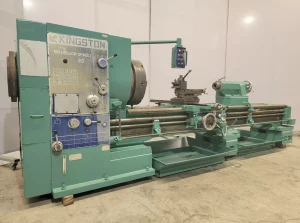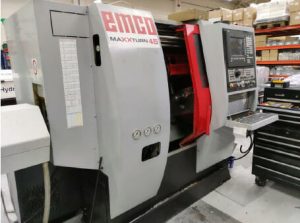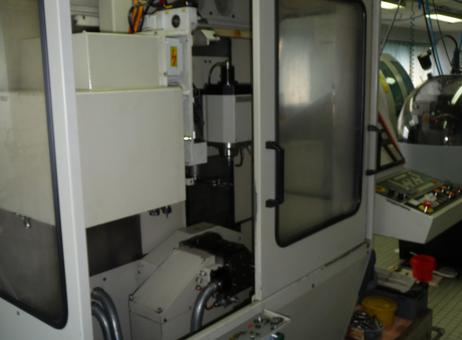
From Factory Floor to Your Workshop: Evaluating a Pre-Owned , Used , Secondhand, Surplus CNC Machines Before Purchase Willemin Macodel W408 CNC Multi-Tasking Turn-Mill Center made in Switzerland
Here’s a detailed “factory floor → your workshop” guide for evaluating a used / surplus Willemin-Macodel W408 (W408MT / W408B) CNC turn-mill / multitasking center (i.e. a hybrid turning + milling / multi-axis machine) before purchase. I’ll include known spec baselines, what to check, how to test it, red flags, and negotiation advice.
0. Reference / Baseline Specifications to Know
Before inspection, collect or confirm the published specs of the specific W408 variant you’re inspecting — these give you the “ideal” targets to compare against. Some published specs for Willemin Macodel W408 (or W408MT / W408B) machines:
| Parameter | Typical / Advertised Value | Notes / Source |
|---|---|---|
| Number of axes | 5 axes (turn + mill) | Many listings refer to “5-axis” for W408MT / W408B. |
| Linear travel (X / Y / Z) | ~ 250 mm (X), ~ 200 mm (Y), ~ 300 mm (Z) | E.g. Kraffter listing for W408MT: X=250, Y=200, Z=300 mm technical datasheet also gives these values in W408 B data sheet. |
| Spindle interface / tool taper | HSK-E40 | The machine uses HSK-E40 for the milling / tool spindle. |
| Spindle speed / power (milling spindle) | 0 – 30,000 rpm (some variants) | The machine can go up to 30,000 rpm (or close) in published specs. |
| Turning / bar capacity | Up to ~ 32 mm bar through spindle | Many W408MT listings mention “max. bar diameter in turning spindle: 32 mm” |
| B / C axis / swiveling axes | B axis swivel ~ -15° to +100° (or similar) | W408 B datasheet shows B axis swivel range of –15° to +100° |
| Tool magazine capacity | Some 24 stations (or variants) | W408 B datasheet: 24 tools, etc. |
| Coolant / fluid capacities | ~ 80 L coolant tank, pump ~40 L/min (or per variant) | Many listings for W408MT list coolant tank ~80 L, coolant flow ~40 L/min. |
| Machine weight / footprint | ~ 1,700 kg | Many offers list weight ~1,700 kg. |
These values are what you use as reference “ideal / expected” to compare with the actual machine you inspect. You should request the exact variant, serial number, control version, and any custom options in advance, so you know which spec sheet to use as your benchmark.
Also, note that the W408 is a precision multitasking machine: combining turning + milling + multi-axis motion increases the number of components and potential failure points compared to a “plain” turning center or milling machine.
1. Pre-Visit / Documentation to Request
Before going to inspect, ask the seller (or current operator) for the following:
- Service / maintenance / repair history
- Dates & details of major overhauls (spindle rebuild, way rework, axis re-scraping)
- Replacements of critical parts (encoders, drives, tool spindle, ball screws)
- Dates of calibration, alignment checks, backlash checks
- Machine configuration and options sheet
- Which axes / options are installed (turning spindle, back machining, B axis, C axis, tool spindle, etc.)
- What tool magazine / tool changer / live tooling is present
- What control / CNC / motor / drive versions are installed
- Control / electronics documentation
- Type and model of CNC controller (e.g., Fanuc, Siemens, etc.)
- Wiring diagrams, I/O list, backup parameter & program files
- Firmware / software version, spare modules / cards
- Run hours / usage logs
- Total hours, cutting hours vs idle hours
- Duty cycles, load factors
- Photos / video of machine in operation
- Showing axes moving, spindle running, tool changes, multitasking motion
- Close-ups of guideways, screws, coupling joints, wiring, cable carriers
- Calibration / alignment reports
- Any past axis accuracy tests, backlash measurements, thermal drift logs
- Spare parts & tooling inventory
- What tooling, collets, driven tools, fixtures, etc., accompany the machine
- Transport / rigging plan
- How the machine will be disassembled, shipped, reassembled, and realigned
- Backup states / parameter memory
- Confirm that all control parameters, offsets, tool tables, programs are backed up and retrievable
- Environmental / site history
- Where the machine was used (clean room, wet environment, chip & coolant exposure)
- Exposure to coolant contamination, flooding, temperature extremes
With that in hand, you’ll be better prepared to spot deviations and risk factors during inspection.
2. On-Site Inspection & Testing Checklist
Bring a set of precision tools (dial indicators, test bars, gauges, feeler gauges, possibly a vibration meter). Inspect in a systematic manner: mechanical / structure, control / electronics, functional / test runs, and environment / ancillaries.
A. Mechanical & Structural Inspection
- Machine base, frame, castings
- Look for cracks, weld repairs, distortions or evidence of rework
- Check for surface corrosion or damage, but focus on structural integrity
- Guideways / linear motion components
- Check for scoring, wear bands, scratches, pitting
- Move axes slowly through travel; feel for binding, stiction, jumps or gritty motion
- Ball screws / lead screws / feed drives
- Remove covers (if possible) and visually inspect threads, check for wear
- Measure backlash / lost motion in each linear axis
- Tool spindle & cutting spindle(s)
- Run the spindle(s), listen for noise, feel for vibration or axial / radial play
- Measure runout (e.g. using a test bar)
- Check how the spindle is driven (direct, belt, gear) and inspect belts / coupling condition
- Swivel / rotary axes (B / C axes, joint mechanisms)
- Check rotational motion for smoothness, backlash, indexing accuracy
- Inspect bearings, gearing, coupling mechanisms
- Test whether there is play or drift in the swivel axes
- Turning spindle / bar-through spindle (if used)
- Check alignment, runout, bearing play
- If the machine runs parts through this spindle, check for signs of wear
- Tool changer / tool magazine / tool holders
- Cycle tool changes, test indexing, repeatability
- Inspect tool pockets, wear in magazine, condition of tool holders
- Live tooling / milling functions
- If there is live / driven tooling, inspect motor, coupling, runout, drive belts / gearing
- Coolant / lubrication / hydraulic / pneumatic systems
- Inspect tanks, pumps, filters, hoses, leaks, contamination
- Lubrication circuits: check if lubrication is reaching all axes properly
- Hydraulic / pneumatic clamping circuits (if present) for pressure, leaks, seals
- Covers, guards, panels, cable carriers
- Are panels intact, wiring harnesses clean, cable carriers free from damage or binding?
B. Electrical, CNC & Control Inspection
- Power-up & control panel testing
- Boot controller, check for error or alarm logs
- Jog each axis manually from the control panel
- Test manual inputs, soft keys, E-stop, limit switches
- Servo drives / amplifiers / motors
- Inspect for signs of overheating (discoloration, burnt smell)
- Check cabling, connectors, shielding, strain relief
- Feedback devices (encoders / absolute scales / resolvers)
- Monitor axis motion for any loss of counts, jitter, erratic readings
- If possible, inspect the wiring / signal integrity of feedback lines
- Wiring & harness condition
- Inspect for brittle insulation, connector corrosion, chafing, loose connectors
- Ensure proper grounding and shielding
- Memory / parameter backup systems
- Confirm that all control parameters, tool offsets, macros, programs are stored / retrievable
- Check battery backup (if used) or memory retention circuitry
- Safety systems / interlocks / limit circuit
- Test E-stop, door interlocks, guard sensors, limit circuits
- Try moving axes toward limits to confirm safe limit behavior
C. Functional / Performance Tests
If allowed, run the machine under motion and, ideally, a representative machining cycle:
- Axis motion & smoothness
- Move X, Y, Z, B, C (as applicable) through full travel at various feed rates
- Observe for smooth motion vs jumps, sticking, jerks
- Backlash / lost motion test
- Move an axis positively a known distance, then reverse, see how much dead motion exists
- Spindle run / vibration test
- Run milling / tool spindle (and turning spindle) at low, mid, and high RPM
- Use a dial indicator or vibration probe (if available) to check runout, vibration
- Monitor heat / temperature rise after continuous operation
- Tool change / magazine cycling
- Cycle tool magazine, check indexing, speed, repeatability, slot alignment
- Turn / mill test & part machining
- Use a test bar / sample workpiece (preferably one you plan to run in your shop)
- Perform turning / milling operations, measure resulting geometry (diameter, roundness, tolerances, surface finish)
- Test combined turning + milling (multi-axis / side machining) if the machine supports that, to see how well axes coordinate
- Swivel / B/C axis accuracy test
- Swivel B or rotate C axis to a programmed angle, then perform a cut / feature related to that axis, measure deviation
- Check whether the rotary axes hold position under motion / cutting load
- Thermal stability
- Let the machine run for an extended period (30–60 min or more) under load, observe whether there is drift, axis shifts, temperature stabilization
- Chip / coolant handling under load
- Test coolant flow, chip evacuation system, filtration, chip conveyor (if equipped)
- Check whether chips interfere with motion or damage axes
3. Quantitative Assessment & Deviation Analysis
Once you have data from inspection and test runs, analyze quantitatively:
- Deviation from nominal / spec values
- Compare measured travels, speeds, spindle performance, rotational axis precision vs published specs
- Significant deviations suggest wear, modifications, or deficiencies
- Wear margin & remaining useful life
- Based on observed wear on guideways, screws, spindles, rotary axes, estimate how much life is left
- Particularly critical are spindle bearings, rotary joints (B/C axes), and tool spindle wear
- Error budgets / precision losses
- Backlash, lost motion, repeatability errors: quantify whether the machine can still achieve the tolerances your parts require
- Repair / refurbishment cost estimates
- List components needing overhaul or replacement (spindles, axes, encoders, drives)
- Get quotes or cost ranges for those repairs
- Risk / downtime evaluation
- Time for disassembly, transport, realignment, calibration, breakdown risk
- Cost of downtime vs alternative
- Upgrade / retrofit potential
- If the electronics are obsolete, can modern control / drives / feedback systems be retrofitted?
- Is the mechanical architecture “open” and modular enough for upgrades?
4. Red Flags & “Deal-Breakers”
Some conditions may be severe enough to walk away rather than try to negotiate:
- Major structural damage or cracked castings
- Spindle(s) in poor condition, excessive noise, vibration, or unknown history
- Rotary / swivel axes (B / C) with excessive backlash or play, inability to hold indexed position
- Guideways or ball screws worn beyond economically repairable levels
- Tool spindle / live tooling in poor condition or missing/damaged
- Tool changer / magazine not functioning or with severe mechanical issues
- Control electronics are obsolete, unsupported, missing modules / cards
- Missing essential components (tooling, collets, control cards, fixture hardware)
- Seller refusing to allow full tests or axis motion
- Severe environmental damage (flooding, corrosion, coolant contamination) beyond repair
- Transport / alignment risk too high
5. Negotiation, Purchase Strategy & Risk Mitigation
- Use your inspection and test data to justify price deductions or ask for repairs before purchase
- Insist on a short acceptance / trial period after installation in your shop, especially for a multitasking machine
- Ask for spare parts, tooling, or warranty on critical systems (spindles, encoders, drives)
- Compare total cost: purchase + transport + alignment + repair + downtime vs alternative machines
- Bring an expert or specialist (especially someone familiar with multitasking machines / Swiss or micro-machining machines) to assist in the inspection
- If control electronics or feedback systems are aged, factor in retrofit or replacement cost
- Negotiate coverage of rigging, disassembly, reassembly, leveling and calibration