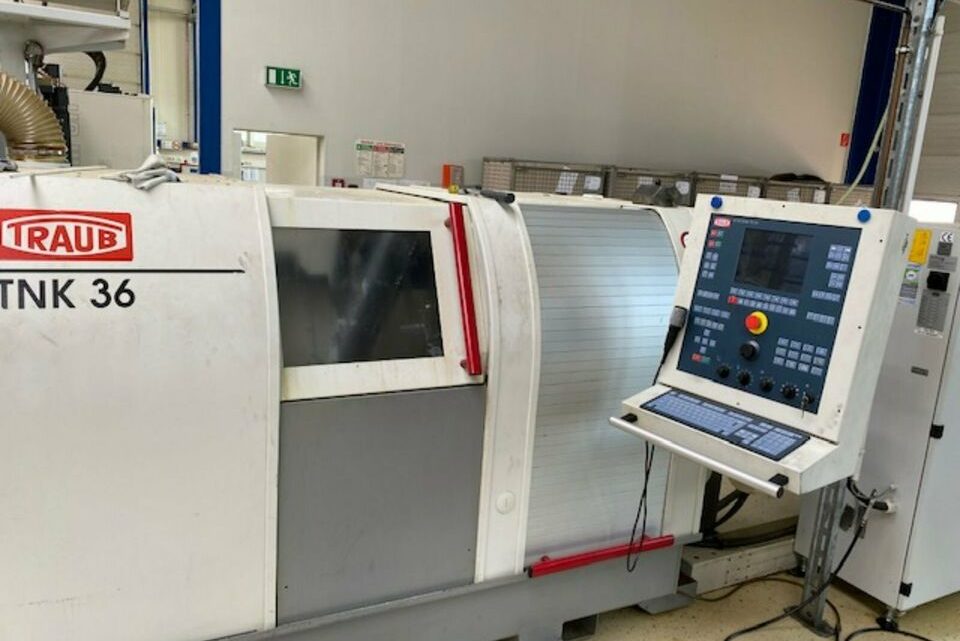
From Factory Floor to Your Workshop: Evaluating a Pre-Owned , Used , Secondhand, Surplus CNC Machines Before Purchase TRAUB TNK 36 CNC Lathe made in Germany
Here’s a “factory-floor to your shop” guide for evaluating a used / surplus TRAUB TNK 36 CNC lathe / turning center (also sometimes referenced as TNK 28/36 variants). I’ll include known specs (as reference baselines), then walk through what to check, how to test it, red flags, and negotiation tips.
0. Reference — What is a TRAUB TNK 36?
Before inspection, gather baseline specs so you know where the “slack” is tolerable vs unacceptable. Based on various used-machine listings and catalogs:
| Spec | Typical / Advertised Value | Notes / Source |
|---|---|---|
| Max bar / workpiece diameter | ~ 36 mm | “Machining diameter max: 36 mm” listed |
| Spindle speed | ~ 6,300 rpm | Multiple listings show this (main and counter spindle) |
| Spindle power (main & counter) | ~ 10.7 kW | From listing |
| Number of axes | ~ 9 axes (in many Swiss / multi-axis configurations) | |
| Turret / tool stations | 12 positions / fully motorized / driven tooling (for many units) | |
| X / Z travel | ~ 370 mm (X), ~ 250 mm (Z) for the main cutting axes | |
| Machine footprint / weight | ~ 3,335 × 1,222 (mm floor space), height ~1,680 mm, ~ 4,000 kg weight listed in some ads | |
| Control / electronics | TRAUB TX8i in many cases |
These specs act as your “gold standard” — when you inspect the used machine, deviations from these (or worse) will help you assess wear, modifications, or damage.
Also note: the TNK line is often used for automatic bar-fed / “Swiss-style” turning tasks (i.e. smaller diameters, higher axis count, multitasking).
1. Pre-visit Preparation & Documentation Requests
Before you travel, ask the seller or current operator for as much of this as possible:
- Service / maintenance / repair logs
- Past spindle rebuilds, bearing replacements, guideway rework, turret overhauls
- Frequency & dates of calibration checks
- Configuration & options listing
- Which axes, live tooling, sub-spindle(s), back machining, Y-axis (if any)
- Type of turret(s), number of tool stations, driven tool power, tool speeds
- Control / electronics documentation
- Control model and version (e.g. TX8i), I/O lists, wiring diagrams, backups, parameter files
- Spare modules, replacement parts for drives, encoders
- Operating / power-on hours
- Total hours, cutting vs idle
- Duty cycles (how heavily loaded)
- Spare parts / tooling inventory
- Turret tooling, live tools, collets, holders, bar feeders, etc.
- Video / photo evidence of motion
- Axes moving, turret indexing, spindle turning, tool change cycles
- Alignment / accuracy check reports
- Past records of straightness, backlash, thermal drift
- Transport / rigging plan
- How they will dismantle, ship, reassemble, realign
- Control backups / parameter / memory retention
- Are all original parameters, programs, settings intact and backed up?
Having this ahead of time lets you tailor your on-site benchmarking and focus on suspect areas.
2. On-Site Inspection & Testing Checklist
Bring precision tools (dial indicators, test bars, feeler gauges, gauges, vibration meter if available). A methodical walk-through is crucial:
A. Mechanical / Structural
- Base / frame / castings
- Check for cracks, weld repairs, distortions, signs of rework
- Surface corrosion, but structurally intact foundation
- Guideways / slides / linear ways
- Inspect for wear bands, scratches, pitting, uneven wear
- Move carriages at different speeds and directions, feel for binding, stiction, jumps
- Lead screws / ball screws / feeds
- Uncover covers and inspect threads, check for wear
- Measure backlash / lost motion in each axis
- Spindles (main & counter)
- Rotate spindle (if possible), listen for abnormal noises
- Check radial and axial play
- Monitor heat, vibration
- Check how the spindle is driven (direct, belt, gear)
- Turret / toolchanger(s)
- Cycle the turret through all stations, check indexing repeatability
- Check tool pocket wear, clearances, fit
- If live tooling: check motor, rotation, runout, power under load
- Y-axis (if present)
- Many TNK machines may have lateral offsets, check smooth travel and binding
- Confirm alignment relative to main axes
- Back machining / sub-spindle (if equipped)
- Check alignment, spindle coupling, mirrored functionality
- Coolant / lubrication / hydraulic / pneumatic systems
- Inspect coolant tank, piping, pumps, filters, leaks
- Lubrication pumps, oil lines, greasing systems
- Hydraulic clamping units, pneumatics
- Covers, guards, panels
- Are covers intact? Any missing panels? Wiring exposed?
B. Electrical, Control & Electronics
- Power-up & control testing
- Boot controller, observe error logs, alarm history
- Jog all axes, test panel responsiveness
- Servo / drive / amplifier units
- Inspect for heat damage, discoloration, smells, signs of repair
- Check cables, connectors, shielding, strain relief
- Feedback devices / encoders / resolvers
- Monitor signals during axis movement if possible
- Ensure axes don’t lose counts or produce glitches
- Wiring / harness integrity
- Check for brittle insulation, corrosion, loose or damaged plugs
- Memory / backup / parameter retention
- Confirm that tuning parameters, offsets, G & M codes, macro programs are stored and retrievable
- Safety / interlock / limit circuits
- Press E-stop, test interlocks, verify limits work properly
C. Operational & Performance Tests
If allowed, run the machine under motion or even cutting:
- Axis motion tests
- Move X, Z (and Y if present) across full travel at various feed rates
- Look for smoothness, jumps, binding, irregular motion
- Backlash / reversal test
- Move axis in one direction, then reverse, measure lost motion
- Spindle rotation & vibration
- Run main & counter spindles at multiple RPMs
- Use a dial indicator or vibration sensor to check runout and vibration
- Turret cycling
- Cycle all turret tools, index, tool change times, repeatability
- Test cutting / turning
- Use a test bar or representative part
- Perform turning operation; measure diameter, roundness, surface finish, tolerances
- Live tooling test (if present)
- Engage live tool, run at speed, check runout, power under load
- Thermal stability
- Let machine run for 30–60 minutes, monitor if axes drift, if temperatures stabilize
- Chip / coolant handling
- Operate coolant pump, chip conveyor, flushing systems under chip load
3. Quantitative Assessment, Deviation & Metrics
After inspections and testing, make a quantitative assessment:
- Deviation from nominal specs
- Compare your measured travels, speeds, spindle performance vs the published values
- If X / Z travel is compromised or turrets have limited indexing, note that as reduction in capability
- Wear margin & residual life
- Estimate how much life remains in guideways, screws, spindles
- Particularly scrutinize turret and live tooling wear
- Error budgets
- Backlash, lost motion, repeatability tolerances: how far off from what you need?
- Repair / refurbishment cost estimates
- List items needing overhaul or replacement (spindles, drives, encoders, guideways)
- Get price quotes for parts / labor
- Risk / downtime cost
- Transport, reinstallation, alignment, calibration, downtime in your shop
- Upgrade / retrofit potential
- If electronics are obsolete, how feasible is upgrading (modern control, drives)
- Whether the machine has open architecture or is too proprietary
4. Red Flags & Deal-Killers
Some problems may be severe enough to walk away:
- Cracks, warping, or heavy repairs to the main casting/frame
- Spindle(s) in poor shape, severely noisy, significant axial or radial play
- Turret indexing failure, excessive tool pocket wear
- Guideways or ball screws too badly worn to be economically repaired
- Feedback/encoder system failures with no spares or replacements available
- Control electronics so outdated or proprietary that parts are unobtainable
- Missing essential components (turrets, tooling, spindles, drives)
- Seller refusing motion / operational tests
- Environmental damage (flooding, corrosion, chemical exposure)
- Overlooked cost of transport, alignment, and re-certification
5. Negotiation & Purchase Strategy
- Use your inspection data (defects, repairs needed) to structure price deductions
- Request a short “acceptance period” after installation (test on your parts)
- Ask for inclusion of spare parts, tooling, or warranty on critical items
- Compare total cost: purchase + transport + refurbish + downtime vs alternatives
- If possible, bring a specialist (e.g. someone experienced with Swiss / multi-axis machines)
- Insist on full disclosure of hours, faults, repair history