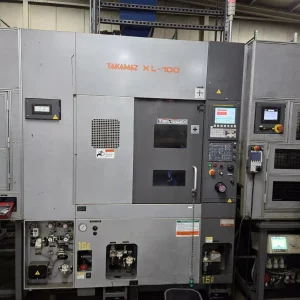
Why are clean compressed air and an integrated V-Drive (variable-speed) compressor system critical when manufacturing high-precision components for the aerospace and automotive industries?

1) Compressed air is a primary control medium
Many accuracy-critical events on CNCs and assembly cells are pneumatic:
- Tool change & drawbar release (air to unclamp): unstable pressure ⇒ incomplete release, pull-stud wear, tool seating errors → axial runout and surface defects.
- Pneumatic chucks/collets & fixtures: clamping force ∝ pressure × piston area. ±0.3 bar swings can shift microns of part geometry or cause variation in SPC.
- Air gauging & leak-tests: back-pressure metrology reads microns; pressure ripple becomes measurement noise.
- Air bearings/linear slides, purge/positive-pressure of spindles, optics and probes, ATC blow-off, burr/particle removal, paint/coating prep, etc.
Result: you need stable pressure, dryness, and oil-free cleanliness at the point of use to keep geometry, surface integrity and reliability within PPAP/AS9100 requirements.
2) Air quality directly affects part quality and reliability
Follow ISO 8573-1 classes for the process (typical targets):
- Particles: Class 1–2 (≤1 µm filtration after dryers) to protect valves, proportional regulators and air bearings.
- Water: Pressure dew point ≤ −40 °C (desiccant dryer) so no condensation in lines/probes during night cooldowns.
- Oil: Class 0/1 (oil-free compression or high-efficiency coalescing + carbon adsorption) for paint, bonding, plating and precision assembly—oil aerosol contamination leads to adhesion failures and NG parts.
Poor air (moisture/oil) causes sticky valves, soft seals swelling, probe/window fouling, corrosion, and variable clamping—i.e., scrap and downtime.
3) Why an integrated V-Drive (variable-speed) compressor
A V-Drive uses a frequency converter to modulate motor speed to match actual flow demand.
Technical benefits:
- Tight pressure band: V-Drive holds the header within ~±0.1–0.2 bar vs ±0.5–1.0 bar on load/unload machines. That directly stabilizes clamping forces, gauging, and tool-change reliability.
- No “idling” losses: Fixed-speed compressors consume 20–70 % of full power while unloaded; V-Drive eliminates most of this by slowing instead of blowing down/reloading.
- Lower leak consumption: Leak flow ≈ k·ΔP. Dropping network setpoint by 0.5–1.0 bar with a V-Drive typically cuts leaks ~7–10 % per bar, which also reduces dryer/filter load.
- Soft-start, low inrush, better power factor: Less mechanical and electrical stress → longer motor, coupling and belt life; fewer nuisance trips.
- Process-friendly ramping: When multiple CNCs pulse demand (ATC, fixturing), the drive ramps to supply the transient without header droop that would trip pressure switches.
- System-level optimization: Integrated control can coordinate dryer, condensate management, and sequencing of standby machines; some units maintain dew-point or pressure-band setpoints, not just on/off.
Energy reality: Compressed air is one of the largest electrical loads in machining plants. V-Drive systems commonly deliver 20–35 % energy savings (more in variable-load shops) with a short ROI, while improving dimensional stability.
4) What “good” looks like (typical set-ups for precision cells)
- Header setpoint: 6.3–7.0 bar regulated; local point-of-use regulators near fixtures/spindles.
- Drying/filtration chain: cyclonic separator → 1 µm prefilter → desiccant dryer (−40 °C PDP) → 0.01 µm coalescing → activated-carbon (where paint/bonding occur).
- Piping: aluminum/stainless ring-main with drops and auto-drains; pressure sensors at far ends for closed-loop V-Drive control.
- Receivers: sized for 6–10 s of peak flow; one wet (before dryer) + one dry (after dryer) smooth transients.
- Monitoring: inline particle/oil sensors, dew-point transmitters, and pressure data to SPC—treat air quality like a CTQ.
5) Risks you avoid with V-Drive + clean air
- Tool-change misfires and drawbar wear from low pressure spikes
- Variable clamp force → microns of diameter/roundness drift
- Air-gauge instability and false scrap
- Corrosion, valve sticking, seal failures from moisture/oil
- Paint/bonding defects from oil aerosol contamination
- Wasted energy from unload cycling and high header setpoints
6) Quick selection checklist
- Demand profile (min/avg/peak), leakage survey, future machines
- Required ISO 8573-1 class per process area (machining vs coating)
- V-Drive turndown ratio and pressure-band control capability
- Integrated dryer type (refrigerated vs desiccant) and PDP control
- Heat recovery option (hot water/air) and remote monitoring
- Redundancy: N+1 compressors or V-Drive + fixed-speed trim
- Acoustic target if compressors are near production
Bottom line: In high-precision aero/auto machining, air quality preserves the mechanics and measurement accuracy; a V-Drive compressor delivers that quality consistently by holding pressure tight and following demand while cutting energy waste. The combination reduces process variation, defects, and unplanned downtime—exactly what your PPAP/AS13100 auditors expect to see.