21/09/2025
What Should I Pay Attention To When Buying a Second-Hand / used ZMM CU 1000?
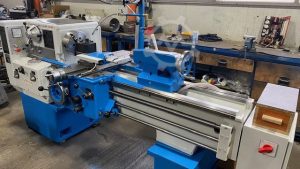
Here are some important points to check when buying a second-hand ZMM CU 1000 machine (or any large industrial lathe/machining tool) to avoid surprises and ensure value. If you want, I can also make a checklist you can bring on site.
What to Inspect: Mechanical & Structural
- Bed / Ways Wear
- Examine the bed (ways) for uneven wear, gouges, dips.
- Use a straightedge or precision level across the ways; deviations or “saddling” may cause inaccuracy.
- Check wear especially near the tailstock end, carriage travel — heavy use often shows there.
- Spindle Condition
- Check spindle run-out (using dial indicator) — both radial and axial.
- Any play or excessive vibration is bad.
- Listen for bearing noise when spindle runs.
- Check condition of spindle taper and threads if used.
- Gears, Gearbox & Transmissions
- Inspect for broken or chipped gear teeth.
- Check ease of shifting feed rates, threading feeds etc. Everything should engage smoothly.
- Check lubrication: gearboxes should be full, oil clear (not dirty/sludgy), seals intact, no oil leaks.
- Electrical / Controls / Motors
- If inverter drive/spindle speed control, test whether speed changes are smooth and accurate.
- All motors (spindle, feed, tailstock if motorised etc.) should run well with minimal noise or overheating.
- Inspect wiring, switches, safety guards; exposed wires or poor insulation are red flags.
- Tailstock
- Check alignment: the tailstock centre should align with the spindle axis. Use a test bar.
- Check movement: can it lock down cleanly, move smoothly along the bed, clamp firmly.
- Check centre point condition.
- Carriage, Cross Slide, Tool Post
- Moves smoothly, no jerky motion; gibs adjusted.
- Check backlash and wear in lead screws and nuts.
- Inspect tool post: does it clamp well; is it damaged.
- Chuck and Holding Fixtures
- Condition of chuck (jaws, mounting), faceplate: are there cracks, warpage, distortion.
- Self-centering chucks must close uniformly, without binding.
- Coolant / Lubrication Systems
- If there is a coolant pump or system, test whether it works, whether pipes/nozzles are intact.
- Check lubrication for slides etc: oil delivery, absence of dryness or scoring.
- Tolerances / Accuracy Tests
- Run a test piece: turn a round bar, measure run-out, surface finish, taper etc.
- Use dial indicators to check straightness and parallelism over travel.
- If you need precision, check how it holds tolerances.
- Overall Structure & Stability
- Check for cracks in the castings.
- Look for rust, especially in ways or moving slides.
- Check if the base is level, well mounted; poor foundation can ruin performance.
Other Non-Mechanical/Practical Considerations
- History / Usage / Maintenance Records
- How heavily used is it (operating hours)?
- Is there a maintenance log? Any record of major overhauls, part replacements.
- Was it used in a clean, dry environment or exposed to moisture, dust, corrosives?
- Spare Parts Availability
- For ZMM CU 1000, check how readily spare parts are available (bearings, gears, spindle components etc.).
- If some parts are rare / expensive, that will impact cost of ownership.
- Year & Model Variant
- Changes between variants (motor power, spindle speeds, features like readouts, CE-compliance).
- Newer ones might have better control options, safer standards.
- CE / Safety / Compliance
- If required by local law (especially in Europe / Türkiye), check whether safety guards, emergency stops etc. are intact and compliant.
- Documentation (if any) for certifications or inspections.
- Transportation & Setup Costs
- The machine is heavy. Moving it from where it is, installing and aligning it will cost.
- Check whether current location is accessible, how much dismantling is needed.
- Price vs Remaining Value
- Compare price with condition: if you need to invest significantly in repair, parts or refurbishment, factor that in.
- Look at market prices for similar machines (year, hours, condition).