What Should I Pay Attention To When Buying a Second-Hand / used ZMM Bulgaria C10TS?
If you’re considering buying a used ZMM Bulgaria C10TS (or variant such as C10TMS, C10THS), here are the things you should pay attention to. It’s a solid conventional / semi-manual high precision lathe with variable spindle speed control, but as with any used machine there are many potential wear points / pitfalls. I’ll first recap what its standard features & specs are (so you know what to expect), then go through what to inspect, questions to ask, red flags, and how to judge condition & price.
Key Specs / What to Expect from a Good C10TS
Here are the standard technical details of the ZMM C10TS / C10TMS machines.
| Spec | Value / Range |
|---|---|
| Height between centers | 330 mm (C10TS) / 380 mm (C10TMS) |
| Swing over bed | 660 mm / 760 mm |
| Swing over cross slide | 420 mm / 520 mm |
| Swing in gap | 850 mm / 950 mm |
| Bed width | 560 mm |
| Distance between centers | Usually offered in lengths of 1,500; 2,000; 3,000; 4,000; 5,000; 6,000 mm |
| Spindle bore | 103 mm (smaller bed) up to ~132 mm (larger) |
| Spindle taper | Metric 120 / 140 |
| Spindle speed / ranges | Infinitely variable via frequency inverter, in 3 subranges: e.g. ~ 9-55; 37-220; 220-1320 rpm (for smaller version) & similar scaled values for larger bed. |
| Main motor power | ~ 15 kW standard for the headstock drive. |
| Feeds | Many feed options (~150 feeds). Longitudinal feed range: approx 0.039-18 mm/rev. Cross feed approx 0.02-9 mm/rev. |
| Threads | Lots of thread settings: metric, inch threads; wide ranges; module thread range 0.125-45, etc. |
| Tailstock | Quill ~ 105 mm diameter; taper Morse No.6; travel ~ 225 mm. |
Knowing these gives you the “ideal” benchmarks for a well-maintained C10TS. If the used one is far off these in any major spec (especially spindle bore, distance between centers, swing, or speed ranges), either it’s a different variant, or it’s been modified / worn / mis-represented.
What to Inspect / Test When Buying Used
Here are the things you should inspect, test, or ask about when evaluating a used C10TS. Some are mechanical / wear items; others relate to whether the machine was well maintained.
| Component / Area | What to Check / What to Test / Inspect | Why It Matters / Common Wear Issues |
|---|---|---|
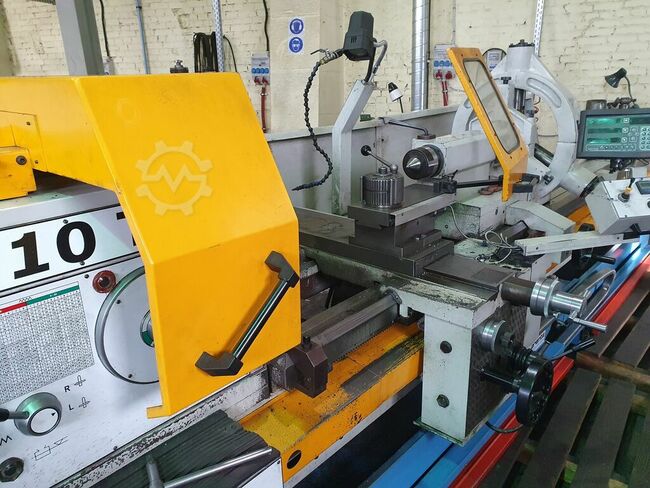
| Spindle & Headstock | • Check spindle bore (inside diameter): is it clean, undamaged, free from scoring, rust? • Inspect spindle nose / taper (DIN 55027 No.11) for wear, damage, dents or chips. • Measure spindle run-out (both radial & axial) with a test bar. • Run spindle through speed ranges: listen for bearing noise, vibration, heating. • Confirm the frequency inverter (if variable speed) works smoothly and covers full ranges without jerks. • Inspect gearbox (if any) for oil leaks, seal condition, lubrication. | Spindle & bearings are expensive to repair / replace; run-out deteriorates surface finish and precision. Poor lubrication or variable speed controller issues can lead to unevenness, loss of torque especially at lower speeds. |
| Bed, Ways, Cross Slide, Carriage | • Inspect bed ways: look for wear, pitting, scoring, dryness, any rust. • Move carriage longitudinally (over full travel) and feel for binding, roughness, dips or “soft” spots. • Measure backlash / play in cross slide & top slide. • Inspect cross slide travel; top slide (compound) travel and condition (slide wear, alignment). • Check whether the bed has been damaged (hammered, struck), or improperly supported during transport (which can distort). | Wear on ways reduces accuracy, causes chatter. Cross slide/top slide play reduces control over finish. Damage may mean alignment issues, which can be expensive to correct. |
| Tailstock / Quill | • Check quill diameter (≈ 105 mm) condition: is it straight, does it move smoothly, any play when locked or unlocked. • Check taper (Morse #6) in tailstock; whether it holds tooling tightly. • Alignment of tailstock: when the quill is retracted / extended, is its centreline co-axial with spindle / chuck? • Quill travel (≈ 225 mm) should be full, with no binding or indication of being stuck. | Tailstock misalignment causes taper, poor threading, concentricity errors. Damaged or worn quill reduces holding power, precision. |
| Feed & Gear Train / Transmission | • Test longitudinal and cross feeds: smoothness, consistency, any irregularity or vibration. • Check gearboxes, belts, couplings in the feed train for wear, slackness, noise. • Inspect for oil leaks / lubrication in these components. • Check the feed reversals: behavior of backlash, whether feed drops or creep when reversing direction. • Ensure feed handles / levers (if manual) are in good shape. | Worn feed parts degrade precision, lead to errors in thread cutting, finishing, and surface finish. Loose belts / worn couplings reduce torque transfer. |
| Thread Cutting Capability | Since the lathe supports a wide range of threads (metric, inch, module, etc.), check whether thread gears / changers or other means are present & in good condition. • Inspect change gears (if used) for wear of teeth. • Test threading operations: whether the machine holds half-turns, dead-centres, consistency. • Check if appropriate lead screw (if fitted) is accurate and well maintained. | Thread cutting is a precision activity: worn gears or leadscrew inaccuracies produce poor thread form, pitch errors, etc. Missing or damaged gear sets reduce usefulness. |
| Control / Speed Control / Variable Speed Units | • Verify the variable speed system works properly: that speed changes smoothly across each range, that motor torque holds up at lower speeds. • Check the inverter or gearbox shifting (if any) for noise, hesitation, jump in torque. • If digital readout (DRO) or other position indicators are installed, check condition & accuracy. • Inspect electrical cabinet: wiring condition, insulation, signs of overheating or repair. • Are speed, feed control handles intact and functional; any wear or looseness. | Faulty speed control can make cutting uneven, increase wear, degrade finish. DROs / indicators often important for precision; if worn or missing, operator has less feedback. |
| Workpiece / Chuck, Work Holding | • Inspect chuck & jaws (if included): condition, wear, ability to grip without slippage or vibration. • Check whether chuck mounting is tight and true. • For gap bed versions (if relevant), check condition of gap insert (if mounted). • Check for alignment: whether spindle centreline to bed / cross slide plane is still accurate. • If steady rest / follow rest used, check their condition (rollers, alignment, wear). | Poor holding leads to vibration, chatter, poor finish, inaccurate parts. Alignment issues introduce taper or off axis turning. Missing or worn steady rest limits what you can do with long workpieces. |
| Structural / Frame Condition | • Inspect bed, headstock, tailstock, cross slide, top slide for cracks, deformations, corrosion. • Check bed gap (if present) for fit and alignment; in gap bed versions, the removable insert must fit closely when closed. • Check that machine is level / base alignment; any sagging or mis-leveling may have caused wear. • Visual inspection for signs of abuse: dents, hits, repairs. | Structural issues can degrade precision; bed gap misalignment causes errors across the gap. Misalignment or improper leveling causes uneven wear or binding. |
| Wear / Usage & Maintenance History | • Ask for total working hours vs idle; what materials were turned (hard, abrasive materials wear more). • Any heavy duty or shock loads / mishandling. • Maintenance records: when bearings were replaced, slides scraped or aligned, lubrication schedules, repairs. • Any known issues: vibration, chatter, overheating, tool holding problems. • Condition of ways / oil or lubrication channels: are they clean, blocked, or have someone neglected maintenance. | Machines with heavy loads or poor maintenance often require more repair; visible wear may be just the tip of the iceberg. Knowing what has been done helps you anticipate future costs. |
| Safety / Guards / Accessories | • Are guards in place for chip guarding, moving parts, belts / pulleys? Are they working / safe? • Are guards or covers over splash / coolant / cutting fluids in good shape? • Are coolant trays / tanks / filters included & in acceptable condition (if machine has coolant) or measures for chip / fluid management? • Are emergency stops or controls accessible and functioning. • Are DRO / position indicators well protected / readable. | Safety features are often neglected in used machines; missing guards are both safety risk & may violate regulations. Accessories such as coolant or chip removal reduce wear and improve usability. |
| Cost & Availability of Spare Parts | • Are replacement parts for ZMM, specifically for the C10TS model, available locally or with manageable shipping. Think spindle bearings, headstock parts, feed gearbox parts, slide ways, cross-slide parts. • Are consumables like jaws, chucks, belts, lubricants etc. easy to source. • Is there documentation, parts list, operator’s manual. • Is there a supplier or service network locally for ZMM machines. | Spare parts or lack thereof often become a bottleneck. If bearings or slide ways are worn and require refurbishing, availability and cost are crucial. |
| Facility Requirements & Installation | • Machine weight: ensure your floor, foundation, handling capacity are sufficient. • Power requirements: ensure voltage, phase & stability match your workshop supply. • Space for using full travel, tailstock use, chuck removal etc. • Overhead clearance, door widths for moving machine in/out, lifting for spindle or headstock if needed. • Clean workshop environment, dust / coolant / ambient temperature control (especially if tight tolerances required). | Even a “good” machine may underperform or require modifications / foundations if your facility is not ready. Moving large lathes & aligning them properly after installation is non-trivial. |
Questions to Ask the Seller
To help determine how well a specific C10TS is likely to perform (and what your costs will be), here are questions you should ask:
- What is the exact variant (C10TS, C10TMS, C10THS) and what distance between centers, swing, and whether it is a gap bed version?
- What are the spindle bore size, taper, spindle nose type? Have spindle bearings ever been replaced?
- How many hours of actual machining / cutting vs idle hours? What materials have been predominantly machined?
- What maintenance / service history exists: slide way lubrication, alignment checks, headstock servicing, gearbox maintenance, etc.
- Are the change gears, threading components, work-holding accessories (chucks, steady rest, follow rest) in good condition / included?
- Has the machine been involved in any overloads, crashes, or any damage (bed hits, tool hits, etc.)?
- Has it been stored outdoors / exposed to moisture or corrosive agents? Any rust or corrosion concerns?
- Are guides / cross slide / top slide / tailstock/quill travel tested recently for backlash, run-out, or alignment?
- Are speed & feed control systems (especially variable speed drive / inverter) fully operational across the ranges?
- Is there documentation (manuals, parts lists), and local or regional support / supplier for spare parts?
- Can I see test turning / precision parts / measure run-out / concentricity / finish from this machine?
Red Flags & When to Be Cautious
If you see any of these, they may mean major cost ahead or that the machine may not be suitable:
- Excessive spindle run-out or bearing noise / vibration.
- Deep scoring, pitting, or rust on bed ways or cross-slide ways.
- Tailstock quill worn, loose, misaligned.
- Cross / top slide backlash too large and not adjustable.
- Speed ranges or variable speed control malfunctioning; inability to reach low or high ends smoothly.
- Change gears or threading parts missing or heavily worn.
- Headstock / spindle nose damaged.
- Poor work holding: chuck jaws sloppily holding work or missing entirely.
- Structural damage (bed cracks, gap misalignment, sagging).
- Poor or missing lubrication, dirty oil channels, or evidence of neglect.
- Missing guards / safety devices; electrical issues or wiring damage.
How to Judge Price vs Condition
When looking at price, try to discount for what needs to be repaired / replaced / refurbished. Some factors:
- How worn are the ways / spindle / gears. If wear is major, price should be much lower.
- Whether accessories / tooling are included: chucks / jaws / steady rest / follow rest / change gears. If those are missing, cost to equip could be significant.
- Transport & installation costs. Big lathe, especially 3-6 m between centers, large swing: moving, alignment, foundation often costly.
- Spare parts availability locally (import cost & delivery time).
- Expected performance: if spec matches your needs (diameter, distance centers, finish, thread capability), less need for upgrades.
- The condition of control/inverter/speed control: a working variable speed control adds value; a failed one is a liability.