What Should I Pay Attention To When Buying a Second-Hand / used TOS WHN 9B?
Here’s what to pay attention to when buying a second-hand / used TOS WHN 9B table/boring-horizontal milling/boring machine. Because these are large, heavy, and often older machines, many issues are hidden or cumulative. I’ll break down the known baseline specs for the WHN-9B, then a list of inspection/test items, questions to ask, red flags, and how to judge value vs cost. If you like, I can also prepare a checklist for you to use onsite.
What “Good” Looks Like: Baseline Specs for TOS WHN 9B
From machine listings & datasheets, these are typical specs so you know what to expect / compare against.
| Parameter | Typical Value |
|---|---|
| Spindle diameter | ~ 90 mm |
| Spindle taper | ISO 40 |
| Spindle speed | ~ 9-1,120 rpm (4 speed “rows”) |
| X-axis travel (longitudinal table) | ~ 1,250 mm |
| Y-axis travel (head / spindle vertical or vertical offset) | ~ 900 mm |
| Z-axis travel (spindle extension or table height) | ~ 1,000 mm |
| Table size / clamping surface | ~ 1,000 × 1,120 mm |
| Max table load | ~ 3,000 kg (evenly distributed) |
| Motor / Power input | ~ 20-30 kW for spindle, ~30 kVA total input depending on version. |
What to Inspect / Test
These are the critical areas to check in person (or via detailed video + good photos) to assess condition and likely life. Many problems only show under motion or load; inspect carefully.
| Area | What to Examine / Test | Why It Matters / What Can Be Wrong |
|---|---|---|
| Spindle & Spindle Bore / Taper | – Check spindle bearings: noise, vibration, how “tight” the spindle feels in radial and axial direction. – Measure spindle run-out (radial & axial) with test bar. – Inspect spindle taper face / tool mounting / chuck mounting for wear, corrosion, damage. – Check spindle extension (how far spindle protrudes / retracts) and whether travel in “W-axis” or spindle longitudinal movement works smoothly. – Check power draw of spindle under no load and under load. | Worn bearings or spindle damage will degrade finish, reduce accuracy. Spindle run-out affects concentricity and tool life. If spindle can’t move or extend/retract smoothly, its utility is reduced. Repairing or replacing spindle or its bearings is expensive. |
| Table, Guides, Ways, Travel Accuracy | – Move X (table longitudinal), Y (vertical / transverse), Z (spindle extension) axes through full travel; note any binding, sticking, “soft spots”. – Inspect ways / guide rails for wear or damage, checking under covers. – Measure backlash and reversal errors in each axis. – Check for squareness / alignment: e.g. errors over long distances, comparing movement vs measurement standards. – Check the movement speed (feeds, rapids) are consistent with spec. | Wear on ways/guide rails leads to loss of positional accuracy, vibration, chatter. Backlash or play in axes means features won’t be precise. Misalignment may cause large errors especially for large components. |
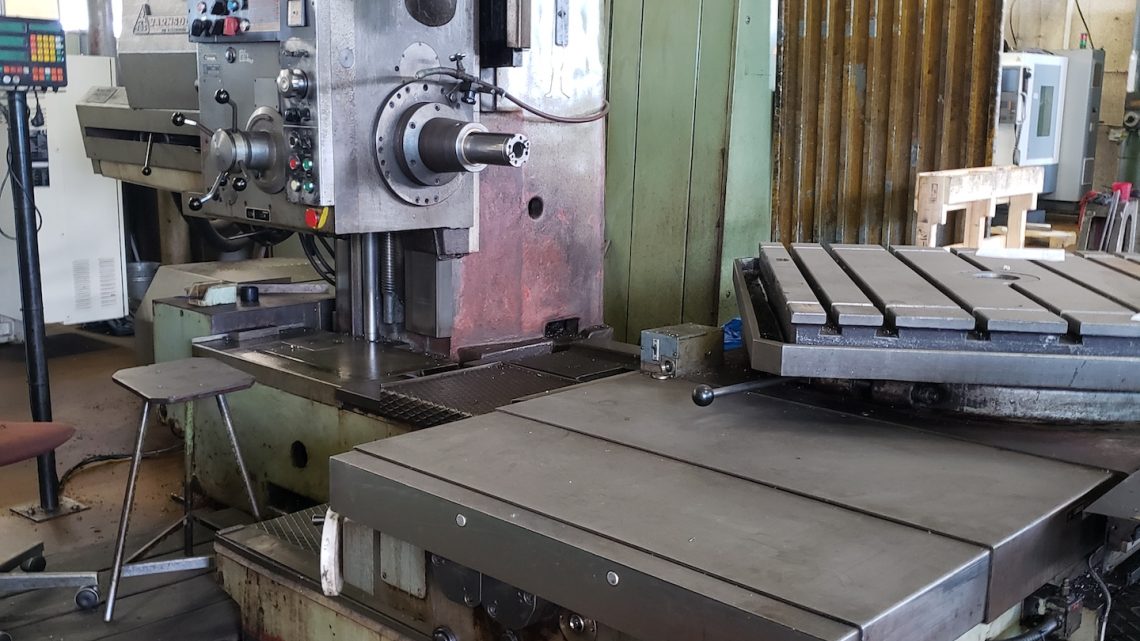
| Table & Clamping System | – Inspect table surface for flatness, wear, scratches, cracks. – Check T-slots or clamping holes: wear, damage, whether clamps fit well. – Check table rotation (if 360° table) for bearing wear, play, smoothness. – Test table load capacity (if possible): with load, see deflection or sag. – Ensure the table clamping / locking mechanisms are functioning correctly. | A poor table = poor workpiece support. Damage or sagging reduces accuracy and may lead to scrap. Clamping issues lead to shifting under load. |
| Drive Systems, Motors & Gears | – Inspect motor(s) for spindle, feed axes: noise, overheating, vibration. – Check gearbox or speed change mechanisms, belts/couplings etc. – Inspect change gears (if any) or gear reductions for wear, backlash, broken teeth. – Check lubrication in gearboxes, motors; seals, oil leaks etc. – Confirm that all speed / feed ranges work as expected (not slipping, stalling). | If the drive train is worn, you lose throughput, tool life, increased maintenance. Gear or belt failure can lead to big repair cost. Missing lubrication or leaky seals accelerate damage. |
| Control, DRO / NC / Electronics | – Identify whether the machine has a digital readout or NC control; check buttons, screens, wiring. – Check that the control (if NC / CNC) works properly: reference returns, positioning accuracy, limit/homing switches etc. – Inspect the electrical cabinet: cleanliness, whether wiring is intact, no corrosion, fans working etc. – Ask whether control electronics (relays, drives, etc.) have been replaced or refurbished. – Check spare parts availability for the control, drives etc. | Old electronics may fail; documentation or parts may be scarce. Malfunctioning controls lead to downtime; limit switches failing can lead to crashes. Wiring damage is a hidden but risky problem. |
| Coolant / Lubrication / Environment | – Inspect coolant tank (if present): cleanliness, rust, filtration, whether coolant flow is good. – Check lubrication system for the ways, spindle, table, etc.; oil supply, grease points, whether automatic lubrication (if present) works. – Check for signs of rust, corrosion on exposed metal surfaces. – Confirm environment: is the shop clean, dry, stable in temperature? Any vibration sources nearby? – Ensure chip removal / swarf guarding is in place; chips aren’t causing damage. | Poor lubrication or dirty coolant causes wear, rust. A harsh environment accelerates many problems. Swarf can damage slide ways, spindle, etc. |
| Structural Condition / Frame / Foundation | – Examine overall machine frame, table supports, bed, headstock etc. for cracks, deformation, previously repaired damage. – Check that the foundation is stable, machine is level; prior movement / transport may have caused misalignment. – Check for wear in large bearing surfaces (table rotation, etc.). – Inspect guarding, covers, safety enclosures; ensure they are intact. | Structural issues are critical: once the base is out of spec, little else matters. Misalignment due to poor foundation or damage drastically reduces accuracy. Missing guards can be both safety risk and leave parts exposed to damage. |
| Performance Tests / Accuracy Under Load | – If possible, perform test boring / milling with a representative workpiece; measure dimensions, finish, run-out. – Do repeatability tests: same operation multiple times, see variation. – Test at different points in table travel: near edges, extremes of travel to see if accuracy holds. – Warm-up machine (let run / move for a while) then retest to detect drift or thermal expansion issues. – Check spindle extension (W-axis) under load; does its extension hold alignment / rigidity? | Theoretical specs may be far from what you’ll get in actual use if wear, thermal drift, or misalignment exists. Testing under load reveals whether machine is actually usable for your work. |
| Usage & Maintenance History | – Ask how many years / hours the machine has been used; in what kind of production (light vs heavy; long runs vs intermittent). – What materials have been machined (hard alloy, cast iron, etc.). – Whether there have been rebuilds / overhauls: spindle replacement, way regrinds, control upgrades, etc. – Whether regular calibration / alignment checks performed. – Any history of crashes / abuse. | Machines used in heavy / continuous duty tend to have more wear; good maintenance extends life significantly. Hidden damage may come from misuse or lack of maintenance. |
| Spare Parts Availability / Cost | – Can you source spares for bearings, guide ways, spindle parts, controls locally or from OEM? – Are consumables included or available (chucks, tool holders, cutting tools, etc.)? – Are documentation and parts diagrams available? – What are costs / lead times for major spares? | Even if the machine looks good, difficulty in getting spares can cause long downtime or high costs. If many parts are worn and need replacement, cost adds up. |
Questions to Ask the Seller
These help you uncover hidden issues and estimate what your costs will be:
- What year is the machine, and what control / readout or NC system is on it?
- How many hours / cycles has it run? Especially spindle usage under load.
- What materials have been machined mostly? (e.g. cast, steel, alloy, etc.)
- Has the spindle ever been overhauled or had bearings replaced? When?
- What’s the condition of the table rotation (if rotating table) — bearing wear, play, etc.
- Are there recent alignment / geometry / calibration reports (squareness, travel accuracy, etc.)?
- What tool holders, fixtures, chucks are included / needed? Are they in good condition?
- Has the machine suffered any damage / crashes / transport incidents? Any structural repair done?
- What is the condition of lubrication and coolant systems? Are filters / pumps working?
- Are spare parts for control / drive / spindle etc. readily available? What do they cost?
- Can the machine be operated under power, so you can see test moves, hear noises, see vibration, etc.?
- Is the machine still properly leveled and installed, or was it moved recently?
Red Flags & Deal-Breakers
If you find any of these, either negotiate very hard or avoid unless price reflects the restoration work / risk:
- Spindle bearings that are noisy or have vibration; spindle nose or taper damaged.
- Excessive run-out or poor alignment in spindle extension / table, especially at full extension.
- Table rotation with play or binding; table bearings worn.
- Ways / guide rails with heavy scoring, deep wear, rust; binding in movement.
- Gearbox noise or speed change issues; inability to hold speeds or slips.
- Control electronics faulty or missing parts; wiring degraded; electrical faults.
- Missing safety guards, covers, or way covers, exposing critical components.
- Too much drift after warm-up or inability to maintain tolerance at different positions.
- Coolant / lubrication systems broken or neglected.
- Structural damage (frame cracks, distorted supports).
How to Judge Price vs Cost
When deciding whether it’s a fair deal, include:
- Cost of any needed repairs (spindle overhaul, way refurbishment, control replacement etc.).
- Cost of spare parts and tooling missing.
- Transport / moving / installation / leveling cost. These machines are heavy (≈ 12,000 kg) and large footprint
- Downtime / setup / calibration after moving.
- The usable precision you need: sometimes “good enough” precision in a slightly worn machine is acceptable if cost reflects that.
- What accessories or attachments are included (chucks, fixtures, DRO / NC control, safety guards etc.).