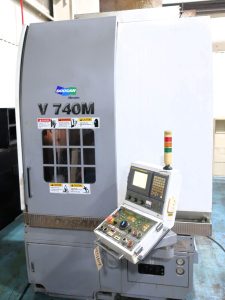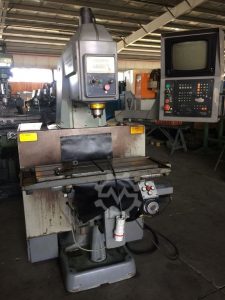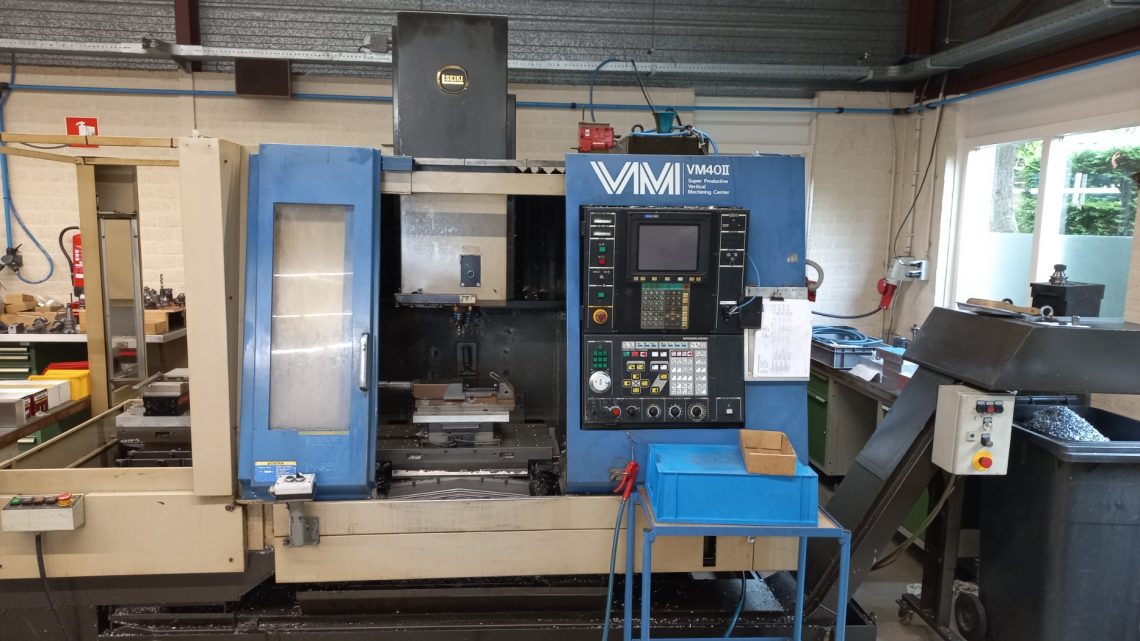
What Should I Pay Attention To When Buying a Second-Hand / used Hitachi Seiki VM 40 II?
Here’s a detailed guide on what you should pay attention to if you’re considering buying a used Hitachi Seiki VM-40 II vertical machining centre. It’s a solid, mid-size VMC, but as with any used machine there are many wear points, potential pitfalls, and things that can cost you later if you don’t check them. I’ve also pulled together what the known specs are so you have a baseline, what to inspect/test, questions to ask, and red flags to watch out for.
VM-40 II: What You Should Know Up Front (Specs / Baseline)
Here are typical or commonly quoted specs for the VM-40 II, so you can see what a “good” machine looks like / what to compare against. These can vary somewhat with the control version, modifications, and how the machine was used.
| Parameter | Typical Value / Specification |
|---|---|
| Table size | ~ 760 × 410 mm (≈ 29″ × 16″) |
| Travel (X / Y / Z) | ≈ 560 mm × 410 mm × 410 mm |
| Spindle taper | BT-40 / CAT-40 / NT-40 depending on variant |
| Max spindle speed | ~ 8,000 rpm in many versions |
| Tool changer capacity | Often 20–30 tools ATC |
| Table load capacity | Around 350 kg in some listings |
| Control system | Seicos MY-II or similar Seicos / Seiko controls in many units |
Knowing those lets you spot when a machine doesn’t meet what you require, or has likely been modified / degraded.
What to Inspect / Test In Person (or via Detailed Video / Maintenance Records)
Here are important subsystems / features and what to check for each. The more thoroughly you inspect, the less risk of surprises.
| Subsystem / Feature | Key Checks / Tests | What Happens If It’s Bad / Likely Failure Modes |
|---|---|---|
| Spindle and bearings | • Run spindle at low / medium / high speed; listen for bearing noise, vibration, check for overheating. • Test spindle run-out (both radial and axial) with test bar. • Inspect the spindle nose / taper for damage (chips, wear, corrosion). • Check spindle motor current draw under load (if possible). • Ask when the spindle bearings were last replaced (if ever). | Worn bearings badly affect finish, precision and tool life. High run-out leads to poor tolerance. Damaged taper prevents proper tool seating, vibration, poor accuracy. Replacing spindle bearings is expensive. |
| Guideways / axes / slide movement | • Move each axis (X, Y, Z) through full travel, check for smoothness, any binding, sticking or “soft” zones. • Check for backlash in each axis (measure reversal error). • With covers removed if possible: inspect ways / slides for scoring, rust, dirt, oil supply dry / blocked. • Check whether the lubrication / way oiling system is functioning (automatic lubrication if applicable). | Worn slides reduce accuracy, cause chatter, increase tool wear. Dry or rusted ways accelerate wear. Poor lubrication = faster degradation. Backlash leads to dimensional error & poor finish. |
| Control system / electronics | • Confirm which control version is installed, whether it’s Seicos or other. • Check display, buttons, pendant, screen clarity – any flicker or missing segments. • Inspect wiring in electrical cabinet: any signs of overheating, burnt connectors, corrosion. • See error logs or history: recurring alarms, servo or axis errors etc. • Verify that parameters like rapid traverse, feed, acceleration still achieve spec (or close). | Old or damaged control can be a major headache. Poor wiring or overheated electronics lead to intermittent failures. If rapid / feed performance is degraded, machining time or throughput will suffer. |
| Tool changer, tooling & clamping | • Test tool change sequence: does it mis-pick, drag, or fail to lock properly? • Inspect tool holders and tools if included: condition, wear, whether cooling holes are clear etc. • Clamp pull-in force / clamping integrity (if applicable). • Check whether the machine has had collisions with the tool changer or any damage to ATC arm. | Faulty tool change causes downtime; dragging or misaligned holders damage spindle taper. Cooling issues cause rapid tool wear. Collisions can badly damage ATC or spindle nose. |
| Table / structural condition | • Inspect table surface: flatness, wear, scratches, corrosion, condition of T-slots. • Check table movement / load capacity. • Inspect the base / frame, column: for any damage, misalignment, distortion. • Check machine leveling & foundation: is it level, anchored, stable? | Warped table / damaged T-slots reduce holding capacity / accuracy. Structural misalignment gives cumulative error. Poor foundation causes vibration, drift. |
| Coolant / lubrication systems | • Check coolant tank condition: cleanliness, presence of sludge or rust, pump functionality, filters. • Coolant lines/nozzle working; correct flow. • Lubrication for spindle, axes, slides: check if oil/greease applied, if leaks present. • Inspect seals (door, spindle, oil seals) for leaks. | Poor coolant can lead to corrosion, poor finish, overheating. Lubrication neglect accelerates wear. Leaks degrade reliability and may be messy/unsafe. |
| Rapid traverse, feed performance | • Run rapids in all axes: note speed, smoothness, whether the accelerations feel solid or sluggish. • Under load, test feed rates; see if the machine loses power or slips. • Check for any vibration during fast movements. | If drives/motors are weak, or belts/gears couplings worn, the machine may be slow or have load-induced loss of precision. Vibration under rapid travel often translates to chatter during cutting. |
| Accuracy & test machining | • If possible, machine a test part (a simple block with holes / slots) and measure dimensional accuracy, surface finish. • Do repeated machining of the same feature to test repeatability. • Measure at different positions in the work envelope (center, near limits) to see if accuracy degrades at extremes. • Warm-up the machine: run for some time then re-test same feature, look for drift. | Theoretical specs are often worse in real life. A machine that looks good may still produce poor results if axes are worn or if thermal expansion / drift is significant. |
| Usage history & maintenance | • How many hours has machine run (power on, cutting, idle)? • What kinds of parts and materials were machined (hard steel, castings, light alloys)? • Has the machine been abused or used in heavy duty / high shock operations? • Maintenance records: spindle bearing replacements, slide way regrinding, lubrication schedules etc. • Environment: was the shop clean, temperature/humidity controlled, or dirty/harsh? • Are manuals / parts diagrams available? | Machines well-used but poorly maintained are costly to repair. Harsh environments accelerate wear. Missing documentation complicates repairs and sourcing parts. |
| Spare parts availability & cost | • Are spare parts for the Hitachi Seiki VM40 II still available locally / regionally (OEM or aftermarket)? • How expensive are common wear items (spindle bearings, way covers, slides, tool holders, ATC parts)? • Is there support for the control system (spare drives, memories, display panels)? • Are manuals and schematics included or obtainable? | Sometimes older machines get very expensive to maintain if parts become rare. If the control or tools are non-standard, getting spares may require shipping or expensive OEM sourcing. |
| Facility / installation / utilities | • Check your facility compatibility: power (voltage, phase, amp rating), floor strength, height clearance, crane access. • Cooling / air / environmental controls in your shop. • Whether chip removal or coolant disposal systems are in good shape or needed. • Transportation / rigging: how hard will it be to move the machine in, install, level etc. | Underestimating facility needs (power, space, support) causes delays & extra cost. Poor transport or alignment often causes hidden damage or setup misalignment. |
Questions to Ask the Seller (Before or During Inspection)
Here are good direct questions to ask, which help uncover hidden problems or determine whether the machine is priced fairly:
- What is the machine’s manufacture year, model number / serial number (so you can trace parts & manuals)?
- How many hours / cycles has the machine had (especially spindle / cutting hours vs idle)?
- What parts have been replaced or serviced: spindle bearings, slideways, lubrication system, ATC, etc.
- What materials has it been machining primarily? Were there heavy / dramatic loads or shock cutting?
- Do you have maintenance logs, parts diagrams, service manuals, and wiring diagrams?
- What condition is the control system in? Is it fully functional? Any missing modules or features?
- How many tools are in the tool changer? Are they included? What condition are they in?
- Has the machine ever had crashes (tool colliding with workpiece, ATC collisions, axis overtravel etc.)?
- What is the condition of coolant / oil system? Any leaks? Frequency of coolant replacement and cleaning?
- Can you see the machine running under load; can I see it do a test job (or repeat a job) so I can measure output (accuracy / finish / repeatability)?
Red Flags & What Might Tip the Decision Against Buying
If you find any of these, either negotiate significantly or walk away:
- Spindle with excessive vibration, noise, or heat.
- Spindle taper / nose damaged, chipped, or worn badly.
- Excessive backlash or play in any axis that can’t be adjusted.
- Slideways with heavy scoring, pitting, rust; way covers torn or missing.
- Tool changer problems (mis-picks, failure to lock, slow or jammed).
- Rapid traverse doesn’t reach spec or axes are sluggish / jerky.
- Control electronics with visible signs of damage (burnt, corroded, wires exposed).
- Missing or severely worn common consumables (tool holders, inserts, fixtures).
- Poor or missing documentation (manuals, parts list).
- Machine located in bad environment (dust, humidity, bad floor, vibrations) without protection.