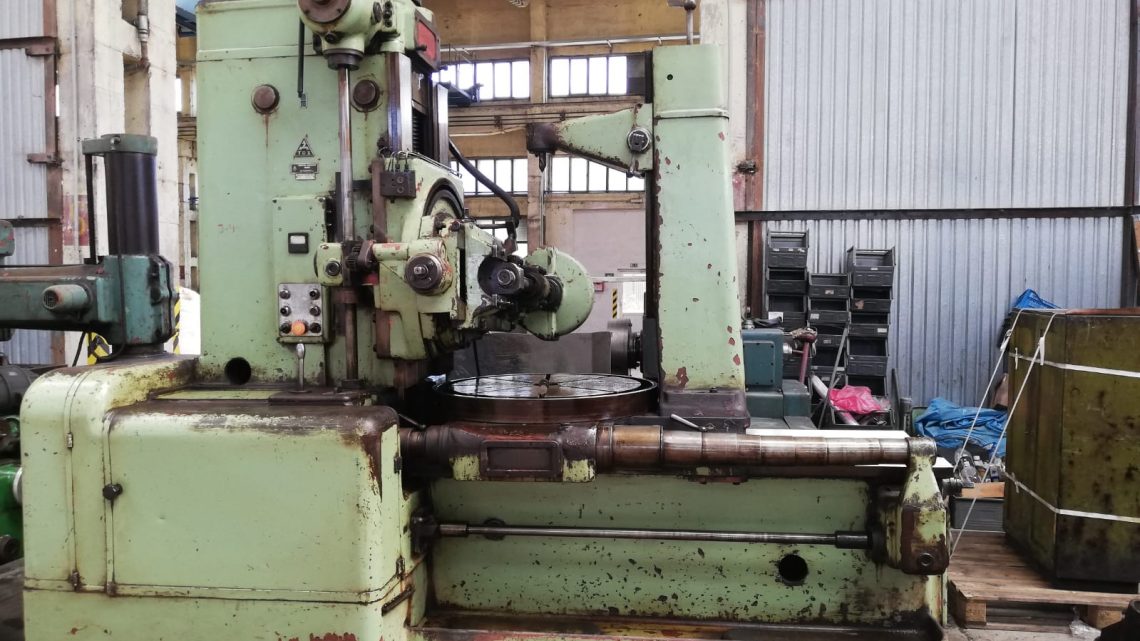
What Should I Pay Attention To When Buying a Second-Hand / used TOS FO10 Vertical Gear Hobbing Machine?
If you’re evaluating a second-hand TOS FO-10 vertical gear hobbing machine, there are many things you should check very carefully. These hobbing machines are workhorses, exposed to mechanical loads, precision demands, and wear. Below are:
- The known baseline / specs for the TOS FO-10, so you know what it should be able to do.
- What to inspect / test in person.
- Key questions to ask the seller.
- Red flags.
If you want, I can also build a checklist you can print & take with you, and find recent used-prices of FO-10s in Türkiye / Europe so you can judge offers fairly.
Baseline Specs of TOS FO-10
From various used-machine listings and vendors, these are typical specs for the TOS FO-10 (they can vary depending on configuration, year, accessories etc.):
| Spec | Typical / Common Values |
|---|---|
| Max gear / wheel diameter | ~ 1,000 mm without tailstock. |
| Max module | about module 10. |
| Width of workpiece (gear width) | ~ 400 mm. |
| Table / clamping table diameter | ~ 850 mm. |
| Milling (hob) cutter size / hob diameter | approx. up to ~ 170 mm cutter wheel / hob diameter. |
| Milling spindle speed / hob speed | ~ 20-125 rpm. |
| Hole in table (for arbor / mandrel etc.) | ~ 100 mm. |
| Machine weight / dimensions | ~ 9 tons, dimensions ~ 3.1 × 1.8-1.9 × 2.5-2.6 m. |
| Motor / drive power | Usually ~ 7.5 kW for main drive (some listings vary slightly). |
So those are the “should know / should expect” numbers. If what you’re looking at is very far off these, that could mean it’s been modified, or parts missing, or worn to the point of not meeting spec.
What to Inspect / Test On-Site or Before Buying
Here are detailed things you should inspect or test to uncover wear, misalignment, missing components, or things that will cost you later.
| Area | What to Check / Test | Why It’s Important / What Often Fails |
|---|---|---|
| Hob (Cutter) & Arbor / Mounting | • Inspect the hob cutter itself: tooth wear, chipped or broken teeth. • Check arbor mounting surfaces: look for wear, damage, fit; whether arbor is concentric & tight. • Measure run-out (radial & axial) of the hob cutter when mounted. • Inspect cooling or lubrication to the hob spindle / arbor (if applicable). • Check for backlash or looseness in the hob spindle drive / gearing. | The hob is essential for profile accuracy. Wear or run-out gives bad tooth form, noise, early failure of parts. Arbor stiffness & mount integrity are critical for finishing. Drive & backlash affect the hob motion. |
| Table / Clamping / Workpiece Holding | • Check the clamping table: surface condition (flatness, damage, wear, rust), T-slots or clamp holes are not worn badly. • Check the table bore (if present) or table hole: concentricity, wear. • If tailstock or steady support is used: check alignment, sliding, locking, whether the height / axis is aligned with hob head. • Check clamping / fixtures / mandrel supports; whether required accessories are present. | Improper or worn holding leads to run-out, wobble, inability to machine large gears accurately. Tailstock misalignment causes taper or axial run error. Missing fixtures add cost. |
| Feed Slides, Slideways, Gibs, Lead / Change Gears | • Move the work table / axial / tangential feeds through full stroke; listen & feel for binding, uneven movement, stick-slip. • Inspect slideways/gibs for wear, pitting, scoring, rust or deformation. • Check the gears (change gears, indexing gears) for wear: tooth profile, backlash, any noise when moving. • Test backlash in feeds, reversal error. • Check lubrication system for slides / gears; whether oil / grease supply is clean and properly maintained. • Check that the vertical / tangential feed is accurate and smooth. | Worn slides or feeds degrade positional accuracy, cause tooth spacing error, increase vibration, produce poor surface finish. Backlash in change gears or feeds makes precise control hard. |
| Spindle / Milling Head, Angular feeds (if any) | • Check the milling spindle (hob drive): noise, vibration, temperature under load, spindle bearings. • Inspect any auxiliary spindle (if milling / drilling feature attached) or tangential head (if machine has one). • Check whether the vertical range of the milling slide is fully functioning, free of binds. • If there’s a tangential head, test it: alignment, load capacity, run-out. | These affect gear tooth depth, finish, accuracy in face width etc. If the auxiliary tooling is worn, performance under load suffers badly. |
| Change Gear Sets, Indexing Accuracy / Dividing | • Are change gears complete, correct for module ranges you need? Condition of gears: teeth wear, backlash. • Test the dividing / indexing mechanism: can it position accurately; is repeatability acceptable. • Check whether any backlash in the dividing mechanism or indexing head; whether there’s looseness. • If fine/partial indexing or continuous indexing needed, test whether that capability is present and working. | Change gears / dividing heads are crucial to produce correct tooth count and spacing. Worn gears or loose indexing cause gear quality defects (pitch variation, etc.). Without good dividing indexing, certain gear jobs may be impossible or yield bad quality. |
| Motor / Drive / Power Transmission | • Inspect motor condition: does the hob drive motor deliver full power; any unusual humming, overheating, vibration. • Check the power transmission: belts, couplings, gearboxes; look for play, noise, lubrication, wear. • Inspect electrical system: switchgear, wiring, control panel, motors; are there signs of burn, wear, corrosion. • Check motor data: whether the motor is original spec or been changed; current draw etc. | If the drive is underpowered or worn, machine may struggle under heavy hob cuts. Transmission wear reduces precision. Electrical problems may show up later as breakdowns. |
| Accuracy / Test Gearing Cuts | • If possible, hob a test gear and measure tooth profile, pitch, run-out, concentricity etc. • Compare results in different parts of the table (center vs near the edges) to see if accuracy holds throughout. • Check gear width accuracy, face finish. • Warm-up the machine and test for drift. • Check for vibration or chatter during cutting. • Check hob cutter diameter reduction (wear) and whether that is accounted for. | These are the ultimate test: no matter how good everything looks, if your finished gears are out of tolerance, it’s no good. Warm-up drift or inaccuracies reveal whether machine has reliably maintained precision. |
| Physical Condition & Cleanliness | • Look for rust, corrosion especially on slides, table and wearing surfaces. • Inspect for oil / coolant leaks, cleanliness of reservoirs / sumps. • Check guards, covers, whether chips / swarf have been allowed to damage surfaces. • Condition of the machine structure (bed, frame, vertical column, etc.) for any distortion or damage. • Check condition of bearings, bushings etc. • Inspect environment it was used in (dusty, wet, temperature extremes). | Wear from rust or poor maintenance can degrade accuracy significantly. Swarf or chips in wrong places cause scratches. Damage to machine structure is often expensive to fix or realign. |
| Maintenance / Usage History | • How many operating hours / hob-cutting hours; how many hours under load vs idle. • Materials machined: hard/abrasive materials accelerate wear. • Maintenance records: slide lubrication, hob spindle bearing changes, gear maintenance, alignment checks, cleaning. • Any history of mechanical damage (collisions, overloads) or emergency stops, etc. • Whether parts or tooling sets (hob cutters, change gears, fixtures) are included or need to be purchased. | A well-maintained machine will last longer and perform better. Knowing what has been done helps you estimate upcoming costs. Missing tooling or accessories can add up. |
| Spare Parts / Tooling Availability | • Are spare hob cutters, arbors, change gear sets, dividing head parts, bearings etc. available & at what cost. • Are manuals, documentation, gear/hob specifications included. • Whether support exists locally (or regionally) for parts, alignment, repairs. • If any custom or rare parts have been modified/change gear sets altered, etc. | If parts are rare, the machine may sit idle for delays. Having documentation helps with maintenance and upgrades. Custom or missing parts drive cost up. |
| Facility Fit / Installation Requirements | • Weight (~9 tons), size; confirm whether your facility can support transport, foundation, floor bearing. • Power supply: correct voltage, phase, amperage; stable supply. • Environmental conditions: temperature stability, humidity, dust, vibration. • Ability to support regular alignment checks, jigs, calibration tools. • Access for maintenance (hob change, gear replacement, lubrication points). • Whether the machine is located in a place where you can test it under load / cut gears. | Even a “perfect” machine will fail or degrade quickly if installed poorly. Moving & aligning heavy precision machines is not trivial. Testing is often hard without being on site. |
Questions to Ask the Seller
To reduce risk, ask the seller to provide information / evidence on:
- Exact model, year, serial number — this helps track down parts and documentation.
- Hours of use — specifically hob-cutting hours / hours under load vs idle.
- What modules and gear sizes were most often used (e.g. did they cut large diameter, heavy gears or small gears); what materials.
- When was last major maintenance done — e.g. hob spindle bearings replaced, slides aligned, dividing head calibration, change gear refurbishing.
- Condition of change gear set — are all gears present; any missing or replaced; condition of teeth.
- Does the machine come with tooling / accessories — arbors, fixtures, hob cutters, steady rest or tailstock, dividing head etc.
- Any known issues — loose bearings, worn slides, noise, misalignment, slipping, vibration etc.
- Availability of documentation / manuals / spare parts — especially for hob modules, arbors, change gears, indexing, etc.
- Can the machine be demonstrated under load — to cut a gear and show finish, accuracy and stability.
- Transport & installation condition — where it’s installed; whether it’s been moved before; whether foundations / leveling are intact.
Red Flags / When to Walk Away or Negotiate Hard
- Hob spindle or arbor with excessive run-out or vibration, especially under load.
- Missing key accessories: change gear set incomplete; missing arbors, steady rest, tailstock etc.
- Worn or damaged slides / way surfaces that show rust, pitting, scoring—especially near table, feed slides.
- Backlash in feeds / dividing head / change gears that’s too large to adjust.
- Poor dividing / indexing accuracy. If indexing has wear or slop, gear pitch or spacing will suffer.
- Motor / drive issues: underpower, overheating, noisy, skipped teeth (in change gears).
- Electrical problems: degraded wiring, non-working controls or hard to service electronics.
- No documentation, manuals, or schematics; makes repair much harder.
- The machine located in a poor environment (humid, exposed to elements, bad dust, corrosion) that may have already damaged components.
- If the quoted spec doesn’t include what you need (gear diameter, module range, width) and upgrading is impossible or costly.