What Should I Pay Attention To When Buying a Second-Hand / used STAR SV38R?
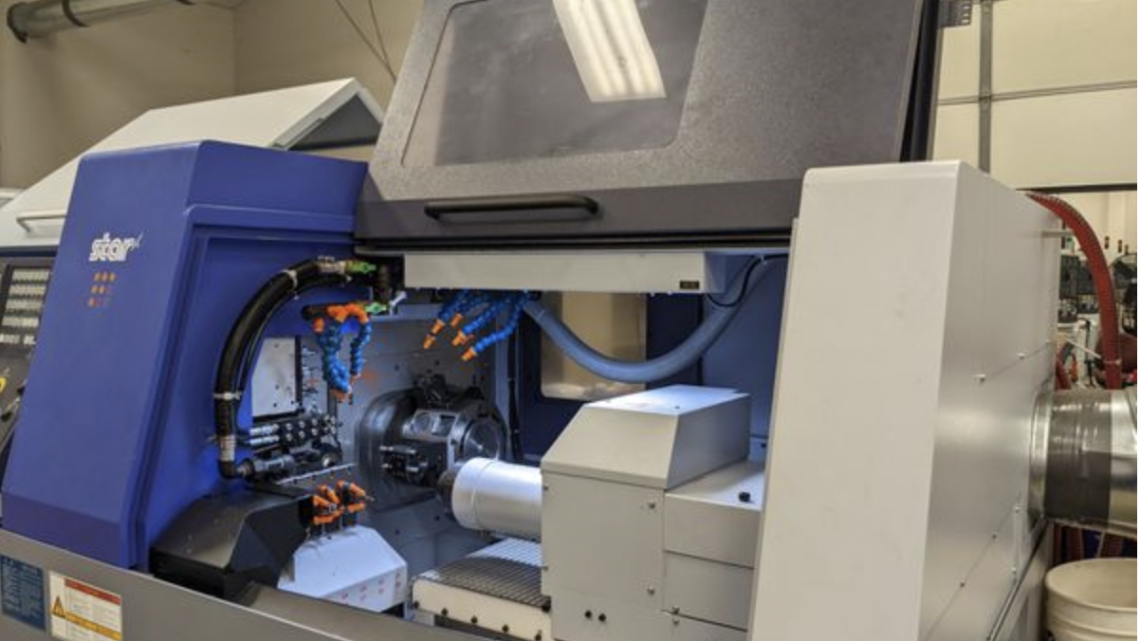
If you are looking to buy a second-hand STAR SV-38R (Swiss-type / multi-spindle / automatic lathe), there are many technical, mechanical, and logistical things to check. This is a complex machine, with many axes, tools, and moving parts, so a clean inspection & test is very important. Below is a detailed guide: what its specs are (so you know what to verify), what to pay attention to, what common problems show up, and what to ask the seller.
What is a STAR SV-38R — Key Specifications
Knowing the specifications helps you check whether what you’re buying matches its original capability and whether it’s suitable for your production.
From the manufacturer and listings:
- It’s a Swiss-type automatic lathe with a max turning diameter of 38 mm (≈ 1-1/2 in).
- Bar capacity: up to 38 mm.
- Spindle speed: up to about 7,000 rpm.
- Tooling: multiple tools; includes gang-type tool posts, driven tools, turret type with ~10 stations in some versions.
- Axes: many axes — X, Y, Z for multiple tool posts; also C-axes; sometimes “back-working” units / intercepting spindle.
- Rapid feed rates vary among axes. For example, in some versions, X1/X2/X3, Y-axes, Z-axes reach up to ~30 m/min in certain axes; slower in others.
- Controller: Fanuc Series 31i-MODEL B5 in many listings.
- Weight & size: around 4,300 kg; dimensions approx 3320 × 1440 × 1865 mm in many cases.
- Utilities: it has hydraulic unit, pneumatic unit, coolant, central automatic lubrication, collets, bar feeder, etc.
Knowing these baseline specs tells you what to test, and to check whether the advertised machine matches what you need (or what you are being told).
What to Pay Attention To / Inspect Carefully
Here are the main components and potential trouble spots. When examining a used SV-38R (or getting info from the seller), use this list to check for issues or to ask about.
| Area | What to Inspect / Test | Why It Matters / What Could Go Wrong |
|---|---|---|
| Main & Intercepting Spindles | • Check spindle runout (radial & axial) on both main & intercepting spindles. • Check power (continuous and short-term) of the spindle motors. Are they delivering rated RPM under load? Any overheating? • Inspect collet/chuck condition; look for wear or damage. • Check spindle bearings: unusual noise, vibration. • Check C-axis functioning (rotation, indexing) if machine has one. | If spindles are worn / bearings are bad, you lose accuracy, surface finish; replacing spindle parts is costly. C-axis failures also reduce capability. |
| Tooling: Tool Posts, Turrets, Driven Tools | • Check condition of all tool posts / turret stations; are tools sharp & properly aligned? • Check driven tools (live tooling): do they spin up properly? Any vibration? Bearings? Speed capability. • Inspect tool holders, inserts; check for excessive wear. • Verify that tool changes are reliable and timed; check alignment of turret with spindle and tools. | Worn or misaligned tooling leads to chatter, bad surface finish, scrap. Live tooling failures are particularly costly. |
| Axis Motions (X, Y, Z for multiple stations) | • Move each axis through its full stroke; check for backlash, slop, consistency. • Check guides, linear rails, bearings; check the lubrication (automatic or manual). • Check that motion is smooth without jerking, binding. • Verify speed rates and accelerations of different axes as spec’d. | If axes are sloppy or worn, precision suffers; cycle times may drop; repairs are expensive. |
| Bar Feeding / Guide Bush / Revolving Guide Bush | • Bar feeder: check feed accuracy, condition of rollers, drive, sensors. • Guide bush / revolving guide bush: condition of bushings, air purge, seals. • Check that bar diameter tolerance matches your stock; check for any wear or looseness. • Check stability of material with back-pressure or vibration. | Worn bush causes vibration, chatter, spindling issues, poor finish, scrap. Bar feeder problems lead to downtime. |
| Intercepting / Back-Working Units | • If there is a back-working / intercepting spindle/unit, check its alignment and operation. • Check tools in that unit: driven tools, live tools, driven turrets etc. • Test for runout, tool chatter, ability to maintain finish under cutting load. • Check air/purge and cooling for that toolset. | These units add capability; if they are out of alignment or poorly maintained, parts made in those operations will be bad. |
| Coolant / Lubrication / Pneumatics / Hydraulics | • Coolant system: pump operation, cleanliness, filters, coolant condition. • Automatic lubrication system: are all lubes going where they should? Any dry guides? • Pneumatic and hydraulic systems: check for leaks; cylinders, valves functioning well. • Collet air purge, spindle clamp air etc. | Poor coolant, lubrication leads to premature wear. Air/pneumatic failures cause tooling or collet problems. Leaks = maintenance headache. |
| Electronics / Controller / Wiring | • Check the control unit (Fanuc or other): does it boot properly? Are there any error logs? Are the firmware / software versions up to date or custom modified? • Inspect wiring harnesses for damage, corrosion, burns. • Check limit switches, sensors (temperature, position), safety interlocks. • Check the operator panel, interface: works cleanly, buttons, touchscreens etc. | Electronics are vulnerable; replacing them or finding parts can be expensive or hard. Poor sensors or bad wiring causes intermittent issues. |
| Structural / Body / Machine Frame | • Check for corrosion, especially areas exposed to coolant, chips, etc. • Look for any deformation or damage (e.g. from collisions). • Check guards, doors, covers; ease of opening/closing. • Inspect chip removal path, chip trays, conveyors, cleaning systems. | Structural damage affects precision. If guards/covers missing, risk of damage or safety issues. Chip accumulation causes wear or overheating. |
| Precision / Alignment Tests | • Test actual machining: cut a test part, check dimensions, tolerances. • Run straight turning at different lengths, check taper / straightness. • Check surface finish at various spindle speeds. • Check angular holes or features if using B-axes or live tools. | Even if specs seem good on paper, real performance matters. Deviations show if machine is worn or mis-adjusted. |
| History & Maintenance | • Ask for working hours / cycles or similar metric; not just years. • Ask about maintenance history: when bearings were replaced, when collets serviced, when lubrication system overhauled, etc. • Any history of major components replaced (spindles, drives, turrets, etc.)? • Has machine been idle long periods? Long inactivity can harm seals, lubrication, etc. | A well-maintained machine will cost less in unexpected repairs. Hidden issues often come from neglect. |
| Spare Parts / Tooling Availability | • What spare parts are included (collets, tool holders, inserts, live tools)? • How easy is it to get parts locally or by import for key items (spindles, guides, drives)? • Is there documentation (manuals, parts lists, service diagrams)? • Are software backups / control manuals available? | If parts are hard to get or expensive, downtime and repair cost go up. Documentation helps maintenance. |
| Power / Facilities Requirements | • What voltage / phase is needed? Is that compatible with your facility, or will you need transformers etc. • Requirements for utilities: air (pressure / volume), coolant, filtration, chip evacuation, power draw • Environmental conditions: temperature, humidity, cleanliness. Swiss lathes are sensitive to temperature changes, vibrations. | If you don’t have the required infrastructure, costs to upgrade or run can be high. Poor environment reduces accuracy and service life. |
| Safety / Compliance | • Safety interlocks, emergency stops, guards: are they present and working? • Cleanliness and safety of chip splash, coolant spills etc. • Check that machine meets any regulatory/safety standards in your country (electrical safety, EMC etc.). • Noise / ventilation / fumes etc. | Ensures safe operation and avoids regulatory risk. |
Common Problems & Weaknesses for STAR SV-38R
From listings, industry knowledge, and user feedback, here are recurring issues or weak points you should be especially mindful of.
- Wear / misalignment in the guide bush / revolving guide bush: because the bar stock is closely supported, wear here causes vibration, poor finish.
- Collet/clamp wear: both main and intercepting spindles often use high precision collets. If they are worn, accuracy drops or parts slip.
- Tool post / turret backlash or looseness; live tool stability (driven tools tend to suffer from vibration, heat, bearing wear).
- Bar feeder issues: misfeed, inaccuracies, sensor failures, physical wear.
- Advanced electronics / control firmware: sometimes custom modifications or old firmware cause bugs; replacement parts or control boards may be expensive or rare.
- Lubrication / coolant leaks or failure; clogging of chip path; contamination of coolant (especially in Swiss machines where coolant often is delivered very close to cutting area).
- Idle-time deterioration: if the machine hasn’t been run for long periods, seals, bearings, pneumatics/hydraulics may be dry or corroded.
- Heat management: many Swiss type machines are sensitive to ambient temperature; thermal drift can affect precision.
Questions to Ask the Seller / Tests to Run
Before you commit, make sure to ask / arrange these tests.
- Operational Demonstration
- Ask to see the machine run a full cycle with material similar to what you plan to use. Include all features: main spindle, intercepting spindle, live tools, turret, etc.
- Watch for stable cutting, chatter, sound, heat, vibrations.
- Test Parts / Sample Cuts
- If possible, cut test parts and measure tolerances. Check diameter, concentricity, finish, length accuracy.
- Test both spindles (main & intercepting).
- Measure Run-out
- Use dial indicator or better to see spindle taper run-out. Small is good.
- Check Tooling & Collets
- Inspect included collets, tool holders, driven tools. Ask their wear history (how often replaced, etc.).
- Check Axis Backlash & Motion
- Move axes manually or in jog mode; check for backlash or looseness.
- Inspect Bar Feeder & Guide Bush
- Feed a bar, see how it guides; look for vibration or chatter, measure off-centerness.
- Inspect Electronics & Safety
- Boot up control. Check alarms, error logs. Try limit switches. Test E-stop.
- Check Cooling, Lubrication & Air
- Ensure coolant is clean; filters not clogged. Lubrication lines working; not dry. Air supply, purge, pressure adequate.
- Inspect Physical Condition
- Frame, guards, covers. Any visible damage from crash. Corrosion. Chip buildup.
- Documentation & Spare Parts History
- Manuals, schematics, parts lists. Past maintenance, hours of operation. Things replaced.
- Facility / Power Matching
- Confirm that your workshop can meet the power, air, coolant, floor weight, space, etc.
- Cost of Transport / Installation
- The SV-38R is heavy (~4.3 tonnes) and large. Moving, rigging, leveling, installing can have significant cost.
What Makes a “Good Buy”
To help you judge whether a particular used SV-38R is worth the asking price, here are some red flags (which lower value) and green flags (which add value):
| Green Flags | Red Flags |
|---|---|
| Recent replacement of wear parts: guide bush, collets, driven tool bearings, coolant pump, filters. Low hours of actual cutting (not just powered on). Good documentation, all manuals and parts lists. All axes working well; minimal backlash. Bar feeder in good condition. Included tooling / collets / live tools that suit your production. Control system up to date; firmware supported. | High hours / heavy duty use without recent maintenance. Missing or badly worn collets or tooling; overpriced for parts you’ll need soon. Electronics boards that are obsolete or custom that are hard to replace. C auditor damage from crashes or collisions. Poor coolant or lubrication condition; signs of neglect. Bar feeder or guide bush badly worn. Omitted safety devices or guards. Has been idle for long time with no preservation. |