22/09/2025
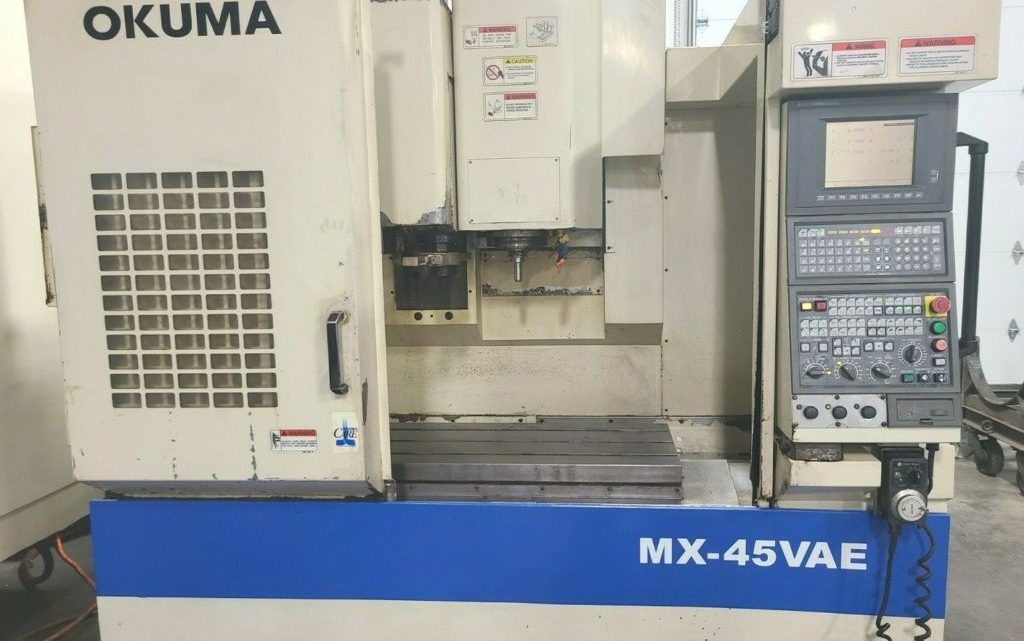
What Should I Pay Attention To When Buying a Second-Hand / used Okuma MX-45VAE – Year 1999?
If you’re considering buying a 2nd-hand Okuma MX-45VAE (1999) vertical machining center, there are a lot of things to check carefully. Older machines can be solid performers, but wear, improper maintenance, or missing parts can lead to unexpected costs. Below is a checklist of what to look out for + what questions to ask. I can also tailor it for Turkey / your site if you want.
What to check – Mechanical & Structural
- Spindle Health
- Check spindle run-out (radial & axial). Excessive run-out = worn bearings or taper damage.
- Listen for unusual vibration, noise, or overheating during spindle running.
- Check spindle overload alarms or if spindle fails to reach rated RPM. Some owners have reported problems with “spindle motor overloaded” alarms.
- Make sure spindle cooling / lubrication systems work (motor fans, coolant supply, thermal protection).
- Way Guides, Ballscrews, Linear Rails
- Look under way covers; check condition of way covers and cleanliness. Dirt / chips = accelerated wear.
- Check if lubrication (grease or oil lines) to ways is present and functional. Some users report grease lines to linear rails being empty, which causes wear.
- Measure backlash in axes (X, Y, Z) to see if ballscrews are worn.
- Tool Changer / ATC Function
- Test full tool change cycle. Does the tool magazine arm move smoothly? Any sticking or misalignment?
- Check orientation of spindle (if required for tool changes) and whether ATC logic is intact. Some reports of stuck tool changers when spindle orientation is lost (E-stop etc.).
- Check for parts availability for ATC and magazine.
- Control System / Electronics
- Is the control (OSP-700M, etc.) fully working? Are there lots of alarms? Are all panels, indicators, switches, displays ok?
- Ask about history of electrical issues, replacement of boards, battery backups, etc.
- Check if the interface (language, parameter menus) is as desired and whether documentation/manuals are present. Some people have trouble changing interface language etc.
- Hydraulic, Pneumatic, Cooling, Lubrication Systems
- Condition & cleanliness of hydraulic oils, filters. Any leaks?
- Are coolant tanks clean? Are coolant pumps operational? Are filters good?
- Lubrication lines/tanks for way lube, spindle lubrication, etc. Ensure they have been maintained.
- Cooling for spindle and motors should be functional.
- Leveling & Foundations
- Machine must be properly leveled; being out of level causes uneven wear and accuracy issues.
- Foundation & mounting—vibration, settling can damage.
- Accuracy & Alignment
- Check workpiece finish in precision cuts; measure tolerances on sample jobs.
- Squareness of axes; test via dial indicators or precision tools.
- Test table flatness / alignment; also check feeder or pallet if present.
- Operating Hours and Usage History
- How many hours has it run? Heavy use vs light? Has it been frequently idle (long periods can also harm some systems if unused)?
- Maintenance history: any major overhauls, spindle replacement, ballscrew replacement, control repairs.
- Wear on Consumables & Replaceable Parts
- Worn spindle taper, chuck (if relevant), tool holders: condition matters.
- Condition of way covers, seals, wipers, guards.
- Condition of belts, couplings, hoses.
- Safety Features & Guards
- Doors, interlocks, shields, emergency stops: do they function? Are safety systems intact?
- Parts & Support
- Can you still get spare parts locally (for Taiwan, Europe, etc.) or imported?
- Manuals, schematics: do you get them? Are they in a language you can use?
- Know if specific parts (spindle bearings, ATC elements, way covers) are costly or long lead time.
Specific Known Issues for Okuma MX-45VAE
From forum reports etc.:
- Tool changer jams or gets stuck if spindle orientation is lost (after E-stop, power off during ATC).
- Spindle overload alarms: for example “Vac Overloaded” or “1057 A Spindle Motor overloaded” when spindle warms up or after high load. Possibly due to thermostat issues or cooling issues.
- Grease lines to linear rails sometimes empty, leading to poor lubrication.
- Way covers often get chip buildup, damage; poor chip evacuation can cause damage to guides.
What Questions to Ask / What Tests to Do
- Request to see the machine in operation: ideally run a job that’s similar to what you’ll do.
- See full startup, warm-up, spindle up to max RPM, test under load.
- Ask for maintenance records.
- Ask what consumables have been replaced recently.
- Check the alignment and accuracy with test pieces or fixtures.
- Ask about the environment: temperature, humidity, dust / chip conditions. Machines used in harsh environment may have more wear.
- Ask about spares: what inclusions (tool holders, fixtures, manuals, spare parts) are part of the deal.
What Settling / Pricing Considerations
- Older machines might look cheap, but repair costs for spindles, ATC, electronics can be high.
- Factor in transport, installation, re-leveling, alignment, possible rebuilds.
- If some parts are missing, factor cost of acquiring them.