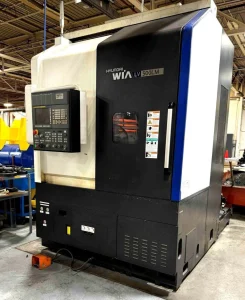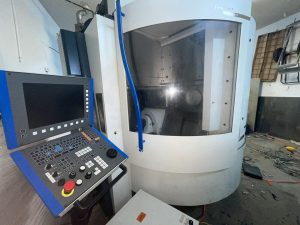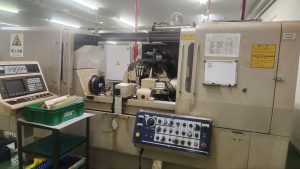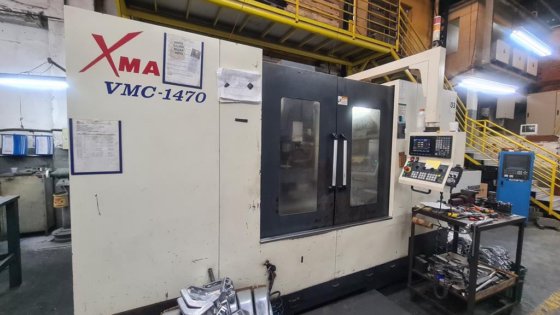
What Should I Pay Attention To When Buying a Second-Hand / used MAXMILL VMC-1470 – CNC Vertical Machining Center?
Here’s a detailed guide on what to look for when buying a second-hand MAXMILL VMC-1470 (a vertical machining center). Knowing its specs helps you verify the seller’s claims, and being thorough in your inspection will help avoid costly surprises.
What the VMC-1470 is / Key Specs to Know
First, some baseline specifications and features of the VMC-1470 so you know what to check vs what you’re being told.
| Feature | Typical / Standard Spec |
|---|---|
| X-Y-Z travel | ~ 1,400 mm × 700 mm × 600-630 mm (X × Y × Z) |
| Table working area / load | ~ 1,550 × 650 mm; max table load ~ 1,400 kg |
| Spindle type & speed | Often belt-drive; speeds vary (standard often ~8,000-10,000 rpm, optional up to 12,000 rpm belt or 15,000 rpm direct drive) |
| Tool shank / taper | BBT-40 standard; optional BT-50 on some machines |
| Tool magazine capacity | ~ 24 tools (arm type) in many versions; also 16-tool armless in some configurations |
| Positional accuracy / repeatability | Positioning ~ ±0.005 mm; repeatability ~ ±0.003 mm in many published data |
| Machine weight & footprint | ~ 8,000-10,000 kg; floor / shipping dimensions are substantial. |
What to Pay Attention To / Check Thoroughly
Given those specs, here are what you should inspect, test, or verify when evaluating a used VMC-1470. Some are general checks for any used VMC, others are more specific to this model.
| Area | What to Inspect or Test | Why It’s Important / Common Issues |
|---|---|---|
| Spindle & Taper | • Check for spindle run-out (both radial & axial), especially at the nose and along the taper. • Listen for bearing noise or vibrations when running. • See how spindle speed ramps up under no load and under light load. • Inspect whether coolant through spindle (CTS) is working (if the machine is equipped) and whether sealed well. • Check for overheating, unusual heat around spindle bearings. | Spindle problems are among the most expensive failures. Worn bearings or misalignment destroy precision, increase reject rates, and may force spindle rebuilds. CTS adds complexity and cost if not functioning properly. |
| Guides / Ways / Box-Way Structure | • Inspect the X, Y, Z guideways for wear: look for shiny spots, scoring, dirt / chips embedded, rust. • Check lubrication: are automatic lube lines working? Is grease or oil supply clean? • Check box-ways (especially if used under load) for straightness, warping, sag. • Check for alignment between axes, whether squareness and tramming are good. | Worn guides reduce accuracy, cause chatter, accelerate wear elsewhere. If the box-way (especially in Z or heavy cross-rail) is warped or damaged, alignment is off and precision suffers. |
| Tool Magazine / Tool Changer | • Does the tool changer/magazine work smoothly? Are there mis-feeds or dropped tools? • Check the condition of tool holders (BT-40 or BT-50) for wear, cleanliness, correct seating. • Is tool change timing reasonable? Tools fully seated and released without excess play. • Check magazine capacity and whether tools heavier / longer than spec cause issues. | Mis-aligned or worn tool holders cause poor machining accuracy, tool breakage. Tool changer problems = downtime. If heavier or longer tools are used, check whether machine is specified for them. |
| Controller & Electronics | • Inspect the CNC control: check screen, buttons, touch panel etc. • Check error/alarms history. • Check whether limit switches / homing / zeroing / interlocks work correctly. • Inspect wiring harnesses, connectors for corrosion, damage, burnt insulation. • Backup software / firmware: is there access to manuals, schematics, parts? • Heat dissipation of electronic cabinet; any signs of water damage, condensation. | Electrical/electronic problems can be subtle but debilitating. Without good support or parts, minor failures become major. Control failure leads to production stops. |
| Feed / Rapid Motions & Motors / Drives | • Move the axes through their full travel at both feed and rapid speeds. Check for smoothness, no binding, consistent speed. • Listen for unusual sound under load. Check accelerations. • Measure backlash or deflection (e.g. in ball screws / drives) in X, Y, Z. • Check the condition of belts (if belt drive spindle), pulleys, gears. • Motor condition (overheating, vibration). | Drives and axes determine how fast, accurate, and reliable the machine is. Wear here directly reduces precision and increases cycle times. |
| Cooling / Lubrication / Fluid Systems | • Coolant tank condition: cleanliness, rust, bacterial growth, pump performance. • Lubrication system (way lube, spindle lubrication, any grease supply): do lines/hose work, no blockages or leaks. • Filters for coolant and lube: condition. • Check whether machine has spindle oil cooler; is it working? • Check chip conveyor or chip management; are splash guards and cover guards in place? • Check for coolant through tool holder / spindle if optional and whether function works. | Poor coolant or lubrication causes overheating, wear, seizure. Also impacts finish, tool life, spindle health. Chips left on ways or in slides accelerate wear. |
| Accuracy / Test Machining | • Cut sample workpieces similar to what you plan to do (same material, size). Measure key dimensions: flatness, parallelism, cylindrical surfaces etc. • Check tolerance around the full travel of axes (long travel parts). • Test for surface finish under different spindle speeds / feed rates. • Check tool probing (if present), auto tool measurement / work piece measurement if installed. • Thermal behavior: after machine has run some time, does accuracy drift? | Even if machine “looks good”, machining test reveals wear, misalignment, heat drift etc. Tool measurement / probing helps reduce setup time if working on precision work. |
| Structural / Physical Condition | • Look for signs of abuse: chips embedded in covers, rust, impact damage. • Check the condition of guards, doors, panels. • Look for coolant leaks around spindle head, base, seals. • Inspect the bed/table T-slots: are they worn, damaged, deformed? • Check if the spindle head or ram can move vertically without binding. • Inspect the base / foundation: has the machine shifted or subsided? Floor leveling. | If the structure is damaged, warped or misaligned, precision suffers. Leaks or lack of level also lead to increased wear. |
| Utilities & Fit with Your Shop | • Power requirements: voltage, phase, amp draw. Do you have capacity? • Air supply (if required) and quality. • Cooling / ventilation; handling chip removal, waste. • Floor space, crane or rigging needed to get it in. Weight and footprint. • Access for maintenance. • Do you need any upgrades (controller, spindle, tool changer etc.) to meet your requirements. | Even a good machine can be costly if you can’t install it properly or don’t have infrastructure. Upgrades/substitutions cost time and money. |
| History, Hour Count & Usage | • How many hours total; how many hours cutting vs idle. • What material was being machined (steel, aluminum, cast iron, etc.). Harder materials tend to accelerate wear. • Maintenance history: how often spindle serviced; when ballscrews replaced; when lubrication flushed; when belt/pulley maintenance done. • Was machine in continuous production, or idle long periods? Idle time can cause seals to dry, rust. • Environment: temperature swings, humidity, dust, constant coolant splash etc. | Good history reduces risk. Heavy usage without maintenance increases risk. Poor environment accelerates wear. |
| Safety / Compliance | • Are safety interlocks, emergency stops present and functioning? • Are guards and splash protection all present / in good condition? • Is the electrical enclosure safe, grounded; wiring up to standard? • Is the lighting good; is operator access ergonomic? • Protection against coolant splash, chip ejection etc. • Are there any regulatory requirements for emissions, noise or insulation in your country and does the machine comply? | Safety is important both for operator and regulatory compliance. Missing safety features can cost you down the line. |
| Spare Parts / Support & Documentation | • Does the seller provide manuals, wiring diagrams, parts lists? • Are spares available locally for key components (spindle bearings, belts, electronics, motors)? • Is the controller still supported (firmware updates, replacements)? • Tooling / fixtures that come with machine; are holders matched, condition known? • Are consumables (if needed) easily acquirable? | If parts are hard to get, downtime or repair cost can be very high. Proper documentation helps maintenance, troubleshooting. |
Specific Weak Points / Things MAXMILL VMC-1470 Might Be Prone To
Given what is published and what users have reported for similar large VMCs, plus the design of the VMC-1470, watch especially for:
- Degradation of box-way surfaces over time (wear, scoring) especially under heavy loads. Because MAXMILL VMC-1470 uses large massive castings and box-ways, distortion or wear in those surfaces can reduce precision significantly.
- Spindle belt wear (if belt-drive machine), pulleys alignment. If the belt has stretch or damage, you may get vibration, less power at high RPM. Belt drive vs direct drive models have different maintenance issues.
- Heat distortion issues: particularly in long or heavy jobs, or when machine has been run without adequate cooling / temperature control. Thermal drift in axes is common in large machines. Also check spindle cooling, oil coolers, whether machine has coolant-through spindle or not, and whether that function still works.
- Accuracy loss over full travels: even if small movements are okay, large traverse distances may misalign due to wear, backlash, sag. Check for Z-axis sag, head/travel droop.
- Tool changer errors: dropped tools, poor clamping, magazine indexing errors. Because heavier tools or longer tools may stress tool changer.
- Electronic / CNC controller age or obsolescence: panels, firmware, spare boards might be harder to get. Look for evidence the control has been maintained, backups made.
- Misalignment of table flatness or leveling: because table size is big and loads heavy, if not correctly leveled, performance across the bed can vary.
- Coolant contamination: rust, chips, bacterial/biological growth leading to pump or piping blockages; impact on finish, corrosion.
- Lubrication system degradation: blocked lines, worn pump, dried grease. If the machine has been idle, lube might have deteriorated.
Questions to Ask the Seller / Tests to Run
Before buying, either visit the machine or arrange a detailed inspection. Here are specific tests or questions to bring up.
- Run a Complete Test Job
- Use material similar to what you plan to machine. – Use a variety of tool sizes, lengths. – Include heavy cuts and fine finishing passes. See how machine handles variation. – Monitor vibrations, noise, heat.
- Measure Run-out & Tolerance
- Run a tool at various points on the bed; measure run-out and dimensional accuracy across the whole travel. – Use a test bar or dial indicator to see straightness.
- Verify Spindle Speed & Power Under Load
- Does spindle reach rated RPM under load? Does it maintain speed under cutting? – Does spindle cultivate any overheating?
- Check Tool Change & Tool Holding
- Cycle the tool changer multiple times. Monitor change time, correct seating, any mis-alignment. – Inspect tool holders for run-out.
- Check Motion & Drives
- Jog axes at different speeds. Look for binding, stuttering, unevenness. – Test rapid moves with full load if possible.
- Inspect Coolant & Lubrication Systems
- Prime the coolant, check pump, filters, clarity, piping leaks. – Flush lines if dirty. – Look inside lubrication pumps; test way grease/oil flow.
- Inspect Structural Elements
- Table T-slots, surface flatness. – Column & saddle alignment; ram vertical movement. – Bed level; check for any deformation.
- Control & Electronics Check
- Boot machine fully; check all screens, buttons, indicators. – Run homing, limit switches, emergency stop. – Review error logs if available. – Check condition of wiring, fuses, and power connection.
- Check Condition of Accessories
- Is the machine equipped with everything advertised (tool measuring, work measuring, spindle air blast, coolant through spindle etc.)? – Are those functions working?
- Review Service History
- Ask for logs: spindle replacement, large repairs, how frequently maintenance was done. – How many hours machine has run; cutting vs non-cutting hours. – Whether any crashes or damage occurred.
- Safety / Guards / Compliance
- Ensure guards, doors, interlocks are present and functioning. – Ensure electrical safety, grounding. – Any modifications done—were they safe and professionally done?
- Ensure Fit & Setup
- Ask about floor load/stability. – Check if rigging or moving parts have been damaged during transportation. – Check whether the machine is level and anchored properly.
- Spare Parts & Support
- What spares are included? Tools, holders, coolant / filters etc. – Are manuals available? Wiring diagrams? Parts catalogue. – Are local suppliers available for parts, or are shipping/import costs large?
Rough “Good Condition vs Re-Work Required” Indicators
To help you estimate whether the machine is in a condition that’s “ready to go” vs one requiring investment, here are indicators to watch out for:
| Good Condition Indicators | Warning / Re-Work Needed Indicators |
|---|---|
| Spindle is clean, runs smooth, minimal run-out; no grinding or abnormal noise. | Spindle noise, wobble, heating, spindle belts loose or worn, poor speed under load. |
| Guideways look uniform, no visible scoring, rust minimal; lubrication fully functioning. | Deep wear/scratches, signs of lubrication neglect, chips embedded, rust on ways. |
| Tool changer works smoothly; tools seat firmly; no misfeeds. | Tool drop, mis-seating, looseness, broken magazine arms, sluggish tool change. |
| Electronics and controller have been maintained; display/buttons clean; backups/manuals present. | Dirty / corroded internal cabinet; missing manuals; worn buttons; no backup; discontinued parts. |
| Cutting test gives good tolerances and finish; accuracy consistent across full travel. | Trouble holding tolerances; finish is rough; drift problems; variation depending on where on table. |
| Clean coolant, filters relatively new; hoses not brittle; no leaks. | Dirty, rusty coolant; leaky fittings; power loss; hoses degraded. |
| Machine has been used regularly, with documented maintenance. | Very low usage (machine idle), or extreme usage without maintenance; unknown history. |