What Should I Pay Attention To When Buying a Second-Hand / used GEKA GCS-P 2010?
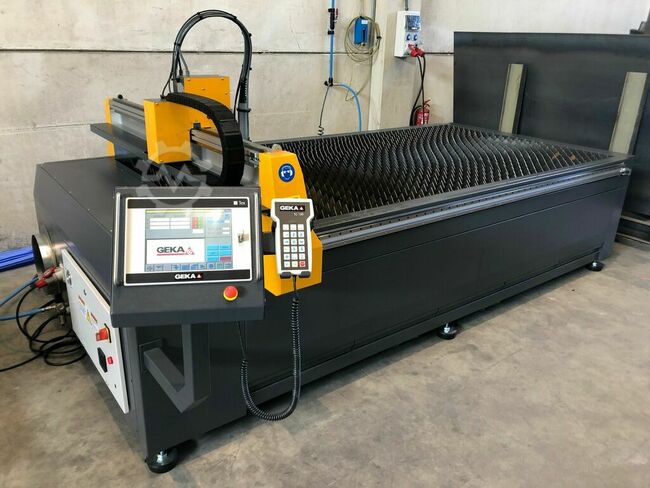
If you are considering buying a second-hand GEKA GCS-P 2010 (a CNC plasma cutting table, model GCS-P, table size ~2000×1000 mm) , there are many things you should check carefully. Plasma cutting machines have many components (mechanical, electrical, consumable, control, etc.), and problems in any of them can cost you in downtime, repair, or scrap material. Here’s a detailed checklist of what to look for, what to test, what to ask, and what to watch out for.
Key Specs / What the GCS-P 2010 Offers (“What Should Be True”)
Before inspection, know what the machine should be capable of, to compare what the seller claims vs what’s real. For the GCS-P2010:
- The table size is 2000 × 1000 mm.
- Common plasma source used: Hypertherm Powermax (various power variants) depending on thickness required.
- Cutting capacities (mild steel / carbon steel) in this model for several plasma power settings: e.g. ~12 mm for lower Powermax units, up to ~22-25 mm for top variants in the series, but depends on duty cycle and material.
- Travel (movement) speed: up to ~40 m/min in X/Y axes in many of the specs.
- Torch Height Control (THC) should be integrated: i.e. automatic control of the distance between the torch and the workpiece during cutting.
- Z head clearance / height: ~100 mm travel for Z head.
- Resolution: around 0.01 mm for positioning/axis motion in many versions.
What to Inspect & Test
These are things you should physically check or test when evaluating a used GCS-P2010 to assess condition, performance, and likely future costs.
| Component / Area | What to Inspect / Test | Why It Matters / What Problems May Appear |
|---|---|---|
| Frame, Table, Structure | • Check table flatness/warpage: is the workbed flat? Any bending or deformation. • Inspect all steel structure for rust, damage, cracks. • Check welds, support members under bed (slats or grate) for damage. • Look at exhaust/fume extraction features: chambered or sectorized workbed if equipped. Are extraction ports clean and functioning? | A warped table or poor structure leads to uneven cuts. Damaged extraction/fume system causes smoke/fume accumulation, corrosion, health & safety issues. |
| X/Y Axis Motion & Mechanical Drives | • Check that the linear guides / rails move smoothly; no binding, rust or chips. • Check for backlash, looseness in axes. • Inspect rack & pinion (if used) or gear drive, pinion teeth, wear. • Check drive motors/servos: do they respond smoothly, any vibration, overheating. • Lubrication of axes / rails: are there automatic lubrication or manual lube points? Is lubrication system working? | Worn guides or drive components lead to inaccuracy, jerky motion, poor cut quality. Replacing linear guides or racks can be expensive. |
| Torch / Plasma Source & Consumables | • What plasma source is installed (Powermax model)? Is it properly matched to the machine & your cutting needs? • Condition of torch, nozzle, electrodes: wear, alignment, overheating, signs of burn back. • Check consumables usage, whether spares are included. • Check torch alignment, whether it’s collinear / perpendicular, whether torch tip “wanders”. • Test the arc start (piercing) performance; does the torch pierce cleanly or with delay / misfire? | Worn consumables degrade cut quality. Incorrect plasma source or mismatched power affects capability. Torch issues can lead to poor cuts, increased scrap, downtime. |
| Torch Height Control and Z-Axis | • Test torch Z-axis travel (height): does it move freely, smoothly, is the travel distance as claimed (~100 mm)? • Does the THC (torch height controller) work? Does it maintain correct distance during cutting? • Check for collision safety / anti-collision features (does the machine stop or alarm if torch hits something)? • Check whether Z-axis motor / actuator is strong and precise. | Without proper height control, cut quality suffers, consumables get damaged, the torch may crash. Z-axis failures can be expensive to fix. |
| Control System & CNC, Software | • Boot up the CNC control: check for errors, firmware version, user interface condition (screen, touch, buttons). • Check memory, whether programs are stored reliably. • Verify the nesting, cutting libraries, ability to import or export designs. • Check anti-collision, emergency stop, homing and limit switches, zeroing (laser pointer or other). • Check resolution of motion, positioning accuracy. • Inspect how the CNC handles cut paths: are there jerks, misalignments, slowdowns. | Poor control performance causes waste, safety risk. Old or unsupported control boards are problems for repair or replacement. |
| Electrical & Safety | • Inspect wiring, connectors: signs of overheating, corrosion, damage. • Check grounding / earthing; CNC plasma needs good grounding for stable arc. • Electrical panels, motors, drives: are they clean, cooled, no burnt smell or oil leaks. • Safety interlocks, emergency stops, guards: test them. • Fume extraction or ventilation in place and working. • Is there any anti-collision / torch protection in the head / rail? | Electrical faults are dangerous and costly. Poor safety features are risks and possibly non-compliant with regulations. |
| Exhaust / Fume Extraction | • If the machine has extraction (fan, turbine, ducting), check that it is sized appropriately, works properly, and its filters are in good condition. • Check whether the extraction is “sectorized” workbed or chambered: examine condition of sectors, sealing. • Inspect hoses, piping, fan condition. • Check if the table allows simple grating or needs other things (bed style). | Poor fume control causes operator health problems, environmental issues, fire risk. Also possible regulatory noncompliance. |
| Consumables / Spares | • What is included: spare nozzles, electrodes, torch tips, gas lines, consumable inventory. • Availability of consumables locally; cost & delivery time. • Condition of spare parts: are spares all OEM or aftermarket, condition. • Condition of the plasma source itself: how many hours has it been used? Any service history. | If consumables are expensive or rare in your region, ongoing cost is higher. A worn or neglected plasma source will need expensive rebuilds. |
| Usage History / Maintenance | • How many hours or “cut time” has the machine been used? Distinguish idle hours vs operational hours. • Maintenance records: when was torch serviced, rails lubricated, motors serviced, consumables replaced. • Environment: was it used in clean or dirty conditions? Exposure to dust, moisture, metal dust, etc. • Any history of crashes, torch collisions, damage, rework. • Whether machine has been idle long (idle machines may have rust, seizing, dried lubrication). | A well-maintained machine will last longer and have fewer surprises. Neglected machines often have hidden wear. |
| Cut Quality Tests | • Perform sample cuts on materials you will use (mild steel, stainless, aluminum, thicknesses). Inspect cut quality: squareness, edge finish, dross, taper. • Test piercing, kerf consistency, speed. • Check cut tolerances: do cut parts fit or match expected dimensions. • Test for thermal distortion, or heat warpage effects. • Monitor consumable usage during test (how quickly do consumables burn out). | This is the real proof of performance. A machine that looks good but produces poor cuts is worse than one that is worn but can deliver. |
| Utilities / Facility Fit | • Does your workshop have sufficient power (voltage, phase, amperage) and clean, stable supply? • Is there sufficient air supply: filtered, dry air for the plasma source if required. • Floor space, transport capacity (crane or fork), structural strength of floor. • Cooling / water (if any water tables) or management of cutting dust/smoke. • Can you provide sufficient extraction / ventilation. • Environmental conditions (temperature, humidity) near rails/torch head. | If facility is not ready, you’ll have added cost to install and run the machine properly. Substandard utilities reduce performance and may damage components. |
Specific Weak Points / Common Issues in GCS-P Series
Based on the specs and what users / distributors list, there are known areas where used Geka plasma cutting tables often have problems (or need inspection):
- Torch consumables heavily used or neglected: nozzle wear, misalignment, burn back from excessive torch height or worn consumables.
- Z-axis / torch height controller faults: sometimes the height control has errors, drift, or slow response. If the THC is lagging, cut quality suffers.
- Axis wear (linear guides, rails, rack & pinion) especially if maintenance or lubrication has been neglected. As the machine table is large and plasma cuts generate dust/sparks, debris often enters guideways.
- Electrical control issues: wiring exposed to heat / dust may degrade; control panels may have suffered from cutting debris or cooling issues.
- Grinding / damage of bed slats / grating / bed structure: tables may have warping due to heat or repeated cutting, slurry or molten metal damaging slats or bed supports.
- Extraction system degradation: fans or turbine motors wear; filters clogged; sectorization inefficient; ductwork leaks. Without good extraction, smoke, spatter accumulate and can damage other components.
- Consumables availability & cost: particularly if the plasma power unit is older, or uses consumables that are no longer made locally, or are expensive to ship.
- Controller software / updates: versions may be old; perhaps OEM control board parts / driver boards have been discontinued or expensive to replace.
- Piercing performance: older or less capable plasma units may struggle with piercing thick material or may have high “delay” before pierce, which affects production rate.
Questions to Ask the Seller / Tests to Do Before Buying
When inspecting a used Geka GCS-P2010 (or negotiating), these are good questions to ask, and tests to demand. Try to see the machine in operation under load.
- Operational Demo
- Can you see the machine cutting real material (same thickness / type that you’ll use)? – Watch how it pierces, how stable the arc is, whether cuts are clean. – Try multiple thicknesses.
- Check Cut Samples
- Get sample parts / pieces from earlier jobs: mild steel, stainless, maybe aluminum. Inspect finishes, taper, edge dross, kerf width, holes if any.
- Torch Condition / Consumable Burn-in
- Inspect torch, inspect nozzle inside. Ask how many hours on latest consumables. – Observe whether torch sparks or arcs flicker.
- Z-axis / THC Testing
- Move the torch up and down; see smoothness, check if there is backlash or slow/noisy travel. – Cut with height control: see if it tracks surfaces or drop/rise in material thickness, warpage etc.
- Axes / Motion Smoothness
- Jog the X/Y axes manually: is motion smooth, no jerking or misalignment. – Move across full table: corners, edges; check whether speed remains consistent.
- Control & Interface
- Check control panel condition. – Test switching on, homing, limit switches, emergency stops. – Import programs / sample nesting if available. <br> – Check for past error logs, how often would maintenance be needed.
- Electrical & Wiring Check
- Open panels, visually inspect finishing, condition. – Look for signs of overheating (discoloration, smell), moisture, dust ingress.
- Extraction / Ventilation
- Run the extraction system: listen for fan/turbo, see whether airflow is good; see if fumes/smoke are extracted efficiently. – Check filters, ducts, bed chamber / sector extraction panels.
- Consumables / Spares
- What consumables come with it. – Is there extra nozzle/electrode stock? – Are OEM spares still available? Approximate cost.
- Maintenance / History
- How many hours or “cut-hours” (not just powered hours). – Maintenance records (torch, axes, extraction, control). – Any known major repairs or crash incidents. – Storage conditions (indoors vs outdoors; humidity / dust exposure).
- Facility Compatibility
- What are its electrical requirements (voltage, phase, amp draw)? – Does your facility have suitable air supply? (pressure, dryness) – Do you have space, lifting equipment, foundations. – Can your plant handle exhaust / ventilation / dust / smoke concerns.
- Cost of Ownership Estimates
- Ask for typical consumables cost (nozzles, tips) and frequency of replacement.<br> – Estimate power usage under typical load. – Estimate maintenance parts / service labour in your region.
- Safety Features & Compliance
- Are protective guards, shields, covers still in place? – Are interlocks / emergency stop buttons functioning? – Is the machine compliant with local safety / environmental emission / extraction / fume control regulations.
What Makes a “Good Deal” vs Warnings / Red Flags
Here are things that indicate the machine is likely to give good service vs things that may lead to trouble (and lower value).
| Good Signs (Value Adders) | Red Flags (Costs / Risks) |
|---|---|
| Recent replacement of consumables (torch, nozzles, electrode) with low hours. | Consumables near end of life, no spare parts included. |
| Clean, well-lubricated rails and drive system; good maintenance history. | Rails with rust, wear, poor lubrication; signs of neglect. |
| Strong extraction system in good condition; fume removal works well. | Poor or no extraction, clogged filters, smoky or dusty operation. |
| Control system is modern, with nesting software, spare parts availability, good UI. | Control board has firmware issues, old/outdated software, missing spare parts. |
| Ability to produce clean cuts (little dross, good pierce, minimal kerf) on materials you’ll use. | Cut outputs inconsistent, poor pierce, excessive kerf, uneven edge. |
| All safety systems working; guards, interlocks; machine seems solid and rigid. | Missing safety features; damage; vibration or wobble; loose components. |
| Facility is prepared (power, air supply, exhaust, space). | Having to invest heavily to prepare your site or deal with utility shortfalls. |
| Reasonable asking price with awareness of required refurbishments / spare part replacement. | Seller overly optimistic without documenting wear or required maintenance; high price but many worn parts. |