21/09/2025
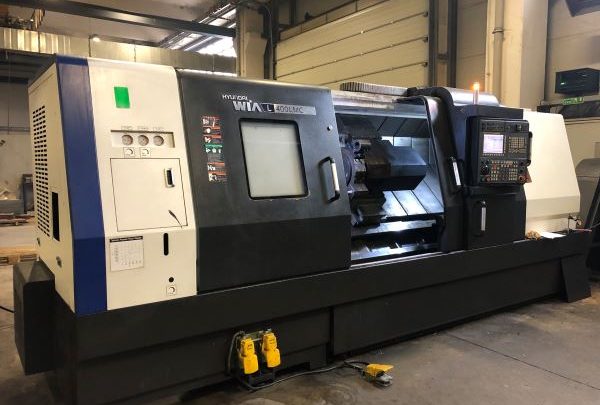
What Should I Pay Attention To When Buying a Second-Hand / used HYUNDAI WIA SKT400LMC?
If you’re looking to buy a used Hyundai WIA SKT-400LMC (or similar) CNC lathe / turning-mill center, you should check many things carefully. These machines are powerful and relatively complex; defects or missing parts can be very costly. Below is a checklist of what to pay attention to, plus tips & questions to ask the seller so you know what you’re getting.
Key Specs & What They Mean
Before you inspect:
- The SKT-400LMC is a large turning center with live tooling, C-axis indexing, tailstock, etc.
- Typical specs: ~ 2,000 rpm spindle speed, ~320 mm X-axis travel, ~2,200 mm Z-axis travel on one version; ~37/30 kW spindle power, etc.
- Big chuck (≈ 15″), decent bore for bar feed, full turret with multiple tools, possibly driven milling tools.
- It’s heavy and large; needs adequate foundations, power, cooling, etc.
Knowing the spec you require (part size, length, diameter, tool count, control type) helps you judge condition better.
What to Inspect / Evaluate
Here are the areas you should check in detail:
| Area | What to Check | Why It’s Important / Potential Problems |
|---|---|---|
| Mechanical condition | • Bed, ways, slide surfaces: check for wear, grooving, pitting, rust. • Turret mechanism: indexing accuracy, backlash, wear. • Spindle: how does it run? Any unusual noise or vibration; spindle bearings condition. • Tailstock (if included): quill travel, alignment. • Joints, guide rails etc: condition, lubrication, play / backlash. | Wear or damage here affects dimensional accuracy, surface finish, and tool life. Repairs (e.g. replacing spindle bearings or regrinding ways) are expensive. |
| Live tooling / milling attachment | • Functioning correctly: check tool changes, driven tools (speed, torque, stability). • Alignment and accuracy when using live tools. • Condition of gearboxes or drive assemblies if used. | Live tooling issues reduce versatility; misalignment causes taper, bad surface finish. Gearboxes are expensive. |
| Control system / CNC & electronics | • Control brand/version (often Fanuc 21i-TB etc): is it well supported, do you know the version? • Check all axes move correctly; see if there are error codes. • Check the state of wiring, connectors, sensors, limit switches. • Do the drives / amplifiers / feedback encoders work reliably (no intermittent faults). • Function of safety interlocks, coolant, lubrication systems. | If electronics are old or poorly maintained, downtime or repair cost can be huge. Also controls may limit ability to run newer software or integrate tooling. |
| Accuracy / Test & Calibration | • Ask for a recent test / performance and accuracy report: straightness, concentricity, repeatability. • Check features like C-axis indexing accuracy. • If possible, run a test part (turning/milling) and measure it (tolerances, surface finish). • Measure spindle run-out. • Check backlash in axes. | Without verified accuracy, you don’t know if machine meets your needs. |
| Wear, Hours & Usage History | • How many operating hours the machine has. • What material types and what kinds of operations it has been used for (heavy roughing vs fine finishing). • Maintenance history: regular lubrication, coolant maintenance, tool changes, alignments. • Any history of crashes, overloads or misuse. | A machine used heavily for roughing will often have more wear. Misuse can shorten spindle / ways life severely. |
| Condition of tooling / attachments / accessories | • Is the chuck in good condition? Are jaws worn? • Any fixtures, steady rests, tailstock accessories included? • Is the chip conveyor working well; coolant system working; hydraulic/pneumatic systems leak-free. • Are tools / inserts etc included (or will you need to buy them). | These “extras” can add cost; missing ones might require you to buy separately. Faulty conveyors, coolant systems etc make production difficult. |
| Structural / foundation / alignment / environment | • Has the machine been moved? Was it realigned after move? • Floor vibration, leveling, anchoring: is the machine properly installed? • Environment: temperature control, cleanliness, dust, moisture. • Power supply: sufficient for motor loads, proper voltage, stable supply. | Even very good machines will perform poorly if misaligned, poorly anchored, or in adverse environments. |
| Wear on consumables | • Tool turret mechanism, indexing pins, slides. • Guide ways or box ways wear. • Spindle bearings, seals. • Hydraulic seals, coolant pumps, filters. | These wear parts often have significant cost; replacement might be difficult or expensive. |
| Spare Parts & Support | • Are parts for this model still available? • Is there local support/technicians familiar with Hyundai WIA / Fanuc etc? • Is documentation/manuals included? • Is software/configuration backed up and transferable? | If parts or support are hard to get, downtime or repair cost rises. Missing manuals/documentation make set-up, troubleshooting harder. |
| Power / Utilities / Running Costs | • Energy consumption; what motor amps are used. • Coolant and lubricant consumption; whether cooling/chiller system is functioning. • Air supply and filtration if needed. • Maintenance cost: how often needs servicing; cost of spindle replacement etc. | Operating cost is often more over the lifetime than purchase cost. You want one with good efficiency and lower upkeep. |
Questions To Ask The Seller
To fill the gaps, here are useful questions:
- How many hours has the machine run, and under what kind of usage (material, roughing/finishing)?
- What maintenance has been done – regular lubrication, spindle rebuilds, alignment, calibration?
- Has it ever had spindle bearing issues, crashes, or damage to ways/turret?
- What is the condition of the live tooling / milling tools and C-axis – are C-axis drives healthy; is gear/drive backlash minimal?
- What control version is installed; is it fully functional; any error history?
- Are all accessories included (chuck, jaws, tailstock, steady rest, fixtures, coolant, conveyors)? Are spares available or provided?
- Do you have recent calibration / test report or can you run a test part?
- What is the condition of coolant, lubrication, hydraulic systems; any leaks; replacement history?
- What is required to move, install, re-level the machine; what power supply is needed; will you supply wiring or modifications?
- Are manuals, schematics, parts lists included? What about software backups or configuration files?
What Might Be Painful / Hidden Costs
Be aware of potential traps:
- Spindle rebuilds are very expensive, especially if bearing condition is bad.
- Wear on ways / turrets might only become evident under load or after long usage.
- Outdated or poorly supported control systems or electronics; replacement of drives can be costly.
- Setup and alignment after transport can be nontrivial. If misaligned, accuracy suffers.
- Live tooling gearboxes deterioration; tool holders or driven tools needing replacement.
- Hidden deterioration of hydraulics, coolant systems, seals etc can lead to downtime.
- If you require high precision, may need re-certification/calibration, which adds cost.
How to Decide If It’s a Good Deal
After inspection and questions you can judge by:
- Compare the machine’s tested accuracy vs what your parts require. Don’t overpay for precision you don’t need.
- Estimate all additional costs (transport, installation, calibration, any replacements) and factor into the purchase.
- Compare cost of used vs cost of new (or factory-refurbished) to see what discount you’re getting.
- Think about downtime risk and spare parts availability locally. A little more upfront cost for a better condition machine may save much more later.
- Consider resale value: models with good control systems, documented history and good condition command better resale.