What Should I Pay Attention To When Buying a Second-Hand / used Hexagon Global S Green 9.12.8 CMM Coordinate Measuring Machine?
If you’re considering buying a second-hand/used Hexagon Global (9.12.8 or similar) coordinate measuring machine (CMM), there are many things to check carefully. The risk is that, while CMMs are mechanically robust, details (software, calibration, environment, wear etc.) can drastically affect performance and cost. Below is a checklist of what to pay attention to, plus some tips specific to Hexagon/Global machines.
What is “9.12.8” and Why It Matters
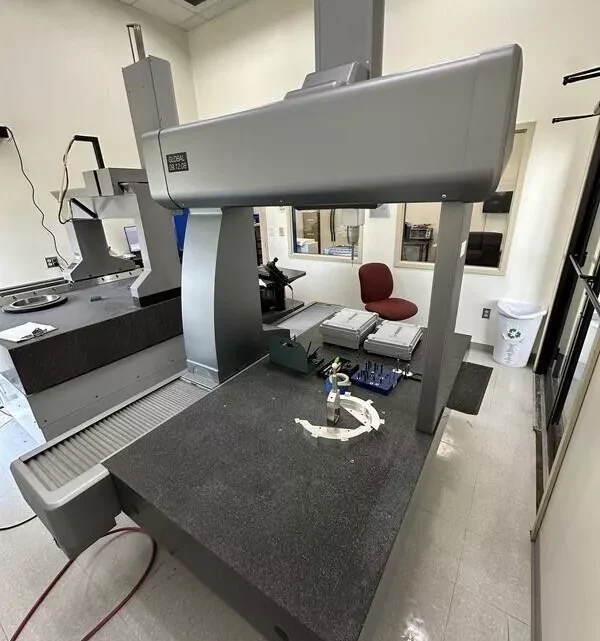
“9.12.8” generally refers to the measuring volume or travel in metres / decimetres / etc (or in decimetres × decimetres × decimetres depending on the convention). About 900 mm × 1,200 mm × 800 mm is typical. So this is a mid-sized Global Performance machine. That sets expectations for size, footprint, weight, etc. Also, the bigger the machine, the more sensitive to environment, installation, etc.
Key Areas to Inspect / Verify
Here are the main things you should check:
| Area | What to Check | Why It’s Important / What Problems Arise |
|---|---|---|
| Mechanical condition | • Granite table / platen surface – flatness, chips, wear • Guide-ways / bearings (air bearings or mechanical) – look for scratches, wear, rust or misalignment • Drive motors, axis movement – smooth travel without “stick/slip” or jerkiness • Any physical damage from crashes (e.g. probe crashes) – check mounting holes, joints etc. | A worn guide or damaged granite will degrade accuracy. Mechanical issues often cost a lot to repair. |
| Probe / Probing System | • Condition of probe head(s), palp or touching probe, any scanning probe, probe extensions – whether the stylus or tips are worn or damaged. • Is the probe calibrated? Are there test reports? • Can it accept the styles you need (length, tip sizes)? • Ability to index or change heads (e.g. PH20, PH10, SP25 etc.). | Probing is one of the biggest cost items. Worn/damaged probes degrade measurement, and some heads are expensive to replace or calibrate. |
| Electronics / Controller / Software | • What controller is in use? Is it supported (spares, firmware)? • What PC & OS is driving it, and is that still current or obsolete? • What version of software? PC-DMIS version for Hexagon machines is important. Is there a valid license? Can it be transferred? • Are there dongles or hardware locks? Are software manuals & documentation included? | Old or unsupported software/hardware can limit functionality or make maintenance difficult. Also, licensing issues can become legal or cost issues. |
| Calibration & Certification | • Ask for recent calibration reports to ISO standards (e.g. ISO 10360-2 etc.). • Check volumetric accuracy over the travel, probing uncertainty (volumetric probing uncertainty). • Has the machine been certified by the manufacturer or a certified service provider? • Are test artifacts included (gage blocks, step gauges, spheres)? | Without proper calibration you won’t know how accurate the machine is – which might mean you under-bid or overpay relative to usable performance. |
| Environment / Installation suitability | • Where has the machine been operating? Was it in a temperature-controlled lab or shop floor? • Is vibration, temperature stability, humidity, dust etc under control? • Has it been moved? How was it shipped / installed? (Transport stress can misalign things.) • Electrical supply: voltage, grounding, air supply (for air bearings) etc. | Even a machine in perfect condition won’t perform well under poor environmental conditions. Also, moving/installing a big CMM is nontrivial. |
| Spare Parts & Service Support | • Are spare parts available locally (or can be imported reasonably)? • Is there local service support (for Hexagon or third-party)? • What is the condition of consumables (rails, belts, bearings, filters)? • Are there history / records of past repairs, maintenance? | If something breaks, you want to be able to fix it without huge delays or cost. |
| Footprint / Infrastructure / Utilities | • Physical size & weight: can you move it in & install it in your facility? • Foundations, floor vibration, ceiling height, door access, crane etc. • Need for air supply, clean power, environmental control etc. • Costs of shipping, packaging (original crates, brackets), un-crating, installation. | Often overlooked costs can add significantly. |
| Value Add / Accessories | • Fixtures, fixture plates, rotary tables, software modules, scanning attachments, etc.—are they included? • Are manuals, training, operator documentation included? • Warranty? (Sometimes “pre-owned / refurbished / certified” machines have some warranty.) | These can make a big difference both in usability and cost. |
Specific Considerations for Hexagon / Global Machines
Because you mentioned a “Global 9.12.8”, here are some points more specific to Hexagon / Global line:
- Hexagon offers pre-owned / factory certified / factory refurbished machines. These tend to include things like software upgrades, warranties etc. Buying from Hexagon directly (or via a certified reseller) is often safer.
- Software license: PC-DMIS is standard for many Global machines. Licensing is important: you need a valid transferable license; older versions might no longer be supported.
- The machine’s specifications (volumetric length measuring uncertainty “E”, probing uncertainty “R”, per ISO) need to be matched with your tolerance requirements. Hexagon publishes specs for their machines; you’ll want to see that the used unit meets them or is capable of meeting them after refurbishment.
- Probing options: many Global 9.12.8 machines are sold with PH20 five-axis heads or other probe heads. Check if that’s included, in working order, and whether its calibration is current.
- Control of thermal/environmental factors: the Global series has published environmental requirements. If the used machine was in a bad environment, some alignment, guide, or scale drift may have occurred.
Questions to Ask the Seller
To help you evaluate, you could ask:
- Age of the machine: When was it built, when was it first commissioned?
- Usage history: How many hours, what kind of parts were measured, how heavy/difficult was the probing (long stylus, etc.)?
- Maintenance history: Any repairs, component replacements, symptoms of wear; have bearings, scales, rails been checked?
- Calibration history & reports: When last calibrated, by whom, test artifacts, results. Can they provide recent test data (e.g. volume test, sphere test)?
- Software / Control version: Which PC-DMIS (or other) version, license status, included modules, is it current or need upgrade?
- Probe(s) status: What stylus types are included, condition, calibration, ability to probe certain features; is there scanning capability?
- Accessories /-fixtures: What is included — fixturing, accessories, manual, spare stylus etc.
- Transport & installation: Who handles shipping, crating, re-installation; do they provide alignment or calibration after installation?
- Warranty / support: Any guarantee; support from Hexagon or authorized service; availability of spares locally.
- Price components: What is included in the quoted price; do you need to budget separately for software/hardware upgrades, calibration, moving, set-up etc.
Potential Pitfalls / What Might Bite You
- Hidden wear: Guideways/scales with wear that you can’t see easily will degrade measurement over travel—higher uncertainty at longer distances.
- Obsolete or unsupported software/hardware: Could mean you can’t upgrade, spares might be expensive or not available.
- Calibration not meeting spec: The machine may have drifted; recalibrating can be expensive.
- Inadequate environment: Temperature swings, vibration, dust can all degrade performance over time and make it hard to achieve the stated accuracy.
- Transport damage: If moved improperly, alignment or straightness might be off. Checking after installation is critical.
- Licensing / legal issues: Software licenses not transferable; missing keys/dongles; no manuals.
Deciding If It’s a Good Deal
After you have all the details, you can evaluate the deal:
- Compare the quoted uncertainty/performance vs. what you need. If your part tolerance is, say, ±50 µm, you don’t need top-of-line accuracy.
- Factor in extra costs: shipping, installation, calibration, any refurbishment, spares, software upgrades.
- Competition: how much would a new or factory-refurbished Global 9.12.8 cost presently (from Hexagon or authorized reseller)? The difference gives you maximum you should pay.
- Consider resale value / lifespan: even a used Global will retain value reasonably well if in good condition.