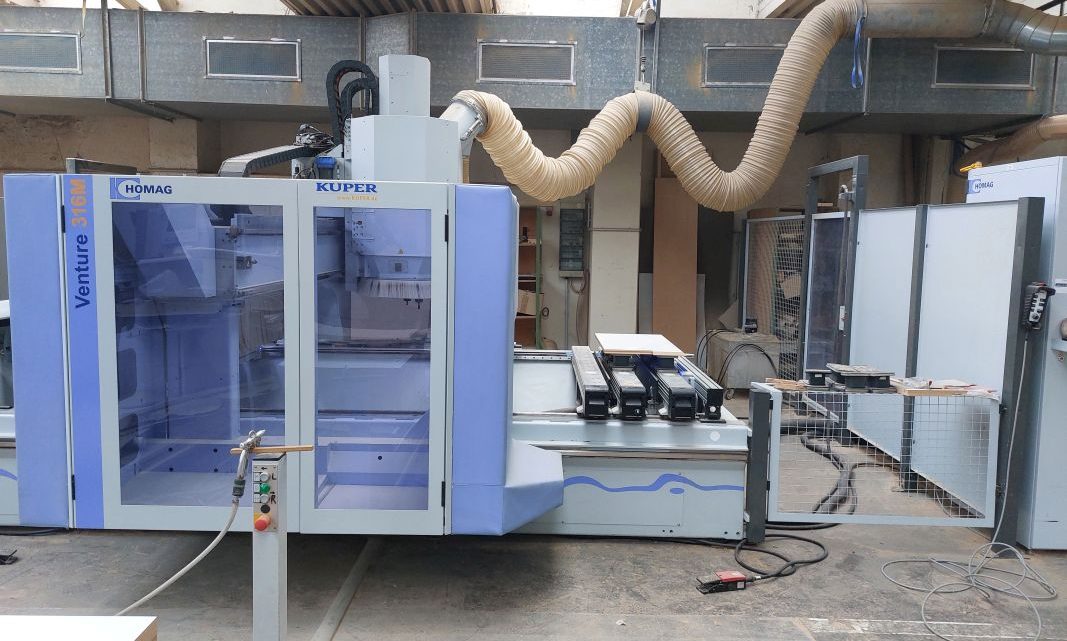
What Should I Pay Attention To When Buying a Second-Hand / used HOMAG BMG311 VENTURE316M CNC Wood 5-Axis Machining Center?
Here are detailed things to check (and questions to ask) when considering a used HOMAG BMG 311 VENTURE 316M 5-axis woodworking CNC machining center. It’s a complex and premium machine, so you’ll want to be sure of many components and conditions to avoid surprises. If you like, I can also prepare a printable checklist based on all this.
What to Know First: Typical Specs / Baseline Features
Before inspecting, be clear on what a healthy / correctly configured BMG 311 Venture 316M should offer, so you can see whether the unit you’re considering is up to expectation. From manufacturer & used listings:
| Spec | Typical for the 316M variant |
|---|---|
| X travel / working dimension | ~ 3,300-4,200 mm (various listings: 3,300 mm, 3,475 mm, etc.) |
| Y travel | ~ 1,550 mm |
| Z travel | ~ 250 mm |
| Spindle power | ~ 10 kW, tool clamping via HSK-F63 |
| Max spindle speed | Up to ~ 24,000 rpm in some versions |
| Tool changer / Tool magazine | Varies (14-position, linear changer, etc) depending on exact config. |
| Drilling and sawing units included | Vertical & horizontal drilling spindles, possibly a saw aggregate (turnable groove saw) |
| Control / software | HOMAG PowerControl (PC 85 in some cases), WoodWOP software versions around 6.0-6.1 |
Knowing these helps you check whether what’s advertised matches what you need (or expect), and whether something is missing or “downsized.”
What to Inspect & Test Before Buying
Because of size, moving parts, precision and variety of functionalities, you want to check many subsystems. Here are important areas, what to check for, and why they matter.
| Area | What to Check / Test | Why It’s Important & What Can Go Wrong |
|---|---|---|
| Spindle & Tooling / Tool Interfaces | • Run spindle at various speeds (low, medium, high); listen for unusual noises (hum, grinding, vibration). • Check spindle run-out (use test indicator, measure with known standard tool holder). • Inspect the spindle taper / HSK-F63 interface: wear, damage, tool seating correctness. • Check cooling of spindle (liquid or air-cooled as per the model): whether cooling works properly, if any overheating. • Check whether the tool changer / magazine works reliably: speed, repeatability, any misses or mis-grips. • Inspect tools (drills, saw, units) included if possible; whether spare tool holders are part of the deal. | The spindle is one of the most expensive parts. Damaged taper or worn bearings reduce machining quality, increase scrap, and may require costly rebuild. Tool changer malfunctions cost time and parts. High spindle speed units are more fragile. |
| Axes, Linear Guides, Drive Systems | • Move each axis (X, Y, Z, plus any 4th/5th axis) through full travel; look for smoothness, any binding, rubbing, vibration. • Check linear guide rails / ways for visible wear, scoring, rust. • Check ball screws / drive mechanisms for backlash; test reversal and measure any positional error. • Check the condition of drag chains, cable routing, and how protected moving parts are from dust, chips. • Check any auxiliary axes (rotary or tilt) for alignment, backlash, speed. | Wear in ways or screws = poor accuracy, slower machining, increased maintenance. Damage via chips or poor protection accelerates wear. Rotary/tilt axes are common failure/precision loss points. |
| Drilling / Sawing / Additional Aggregates | • If vertical/horizontal drilling spindles are present, test them: are they tight, do they maintain accuracy under load. • For the groove saw / sawing aggregate: inspect the saw blade condition, alignment, lubrication, whether the 90° turn (if turnable) works cleanly and accurately. • Check any saw guard / blow-off mechanisms. • For saws, look for vibration, run-out, freedom of motion. | If these aggregates are misaligned or worn, holes or grooves will mislocate; fine joinery or drilling precision suffers. Damaged or misaligned saws can cause poor cuts or safety risk. |
| Work Table / Vacuum / Pod System | • Inspect table flatness; check for warping or damage to pods or rails. • Check vacuum pods: do they seal well; is vacuum pump in good condition (capacity, leaks). • Check if vacuum rails or cups have damage; check whether supports (holds, clamps, locating pins) are present & aligned. • Check that the machine has what it needs for vacuum/fixture system, moisture protection. | If the fixture system is bad, workpieces may shift during machining; poor holding leads to chatter, errors. Vacuum systems wear with time; repair or replacement may be expensive. |
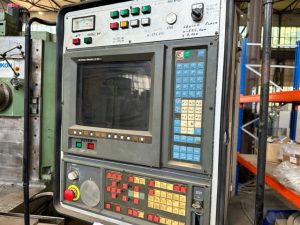
| Control System, Software & Electronics | • Which version of WoodWOP is installed and running? Are updates available / installed? • Inspect control hardware: pendant / console buttons, display screens; any display artifacts; keyboard or touchscreen responsiveness. • Check all sensors, limit switches, safety interlocks; whether any warnings/alarms are logged. • Inspect electrical cabinet: condition of wiring, fans, cooling, possible water or dust ingress. • Check if spare parts and licensing for control electronics are available. • Check auxiliary systems: lubrication, coolant (if used), chip conveyor, dust extraction. | Outdated or broken control system can be a big weakness; if the software is no longer supported, upgrades or fixes may be hard. Electronics exposed to dust/water often fail. Auxiliary systems are essential for production; missing or broken ones reduce uptime. |
| Structural / Mechanical Condition | • Inspect the gantry, head, beam, frame for any signs of stress, cracks, past impact damage. • Check for warping of moving bridge or sagging. • Confirm machine leveling; foundation or floor anchoring is straight & stable. • Examine way covers / protective shielding: whether covers present, clean, not torn, etc. • Inspect the table surface (damage, corrosion, wear). • Check for loose or missing fasteners, visible rust or corrosion. | Structural issues lead to misalignments, repeatability and straightness errors. Poor shielding allows dust/particles into guideways, accelerating wear. Rust or corrosion can damage components severely. |
| Usage History, Hours & Maintenance | • Ask for number of operating hours vs idle hours; heavy vs light usage. • What kind of material was processed frequently (softwood vs hardwood vs composites)? That affects wear. • Regular maintenance records: bearings, lubrication, saw servicing, coolant cleaning, etc. • Any known incidents: tool crashes, overtravel, misuse or operator damage. • Whether consumables have been replaced when needed (e.g. saw blades, tool holders, sensors). • Environment: was the machine in a clean workshop with good dust extraction/dust protection? Or dusty / humid environment? | Good maintenance history is one of the best predictors of how much work you’ll need to put in after purchase. Dirty or adverse environments accelerate wear. Incidents often cause hidden damage. |
| Performance Testing & Accuracy / Repeatability | • If possible, run a test part / demo job that uses full travel in X, Y, Z. • Make cuts / milling on each axis, edge finishing, drilling, see if holes / edges are correctly located. • Measure repeatability: do the same job multiple times and measure deviation. • Measure surface finish / edge quality, especially with 5-axis movements. • Warm-up the machine: let it run for some time and check if performance drifts. • Test maximum feed speeds vs accuracy; test under load. • Check spindles and tools for chatter under cutting conditions. | Even if a machine looks mechanically solid, wear or misalignment can lead to poor output; test cuts reveal whether you can trust tolerances. Warm-up drift and performance under load are crucial for production. |
| Safety & Compliance | • Check safety guards, interlocks, bumpers, emergency stops. • Check whether photocat or CE safety features are intact and working. • Dust extraction & chip removal: significant in wood machining for operator health and machine cleanliness. • Check ventilation / extraction of fine sawdust. • Check whether machine meets safety standards in your region (or can be made compliant). • Inspect electrical safety (grounding, enclosure integrity, protection from moisture/dust). | Woodworking CNCs produce dust and chips; safety and clean working conditions are essential for both health and machine longevity. Regulatory compliance avoids legal / insurance issues. |
| Spare Parts & Support / Upgrade Potential | • Can you get spare parts for this model locally (or regionally)? Spindles, tool holders, saw blades, consumables, bearings, electronics. • Is software still supported/upgradable? • Are technical manuals, wiring diagrams, parts lists available? • What is the cost of replacements (tool holders, vacuum pods, clamps, saw bits)? • Could you upgrade anything (e.g. control, spindles, fixturing) in future, if needed? • What is the skill level required for maintenance locally (do you have people who know WoodWOP, Homag machines)? | Even a good machine can be expensive if parts are rare or shipping high. The more support you can get, the less risk. Upgradability adds value. |
| Installation, Facility Requirements & Running Costs | • Does your facility have the required floor space, height clearance, load-bearing capacity? These machines are large and heavy; moving and installation logistic costs matter. • Power supply: voltage / phase / amperage; whether any transformers or electrical prep needed. • Dust extraction capacity and routing; chip conveyor; saw dust & waste handling. • Utilities: compressed air, if used; cooling or coolant systems; lubrication systems. • Cost of consumables: saw blades, tool bits, vacuum pumps, maintenance tools. • Operator training, spare tools etc. • Downtime & service intervals: how often routine maintenance is needed, cost and difficulty. | Even with good specs, if your facility isn’t ready, costs add up. Consumables and maintenance in wood machining can be a large portion of operating cost. Downtime from poor support or untrained staff can kill profits. |
Common Weaknesses / Red Flags
These are the warning signs that often indicate a used BMG 311 (or similar Homag machine) will need more work than seems on the surface.
- Spindle bearings worn or making noise, especially at higher RPM; tool taper loose or chipped.
- Tool changer misses or mis-alignment; tools dropping or mis-positioning.
- Rotary / tilt axes (4th / 5th axis) alignment lost or wobble under motion.
- Vacuum pods or vacuum table leaking, not maintaining vacuum, or broken cups / rails.
- Saw / router bits not true; saw aggregate / blade wobble.
- Excessive play / backlash in axes; noticeable slop in joints or gantry.
- Guideway damage or rust (from humid or dusty environments) especially if covers or shields damaged.
- Electrical panels with water damage or dust / chip accumulation; burned wiring or connectors.
- Control software outdated or unsupported; missing licenses; difficulty to get updates.
- Safety features broken or missing (guards, emergency stops etc.).
- Inadequate extraction or dust handling, leading to excessive dust build-up; this often accelerates damage in electronics or motion systems.
- General negligence signs: grease / lubrication dried; chips left uncleaned; poor maintenance history.
Questions to Ask the Seller
Here’s a suggested list of direct questions you should ask, or get answers for before committing:
- What is the year of manufacture, model (exactly 316M or L etc.), and serial number?
- How many hours of operation (and how many charging / idle hours)? What kind of material was most often processed (wood types, composites, hardwoods, etc.)?
- What is the maintenance history: spindle servicing, saw blade(s), tool changer maintenance, vacuum pump maintenance, guideway lubrication, etc.? Any records / invoices?
- Has there ever been a crash, overtravel, or major repair? <br> Any known damages to gantry, spindle, tool changer, electronics?
- What condition are the spindles / bearings in? When were they last replaced or serviced? Any run-out measurements?
- Are the tool-holders, saw blades, drills etc. original or included? How many spares are provided? <br> What is the condition of tooling?
- What software / control version is installed? Any updates; are licenses current? Any optional modules installed (4th/5th axis, collision control, etc.)?
- Are all auxiliaries working: chip extractor, dust extraction, coolant (if used), lubrication, safety systems, vacuum pods, table clamps / pods?
- Is the machine still under power / setup? Can you see it running? Can you perform test cuts / demo job?
- What is included in the sale: tooling, fixtures, vacuum pods, clamps, saw aggregate, etc.? Are there spare parts?
- What is the current condition of electrical enclosures (clean, dust / chip present, moisture)?
- What is the cost and availability of spare parts (from Homag or local agents)? What about consumables?
- What is the expected lead time for shipping, installation, commissioning in your facility? Is leveling / alignment needed? Who will do dismantling / transport?
- Are there safety certificates or compliance documents, CE marking? Are safety guards, interlocks in place and functional?
Things That Might Be Worth Paying More For (and What to Negotiate)
If certain features or conditions are better, they add significant value. Also, some deficiencies might be negotiable in price if repair is manageable.
Value-adding features:
- Recent refurbishment or service: spindle rebuilt, bearings replaced, tool changer overhauled.
- Spare tooling included, many clamping / vacuum pods, saw blades, drill bits etc.
- Upgraded software / control (latest version, with needed modules).
- Excellent auxiliary systems (vacuum, dust extraction, chip conveyor) in good shape.
- Good environmental protection, covers, shields, maintenance done properly.
- Machine that’s still set up and running, so you can test directly.
Negotiable / Deductible items:
- Minor cosmetic damage or surface rust that can be cleaned.
- Parts like vacuum pods or clamps if replacement cost is known and manageable.
- Tooling not included or partial.
- Minor control or UI issues (if spare parts or upgrades are available).
- Need for re-alignment / leveling if you can do or pay for that.