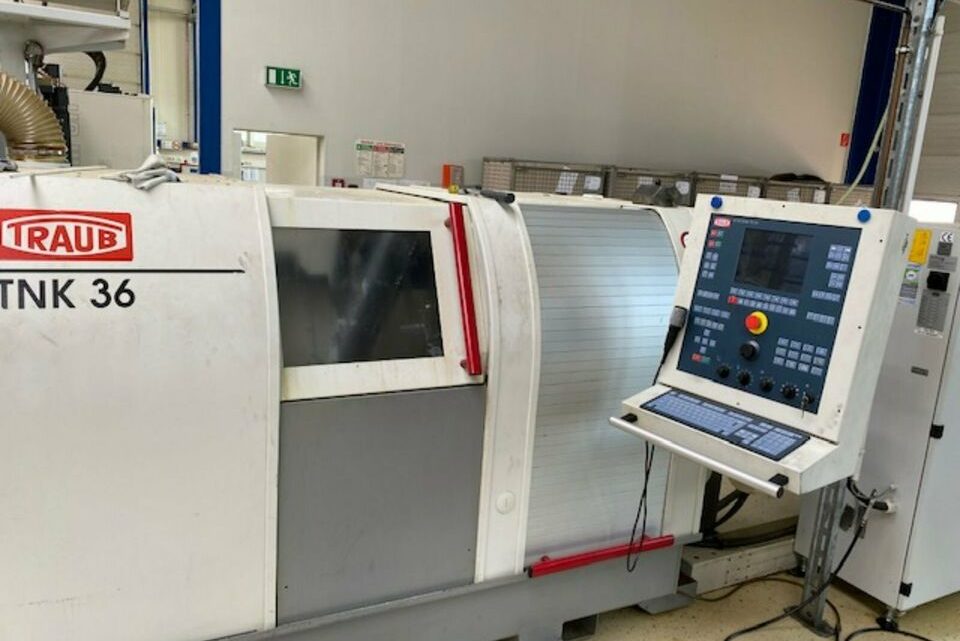
What Should I Pay Attention To When Buying a Second-Hand / used TRAUB TNK 36?
Here are detailed things you should check / think through if you are considering a second-hand Traub TNK-36 CNC lathe / Swiss-type / multi-axis live-tool machine. These are pretty complex machines, so a thorough inspection and asking the right questions is especially important.
What the Traub TNK-36 Is / What to Know First
Before inspecting, it helps to understand the baseline specs (so you know what “normal / good” looks like, and what deviations are a red flag):
From various sources:
| Spec | Value / Typical for TNK-36 |
|---|---|
| Number of spindles | 2 |
| Number of axes | 9 axes |
| Bar / max workpiece diameter | ~ 36 mm |
| Spindle speed (main & counter) | up to 6,300 rpm |
| Spindle power | approx. 10.7 kW on main spindle; same or similar on counter spindle |
| Tooling / Live-tooling | 12-pos turret / many live tools; combined attachments; motorized tools in turret; Y-axis stroke in attachments etc. |
| Control system | TRAUB TX 8i is common in many listings |
| Size / footprint / weight | Machine footprint quite large (several meters), weight several tons (≈4,000 kg typical in many specs) |
Knowing this, you can verify whether the specific machine is within expected condition / spec.
What to Pay Attention to / Inspect
Given the machine complexity and what tends to wear / fail first, here are areas to inspect, test, and ask about.
| Area | What to Inspect / Try / Ask | Potential Problems to Watch For |
|---|---|---|
| Spindles (Main + Counter-Spindle) | • Check for spindle noise, vibration; run at idle and under load if possible. • Measure run-out on spindle nose; check if it can hold precision. • Check bar bore (inside passage) condition: any wear, damage, ovality. • Confirm power ratings, whether recent bearing replacements done. • Ask for spindle hours, megger / insulation condition of spindle motors. | Worn bearings, imbalance, or damage from debris reduce precision or ruin parts. Bar bore wear reduces concentricity. Spindle motor overheating or wear may indicate heavy prior usage or mis lubrication. |
| Axes, Guideways, Ball Screws, Turrets / Y-Axis (Attachments) | • Move each axis through full travel; feel for binding, stiffness, backlash. • Check linear guides and ballscrews for wear, especially Y-axis or combined attachments which often see variable loads. • Turret: indexing accuracy; live tool spindles; test driven tools; speed & torque; whether there is looseness. • Test tool changes: dead time, alignment of tools, whether turret alignment is good. | Wear in guideways degrades positioning accuracy over full stroke. Turret or live tools with worn bearings produce chatter, vibration, errors. Poor indexing leads to scrap. Y-axis attachments (combined ones) often weaker links. |
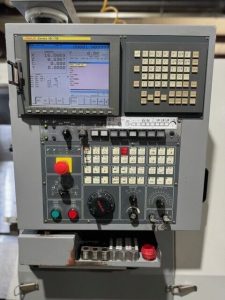
| Control, CNC / Software / Firmware | • Check the control model (usually TRAUB TX8i); verify screen/display, buttons, pendant. • Check version / licensing: whether firmware / control upgrades have or can be been done, and whether support is available. • Check error / event logs; whether there have been frequent failures. • Are all the options you need installed (rigid tapping, live tooling, backworking, offset/tailstock features) and functioning. | Obsolete control or software hard to service; missing features may limit what you can do. Faulty or old controls may cause downtime. |
| Usage / Hours / Maintenance History | • Ask total power-on hours vs actual working / machining hours. Idle time vs productive time. • Ask what materials were machined (hard, abrasive materials vs softer). • Service history: spindle bearing replacements, guideway scrapping or regrinding, turret rework, etc. • Any crash history (tool crashing into part / turret / spindle etc.). • Condition of lubrication: are way/oil/grease systems functioning; any leaking seals. | Machines with many hours and little maintenance will have worn components; crash history may have introduced hidden misalignment. Poor lubrication causes accelerated wear. |
| Live Tooling (Driven Tools) / Attachments / Combined Attachments | • Run driven tools; check speed and torque; see if they run smoothly without excessive vibration. • Check if attachments (combined attachments, backworking) are aligned, their travel (X/Y/Z), check for backlash. • Check max speeds are reached; check tool holder condition. • Check coolant / lubrication to live tool spindles. | Driven tools often wear out faster; mis-alignment affects finishing, tool life. Bad coolant leads to overheating, bearing damage in live tool spindles. |
| Accuracy & Repeatability | • Perform test piece / demo jobs; measure concentricity, diameter at front/back, taper, finish; measure repeatability of same cut multiple times. • Check positioning at different points in the workspace (ends of strokes) to detect variation. • Warm-up drift: let machine run or idle for some time; measure whether accuracy shifts. • If C-axis used heavily (indexing etc.), check that indexing precision / backlash in C-axis is good. | Even if machine looks good and axis travel is OK, wear can cause drift or inaccuracy especially at edges of travel. Taper and concentricity errors often show up in test cuts. |
| Physical Condition / Cleanliness / Wear | • Look for signs of oil leaks, coolant leaks; inspect seals, gaskets; especially around spindle, turrets, attachments. • Check chip removal: are chip conveyors, catchers intact & functioning; is there accumulation of chips or abrasive materials that can damage things. • Condition of guardings, covers, shields; protectors for guides. • Cleanliness: whether machine has been kept clean; whether coolant has rust or bacterial contamination. • Condition of hydraulics (if used), pneumatic systems. | Dirty or poorly maintained machines tend to have hidden wear. Chips can scratch ways; leaks reduce lubrication; corroded coolant causes problems. Worn seals cause fluid contamination, loss of pressure. |
| Electrical / Drives / Motors / Wiring | • Inspect wiring, connectors, cable chains; any signs of fraying, overheating. • Check servo motors, amplifiers; look for overheating / repair history. • Check limit switches, home sensors, tool setters, safety switches. • Inspect control cabinet; check fans, cooling; whether moisture or corrosion is present. • Voltage / phase compatibility for your site. | Electrical failure can cause big downtime. Bad wiring often overlooked. Incompatible power or voltage / unstable supply causes motor / control damage. |
| Coolant / Lubrication / Consumables | • Check coolant system: pump, filters, coolant condition (is it clean, no sediment or foreign particles). • Lubrication lines: verify that all auto-lubrication (if any) are functioning; ways, screws, turrets appropriately lubricated. • Inspect and test coolant/hydraulic seals, reservoirs; foil/filters. • Check what spare parts / consumables (tools, nozzles etc.) are included. | Poor coolant or lubrication leads to wear, damage. Contaminated coolant causes corrosion or abrasion. Lack of consumables included increases cost. |
| Support / Parts / Documentation | • Are parts readily available for TNK-36 (bearings, spindle parts, servo motors, control parts)? • Are manuals, schematics, service documentation included? • Is the manufacturer / local agent still supporting this model / control version? • Availability of tooling holders / live tooling / spare turrets etc. • Can you get training, calibration services, alignments locally? | Long lead times or high part cost can kill margins. Lack of documentation makes maintenance / repair harder. |
| Facility / Installation / Infrastructure | • Floor strength / foundation: machine is heavy; need stable and level installation. • Power supply compatibility; ensure required voltage / amperage. • Cooling and ventilation for motors, electronics. • Chip removal and coolant disposal infrastructure. • Space for maintenance, operator access; clearance for barfeeders, attachments. • Transport: moving, rigging, setup costs. | Even buying a good machine can get expensive if you underestimate installation / utility infrastructure. Poor facility setup can degrade accuracy or reliability. |
Some Specific Red Flags for a Used TNK-36
These are issues that often show up in MNF (multi-axis, live tooling, twin spindle) machines like the TNK-36, and which are especially costly or difficult to correct:
- Spindle or counter spindle bearings worn; high noise or vibration, run-out large.
- Live tooling spindles (driven tools) with worn bearings, inability to reach rated speed, or excessive temperature rise.
- Turret misalignment; poor tool change; tool holders loose or worn.
- Loss of precision / backlash in C-axis or very high positioning error in complex multi-axis motion.
- Excessive axis backlash in X, Z, or Y attachments; worn ways especially where attachments slide.
- Damaged or compromised bar feeder system (if included): misfeed, vibration, inconsistent supply.
- Coolant contamination; rust; poor coolant flow in critical areas (live tools, spindle).
- Electrical issues: damaged cables, in particular in moving arms, that may cause intermittent faults.
- Obsolete or unsupported control version; difficulty sourcing spare parts.
- Machine used in a harsh environment (many hours, abrasive chips, dust, water etc.) without good protection.