What Should I Pay Attention To When Buying a Second-Hand / used HAAS VF-6/40?
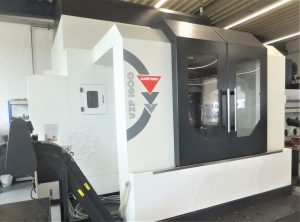
Here’s a detailed rundown of what to check, ask, and test when considering a used HAAS VF-6/40 vertical machining center. It’s a large-frame, 40-taper machine, so size and condition really matter. I can also pull together a printable checklist if you like.
What Is a Haas VF-6/40 (Baseline Specs)
Knowing what the VF-6/40 should have helps you judge how well the used one stacks up. Here are its standard / common specs and features:
| Spec | Typical Value / Feature |
|---|---|
| X / Y / Z travels | 64″ × 32″ × 30″ (≈ 1626 mm × 813 mm × 762 mm) |
| Spindle taper | 40-Taper (CT-40 / BT-40 / sometimes HSK A-63 depending on options) |
| Spindle speed | ~ 8,100 rpm for standard version; higher speed versions are possible as upgrades. |
| Spindle power | ~ 30 hp (≈22.4 kW) for standard machine; direct drive spindle |
| Tool changer | Side-mount, usually ~ 30+1 tools standard; options for larger magazines. |
| Rapid traverse / feed rates | Rapids typically ~ 600 ipm in X, Y, Z for many units, depending on configuration; cutting feed rates lower. |
| Coolant, enclosure, other standard features | Flood coolant (~ 90-100 gallon / ~ 350-400 L), programmable coolant nozzle, chip auger, remote jog handle, coolant/lubrication systems. |
| Power & Air requirements | 3-phase power (220/440 VAC depending on locale), clean dry air supply for controls & spindle lube / pneumatic parts. |
Key Things to Inspect & Test When Buying Used
Because this is a big machine, many wear & maintenance issues can show up, especially if it’s been heavily used without care. Here are what I’d check in person (or have someone inspect):
| Area | What to Check / Test | Why It Matters / What Can Be Wrong |
|---|---|---|
| Spindle & Spindle Bearings | • Run the spindle up to speed, listen (noise, vibration), check for looseness. • Measure run-out at spindle nose (dial indicator or better). • Check spindle lubrication / cooling: is oil/air injection (if applicable) working; are oil lines clean and not leaking. • Check the drawbar: does tool change work cleanly; is drawbar force correct. • Inspect spindle taper (wear, dents, chips). | Worn bearings reduce accuracy, increase vibration, shorten tool life. Poor drawbar or tool change reliability causes downtime. Damaged taper leads to run-out and poor surface finish. |
| Axes (X, Y, Z), Guideways, Ballscrews | • Move axes through full travel; observe if motion is smooth, or there is binding, stick-slip. • Check backlash/reversal in axes (measure with dial indicator). • Inspect guideways for wear (scoring, pitting, rust), especially in places chips accumulate. • Check lubrication to ways & screws; see whether automatic lubrication is working. • Check if squareness / alignment is maintained (e.g., measured by test block or alignment tool). | Worn ways / screws degrade positional accuracy, repeatability. Poor lubrication accelerates wear. Misalignment causes mistakes, increases scrap. |
| Tool Changer / Magazine | • Test tool change sequence: does it pick up / drop tools without issues; any mis-grips / slow operations. • Inspect tool holders, collets: are they in good condition. • Capacity: is the advertised size present; is the changer fast / reliable. • Inspect mechanisms (arms, rails, actuators) for wear, binding, looseness. | Tool change problems are a major source of downtime. Damaged holders or mis-aligned magazine add error. |
| Control System & Electronics | • Which Haas control version is installed; is it up to date; are there options (rigid tapping, probing, etc.) working properly. • Inspect control panel, display, jog handles: are buttons responsive, screen clear; USB, Ethernet ports (if used) functional. • Check wiring in the electrical cabinet: signs of overheating, blown fuses, corrosion. • Check history/logs for alarms or recurring issues. • Check that firmware/software updates have been applied. | Old or unsupported control modules are costly to replace. Hidden electrical issues often cause intermittent problems. Poor UI or missing options may limit what you can use the machine for. |
| Coolant System / Chip Handling | • Inspect coolant tank: condition (rust, sludge), filtration, pump operation. • Check coolant nozzle (programmable nozzle) is functioning and reaches all needed areas. • Check chip auger or conveyor: is it working; any blockage; general cleanliness. • Check whether coolant concentration is maintained (if possible to get records) to avoid corrosion. | Coolant neglect causes corrosion and rust; poor chip handling causes mess, chips can damage ways, droppings can cause wear. |
| Physical & Structural Condition | • Inspect machine body/frame/gibs for cracks, damage or distortion. • Check for damage to enclosures, guards, covers; are all doors / seals intact. • Check table surface: T-slots condition (wear, corrosion), flatness, any warping. • Check machine leveling; base or foundation condition. • Look for signs of abuse (collisions, obvious overloading, dents). | Structural issues reduce rigidity, cause misalignment under load. Table damage reduces precision and clamping reliability. Foundation/leveling is essential for proper accuracy. |
| Performance / Accuracy Tests | • Do test milling operations: straight cuts, contouring, finish passes; check surface finish. • Do repeatability tests: measure same feature multiple times; check in different zones (center vs extremes of travel). • Check positional accuracy: use precision indicators, measure size across table travel. • Warm-up test: see if accuracy drifts as machine reaches thermal equilibrium. • If the machine has rigid tapping or optional features, test them. | Actual performance is what matters; spec can be eroded by wear. Warm-up drift and travel-end errors are common. |
| History / Usage / Maintenance Records | • Ask for total hours of operation, including spindle hours and how many hours under load vs idle. • What materials were cut (hard metals, abrasive work) → more wear vs light / softer material. • Maintenance history: spindle bearing replacements, axis adjustments, lubrication of ways, tool changer maintenance, chip clearance, coolant system servicing. • Any history of crashes or overloads. • Whether the machine has been stored / moved; how transported. | Well-maintained machines perform longer; abuse or neglect leads to hidden damage. Crash incidents may misalign components. |
| Power, Air & Facility Fit | • Check that your facility can supply the required power (voltage, phase, amps) and stable voltage. • Air supply (clean dry) for pneumatics, spindle lube, etc. • Foundation/floor capacity and space: VF-6/40 is large and heavy; need room for operator access, maintenance, movement. • Cooling / ventilation; if ambient temperature extremes, thermal stability might matter. • Transport / installation cost: moving such a machine and installing is non-trivial. • Installation dimensions: enclosure height, door widths etc. | If facility is not ready, costs escalate. Poor installation damages precision. Ambient conditions affect thermal drift. High transport/installation cost can negate purchase savings. |
| Wear / Consumables & Spare Parts | • Ask about condition of consumables: tooling, collets, holders, filters, belts, seals etc. • Are spare parts locally available for critical items (spindle bearings, ways, ballscrews, electronic modules)? • Condition of coolant oils / filters etc. • Condition and age of belts (if any), couplings, pulleys. • Are parts or options included (e.g. remote jog, probes, attachments)? | Missing / worn consumables add cost. Hard-to-source parts lead to long downtime or high import costs. |
Red Flags & Deal-Breakers
Here are warning signs that suggest either heavy investment needed or walking away might be better:
- Spindle with noticeable vibration, heat, or noise, especially at moderate speed.
- Excessive run-out or worn spindle taper.
- Large backlash in axes that cannot be adjusted; binding or rough motion in guideways.
- Control issues: unresponsive buttons, missing features, software version too old or unsupported.
- Frequent alarms or errors in control logs that suggest underlying issues.
- Rust, corrosion in critical areas (ways, table, inside enclosures).
- Poor coolant / chip handling; sludge or damage from chips.
- Missing or broken guards, doors or seals which allow contamination.
- Excessive wear of T-slots; table damage.
- Facility mismatch: if the machine is too large / heavy to move properly or you don’t have proper power / air supply / foundation.
- Costly spares missing or not available locally.
Questions to Ask the Seller
Here are useful questions to ask, to expose hidden issues and evaluate value:
- What is the machine’s age, serial number, control model, software version, and what options are installed (rigid tapping, high speed spindle etc.)?
- How many total hours has the machine run? Spindle hours? How many of those under load?
- What materials have been typically machined (aluminum, steel, titanium etc.) and what cutting strategies used (heavy cuts, high speed etc.)?
- Can I see maintenance records: spindle bearing replacements, ballscrew/turret/way lubrication, any way scraping or re-alignment work?
- Any history of crashes, collisions, overloads? Any history of overheating, excessive vibration or grinding noise?
- Is the tool changer functioning well? Are tool holders available and included? Any issues with mis-picks or alignment?
- What condition is coolant (type, maintenance, cleanliness)? Are coolant tank, pumps, filters, nozzles in good shape?
- How is chip evacuation / chip auger or conveyor, and overall cleanliness of the machine environment?
- What electrical supply does it need, and is that compatible with your facility? Are there any transformer or voltage issues?
- Can I see the machine running, perform test pieces, see accuracy / finish? Are there opportunity to measure test cuts, repeatability, run-out etc.?
- What spare parts are included? What critical spares are needed soon? What is cost / lead time for those?
- Are the guards / doors / covers / seals intact? Are there issues with dust / coolant leaking into electrical cabinets?
- What is the condition of the ways / lead screws / guide rails (visual inspection, any replacement or rework done)?