22/09/2025
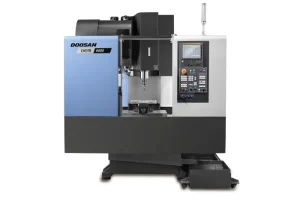
What Should I Pay Attention To When Buying a Second-Hand / used Doosan DNM 350/5AX?
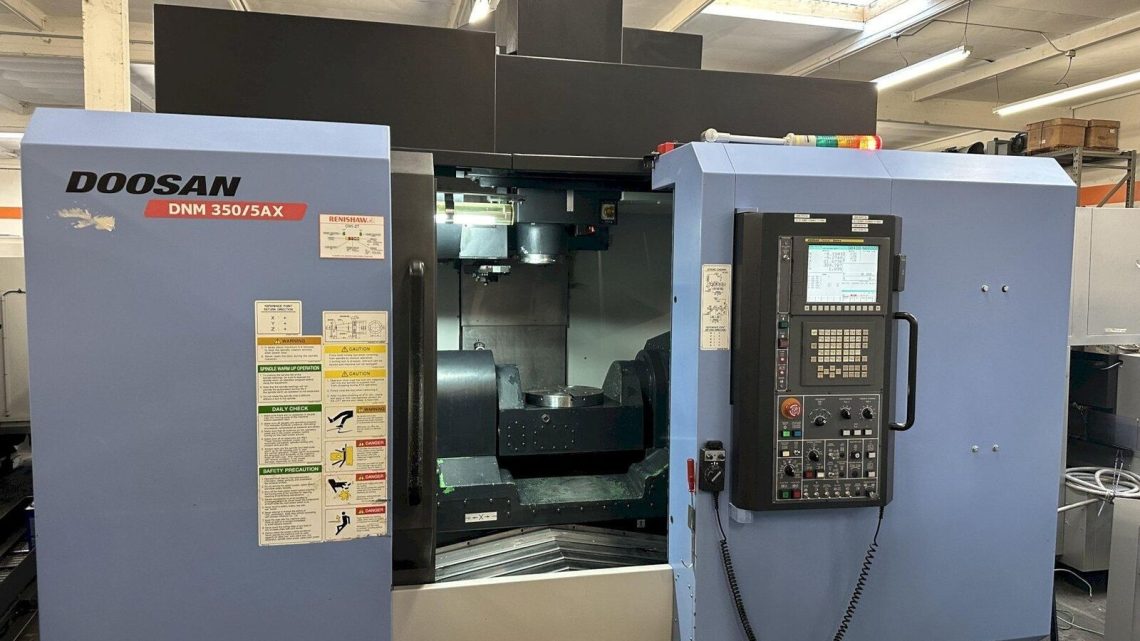
Here’s a detailed guide of what to check, test, and ask when evaluating a second-hand Doosan / DN Solutions DNM 350/5AX 5-axis machining center. Doing this carefully will help you avoid surprises in precision, maintenance, and cost.
What the DNM 350/5AX Should Be / Key Specs
Before visiting, know what the machine is supposed to offer, so you can verify whether what the seller claims matches reality:
| Spec | Typical Value for DNM 350/5AX |
|---|---|
| X travel | ~ 600 mm |
| Y travel | ~ 655 mm |
| Z travel | ~ 500 mm |
| Spindle speed | 12,000 rpm |
| Spindle power / torque | ~ 18.5 kW (continuous) and higher in peak loads |
| Rotary table (tilt & swivel axes: A and C) travel | A: approx +30° / -120°, C: full 360° |
| Table load capacity | up to ~ 250 kg on the rotary table |
| Tool magazine | 30 tools standard; there are optional 40 or 60 tool magazines |
| Control | Commonly Fanuc Oi or similar; check version and support |
What to Inspect & Test Carefully
Here are subsystems and test points; try to see the machine running if possible.
- Spindle & Bearings
- Measure radial/axial run-out at the spindle nose. – Listen for any vibration or unusual noise over speed range. – Under load, does spindle maintain RPM without overheating or vibration? – Check taper surface condition; look for damage or wear. – If there was a spindle collision in the past, look for repaired damage (possible brittle points, vibration issues)
- Rotary Table / A & C Axes
- Move A and C axes fully through their travel; check for smooth motion, no binding. – Test clamping: does the table lock rigidly in every position under load? Any drift or looseness. – Check encoder feedback, zero/reference positions. – Verify table surface flatness and whether workholding is correct.
- Linear Axes (X, Y, Z) & Guideways / Ball Screws
- Traverse full span in X, Y, Z; feel for binding or changes in resistance. – Check backlash and repeatability (e.g. move out and back, measure position). – Inspect LM guides / roller guides / covers: any chips, rust, gouges, damage. – Check lubrication to guideways, ball screws, whether oil lines/oil pumps are working and clean.
- Tool Changer & Tool Holders
- Cycle through several tool changes: speed, reliability, mis-picks? – Inspect holders for wear or damage. – Sensors for tool presence, clamp/unclamp working properly. – Is the magazine full / functional; are all slots usable.
- Control System & Software
- Power up control; check display / buttons / touch if any. – Check alarm / error logs. – Is the control version current or obsolete? Are software/firmware backups available? – Test coordinate systems, probing (if present), 5-axis capability (4+1 or simultaneous) as needed.
- Coolant / Through-Spindle Coolant (TSC) & Chip Management
- If TSC is installed, test flow and pressure; check for leaks or seal integrity. – Coolant tank: clean, adequate capacity, filter condition. – Chip conveyor: is it working; is it cleaned; any blockage; watch for chips damaging lower components. – Guards, shields, ways to deflect chips away from guides.
- Accuracy & Test Machining
- Cut test parts like what you plan to do; measure dimensional accuracy and surface finish. – Test at multiple positions: center and towards extremes of the axes. – Run some heavy cuts and some high-speed cuts to check behavior under both. – Check for drift after machine warms up.
- Power, Electrical & Utilities
- Inspect electrical panels: wiring, connectors, cleanliness, cooling of cabinets. – Power requirement: voltage, phase, amp draw; ensure your shop can supply. – Air supply, if axis (like rotary clamp) requires pneumatics. – Hydraulic / coolant pumps: function, leaks, performance.
- Maintenance History & Usage
- Hours of operation: total, under cutting, idle time. – What kind of machining was done (materials, depth, use of 5-axis simultaneous etc.). – Any crash or known damage (especially spindle collisions, rotary table hits). – Servicing of bearings / spindles / axes / encoders.
- Safety & Physical Condition
- Emergency stops, guards, interlocks, door sensors functional. – Machine housing / enclosure in good condition: no major corrosion, rust, or coolant damage on external surfaces. – Check way covers, seals, lubrication lines for damage or leaks.
- Tooling & Accessories Included
- What holders, fixturing, probes, workholding (rotary fixtures etc.) are included. – Are spare parts included (filters, belts, seals)? – Are manuals, wiring / maintenance documentation available?
- Footprint, Installation & Fit
- Machine size and weight compared to your facility’s floor, crane or rigging capacity. – Leveling: has machine been leveled properly? – Conditions in shop: temperature stability, vibration, cleanliness; these affect precision in 5-axis machines.
Known Weak Spots / Common Issues
These are things commonly reported by owners / repair shops on this model or series:
- Spindle collisions: even small spindle nose impacts can degrade run-out and surface finish sharply. – Inaccuracy in volumetric calibration (table + rotary axes + spindle alignment) may need compensation. Users report needing to recalibrate DCP-i / probe compensation etc.
- Wear in spindle bearings over time, especially if cooling / lubrication not well maintained. – Tool changer reliability issues, especially with high tool counts. – Rotary table stiffness / clamping wear can reduce rigidity. – Chip ingress / coolant splash affecting rotary and linear guideways if way covers or shields are damaged. – Software version idiosyncrasies; older control firmware or missing updates.