21/09/2025
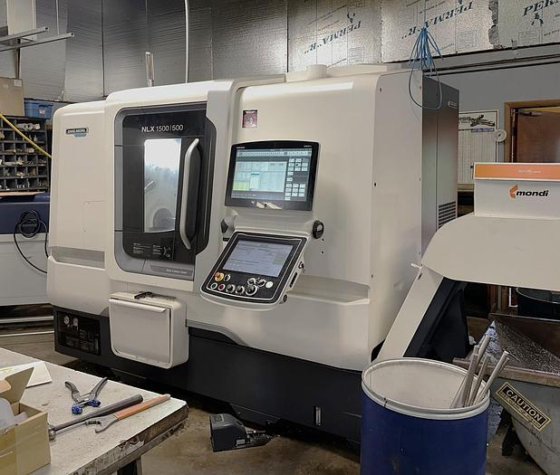
What Should I Pay Attention To When Buying a Second-Hand / used DMG MORI NLX1500/500?
Here’s a detailed guide for what to watch out for when buying a used 2021 DMG MORI NLX 1500/500 turning-center. Use this as a checklist during inspection and negotiation.
Machine Basics & What Matters
First, know what this model typically includes, so you can recognize deviations or omissions:
- It’s a high-rigidity CNC lathe with turning and milling (live tooling) capabilities.
- It has a “500” designation meaning it has roughly ~500 mm Z-axis (turning length) in many configurations.
- It often comes equipped with a live tool turret, Y-axis (in some versions), C-axis indexing, good spindle power, and possibly sub-spindle or tailstock attachments.
- It uses DMG MORI’s control system (CELOS + MAPPS or similar), modern servo drives, coolant & chip removal systems.
Knowing what “standard” looks like helps you assess what’s present and what might be degraded or missing.
Key Areas to Inspect & Test
Here are critical areas to check. When possible, test under real load or similar cuts to what you will run.
| Area | What to Check / Test | Why It’s Important / Risk If Worn or Missing |
|---|---|---|
| Spindle(s) & Bearings | • Run main spindle at low and high speeds; listen/feel for abnormal noise/vibration. • Check run-out (radial & axial), especially at spindle nose and through bar bore (if used). • Inspect spindle taper/bore for wear or damage. • Temperature rise during long run; whether cooling is working well. | Spindle wear increases scrap, reduces surface finish, and repair or replacement costs are high. High run-out limits achievable tolerances. |
| Turret & Live Tooling | • Indexing accuracy of the turret; check for delay or backlash. • Operate live tooling: radial & axial imbalance, vibration, whether torque/power spec is met. • Condition of tool holders, clamping surfaces; presence of wear, slack, damage. • Turret change over speed and repeatability under load. | A sloppy or worn turret or live tooling reduces precision and repeatability; can cause vibration, poor cut quality, increased tool wear. |
| Axes (X, Z, possibly Y), Guides & Ways | • Move axes through full travel; observe smoothness, any uneven motion, binding, noise. • Inspect machine bed, guide-ways/slides for wear, scoring, corrosion. • Check backlash in each axis, especially X- and Z-axis; for models with Y-axis: check its condition and performance. • Check alignment: squareness, perpendicularity of axes, turret to spindle, etc. | Worn ways or misalignment cause taper, inaccuracy, bad fits. Repair/realignment can be costly and time-consuming. |
| Control System / Software / CNC Electricals | • Check control panel, display, all buttons/switches are functioning. • Inspect error logs or historical faults; inverter/servo drive health. • Verify that software version is up-to-date or at least supported; check whether all intended CNC functions (live tooling, C-axis, Y-axis, etc.) are licensed and working. • Examine wiring, connectors, sensors, limit switches. | Faulty control / drives cause intermittent failures. Old or unsupported software could limit functionality, make upgrades or support harder. |
| Accuracy / Production Test | • Ask to run a typical part you will produce, with the tools and speeds you will use; measure it for dimension, finish, repeatability. • Request calibration or geometry reports: e.g. turning accuracy, concentricity, roundness, repeatability over Z travel. • Examine spindle bore repeatability / retraction cycle response (if applicable). | Without proof of accuracy, the machine’s abilities may fall short of your part tolerances. Manufacturing requirements may not be met unless results are verified. |
| Wear, Usage History & Maintenance Records | • Total operating hours; hours under load vs idle; spindle hours, live tooling usage. • What materials were machined (hard metals, abrasives, etc.)—those wear things faster. • Maintenance records: lubrication schedule, coolant maintenance / replacement, turret servicing, alignment / bed scraping if ever done. • Whether the machine has had any crashes, overloads, or extreme usage. | Heavy use or poor servicing often leads to hidden wear; costs for refurbishing can reduce returns on investment. History helps you estimate remaining useful life. |
| Peripheral Systems, Accessories, Consumables | • Condition and inclusion of chuck & jaws, steady rest or tailstock (if included), tool holders, tool presetter. • Coolant system (tank, pump, filtration), chip conveyor, safety enclosures, lighting. • Whether cooling / lubrication / hydraulic systems are leak-free, well maintained. • Check consumables like seals, filters, ways protectors, greasing systems. | Missing or badly worn accessories reduce productivity, may force additional purchase. Peripheral failures can halt production. Good condition saves cost. |
| Transport / Installation / Foundation / Environment | • Ask whether the machine has been moved; after moving, was it re-leveled / realigned. • Floor vibration, foundation rigidity; whether machine is anchored properly. • Power supply stability; cleanliness of the environment (dust / chip accumulation), temperature control. • Whether the facility has the required utilities: cooling, air (if needed), hydraulic/pneumatic supplies. | Misinstallation causes alignment problems, vibration, reduced precision. Poor environment worsens wear and reduces reliability. |
| Spare Parts & Support | • Determine how available the spare parts are for this model (spindles, drives, tool holders etc.). • Manuals, parts diagrams, service history; whether they are included. • Local service support or technician experience with this model. • Software backup of machine parameters. | Difficulty getting spare parts or service leads to long downtime, higher costs. Lack of documentation complicates maintenance. |
| Cost of Ownership / Hidden Costs | • Consider costs for eventual refurbishing of wear parts (spindle, ways, turret) if needed. • Expected energy, coolant/lubricant, tooling costs. • Costs for moving, reinstalling, calibrating after purchase. • Potential future software or control upgrades; licensing costs. | A low purchase price but high running cost or refurb requirement can make the investment poor. |
Questions to Ask the Seller
Here are useful questions to fill in details that aren’t obvious by inspection:
- What is the exact operating (and spindle) hour count?
- What is the condition of the spindle bearings (any replacement)?
- Has the machine ever had a crash, overload event, or misuse?
- What is the software version and what functions are installed and working (live tooling, Y-axis, C-axis, retraction cycle, etc.)?
- Do you have recent calibration / geometry reports? What tolerances have you held in practice?
- What maintenance schedule has been followed; what parts have been replaced (ex: ways, seals, turrets)?
- Are all original or intended accessories included (tool holders, chuck, jaws, steady rest, chip conveyors, cooling, etc.)?
- What is the power and utilities situation where the machine is; where has it been installed; has it been moved?
- Are there logs of errors/faults; any recurring issues?
- Are manuals, spare parts catalogues, software backups included?
Things That Tend to Cause Trouble / Hidden Problems
- Spindle wear: bearings might degrade quietly over time, run-out can increase, and damage might have occurred from lack of lubrication or overheating.
- Turret or live tool chatter or looseness: especially under load, rarely obvious in idle testing.
- Guide ways wear or bed deformation (especially if heavy parts were run or machine was overloaded).
- Electrical / control issues: wiring insulation, connectors, sensors degrade; sometimes intermittent faults that show only during full production.
- Cooling / lubrication failures: coolant contamination, pump wear, filter clogging can degrade machining, cause rust or wear.
- Moves / transport: any machine that has been transported may be misaligned unless carefully reinstalled.