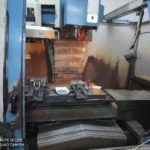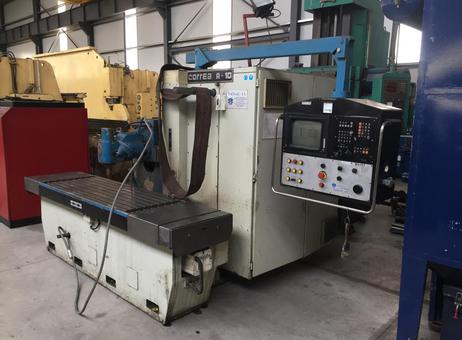
What Should I Pay Attention To When Buying a Second-Hand / used CORREA A-10?
If you’re considering a second-hand Correa A-10 (bed-type universal / CNC bed milling machine), it’s a solid machine but there are many things you’ll want to check carefully. Below is a breakdown of what to pay attention to, based partly on known specs of the A-10 and common failure / wear modes. If you like, I can also give you a checklist you can use during inspection.
Key Specifications & What to Know (Baseline)
First, know what a typical A-10 can do so you can judge how the used machine stacks up. Some typical specs for a Correa A-10 (may vary by configuration / year):
| Spec | Typical for Correa A-10 |
|---|---|
| Table size | ~ 1700 × 630 mm |
| Max load on table | ~ 3000 kg |
| X-axis travel | ~ 1300 mm |
| Y-axis travel | ~ 630 mm |
| Z-axis (ram / knee / vertical) travel | ~ 630 mm |
| Spindle taper / type | ISO 50, universal milling head |
| Spindle speed range | ~ 80-3,150 rpm |
| Spindle power | ~ 16-19 kW depending on variant |
| Rapid feedrate | ~ 8,000 mm/min for X/Y/Z |
These indicate a robust, fairly large bed mill suitable for heavy / large workpieces.
What to Inspect / Test Before Buying
Given the size, workload, mechanical complexity, and how long these machines tend to be in service, here are the main areas to check.
| Area | What to Look For / Test | Why It’s Important / Common Issues |
|---|---|---|
| Spindle & Head | • Run the spindle at multiple speeds; listen for grinding, knocking, or vibration. • Check run-out on the spindle nose (using test bar / dial indicator). • Inspect spindle taper / cone (ISO 50), condition of tool-clamping (hydraulic, etc.). • Check head’s universal / swivel / ram function (if it has a tilting / swiveling head). • Coolant or lubrication to spindle: make sure seals aren’t leaking; check oil or hydraulic systems. | The spindle is central: worn bearings, damage or vibration will degrade finish, accuracy; tool holder seating may have been abused. Universal head components and swivels are expensive to repair. |
| Axes (X, Y, Z), Guideways, Screws / Nuts | • Move each axis through full travel: feel for binding, rough patches, scratching, backlash. • Check way surfaces (bed ways, ram slide, etc.) for wear, scoring, rust, pitting. • Check ball screws or lead screws: backlash, wear in nuts, lubrication. • Check alignment: are axes square / level; is the bed flat; is the ram vertical? • Check dovetail or ram slide geometry if present. | Wear in ways or screws will hurt accuracy; misalignment causes error especially on large/long work. These components are heavy-duty, but when abused / not maintained, can degrade. |
| Control System & Electronics | • Which CNC control is installed (Heidenhain TNC-320, TNC-360, TNC-355, etc. depending on year) and what condition it is in. • All panels/buttons and displays working. • Look in error / fault logs, service history. • Make sure all electrical enclosures are clean, no signs of overheating, burnt cables, moisture. • Check servo / drive units, wiring, limit switches. | A good control is essential for precision & usability. Old or faulty control/electronics can be difficult/expensive to repair. |
| Mechanical Structure & Physical Condition | • Inspect the machine frame / bed: any cracks, warps, damage. • Condition of table: T-slots, surface flatness, wear, corrosion, damage from clamping heavy loads. • Ram head / knee: move up/down; check for wear or play. • Guards, covers: are they intact; chip guards, splash guards etc. • Condition of cooling / chip removal – coolant systems, chip conveyors(if present), filtration. | Structural problems degrade rigidity and thus precision; damage from chips, coolant leaks, etc., often leads to alignment or wear issues. |
| Feed / Rapid Feeds & Motors / Drives | • Test feed performance: does it reach rapid speed properly; is motion smooth. • Check motor noise, heating, belt or coupling conditions. • Check drive backlash, smoothness at low feedrates. • Digital readouts, axis feedback / encoders calibration. | If feed drives are loose, misadjusted, or worn, you’ll lose precision and productivity. Rapid-feed problems slow work and may indicate drive wear. |
| Power, Lubrication & Hydraulic Systems | • Hydraulic tool-clamp (if present): check clamping pressure, leakage, consistency, safety interlocks. • Lubrication of sliding surfaces, screw nuts, ways; check for lubrication points used and that lubrication is maintained. • Coolant pumps, coolant quality, coolant tank condition (rust, sludge, bacterial growth), coolant flow to spindle or head. • Motor cooling, exhaust fans, electrical cooling. | Proper lubrication & cooling are often neglected and can cause accelerated wear. Hydraulic or coolant failure can lead to overheating, tool / spindle damage. |
| Accuracy / Test Cuts | • If possible, make test cuts / face, milling, slotting, finish passes; measure surface finish, dimensional accuracy. • Repeatability: measure same part or gauge multiple times. • Across full travel in X/Y/Z, test whether accuracy holds near ends of travel. • Thermal behavior: see if warming up affects accuracy or causes drift. | The spec of material removal is one thing; actual precision across full travel is often worse in older machines. Test cuts reveal what maintenance or wear has done. |
| History / Maintenance Records | • Ask for history: hours of use, what types of materials were milled (hard / heavy work accelerate wear). • What maintenance has been done: way scraping, alignment, spindle bearing replacements, hydraulic servicing, etc. • Whether any major repairs or overhauls were done: replacing ways or screws etc. • Retrofitting/upgrades: sometimes machine was refurbished (e.g. retrofitted control, refurbished head etc.). • Any known issues or damage (collision, overload, coolant leak, big crashes). | Knowing what’s been done gives you a baseline for future upkeep. Also helps you price risk. |
| Spare Parts & Support Availability | • Are spare parts for that year / control version still available locally (spindle parts, bearings, motors, control electronics)? • How easy is support / service for Correa machines in your area? • Manuals, schematics available? • Are common consumables (tool holders, hydraulic components, filters, etc.) easy to source? | If parts are scarce, downtime & repair cost go up. Also older controls may be discontinued or have long delays on parts. |
| Facility & Setup Requirements | • Machine weight (≈ 9,000 kg typical for the A-10) and necessary foundation / base; can your facility support it? • Power supply capacity, voltage, three-phase etc. • Cooling, coolant disposal, chip removal / handling. • Crane / rigging for loading / moving the machine. • Floor space and clearances; head-ram clearance; operator access. | Even a “perfect” machine can cost a lot to install and commission if your facility is not prepared. Transport damage can cause alignment issues. |
Red Flags & What Might Make You Walk Away (or Bargain Hard)
These are warning signs that either mean heavy costs ahead, or that the machine may not be worth its price.
- Spindle run-out or noise at light load → indicates bearing wear or misalignment.
- Excessive backlash in axes that can’t be adjusted out.
- Nasty wear or damage to ways (scoring, rust, pitting) especially bed ways, ram, table surface.
- Missing or damaged lubrication / coolant systems; rust inside coolant tank / conduits.
- Hydraulic clamping tool system that leaks or is inconsistent.
- Control electronics older, unmaintained, display / input units not working properly.
- Availability issues for spare parts (especially hydraulic, spindle bearings, control parts) in your region.
- Any crash damage: ram collisions, tool hits, parts banging into table etc.
- Bad alignment or geometry: even if mechanical parts look good, if the machine hasn’t been “put in geometry” (i.e. realigned / scraped) for a while, you might get poor accuracy. Correa’s own service provider mentions that as part of refurbishing.
- High cost of transport + installation outweighing any savings from buying used.
Pricing & Value Considerations
When deciding whether the price is fair, factor in:
- Condition: how well-used, how well maintained, level of refurbishment (if any).
- Accessories included: tool holders, fixtures, coolant system, chip handling, guards, etc.
- Control model & state: newer / maintained controls bring higher value; older may need upgrades.
- Transport + installation + alignment: large milling machines are heavy and need strong foundation, proper setup.
- Future cost: spare parts, maintenance, potential downtime.