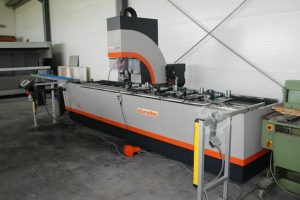
What Should I Pay Attention To When Buying a Second-Hand / used CHIRON FZ 18L?
Here’s a detailed guide for what to check if you’re considering buying a second-hand Chiron FZ 18L machining centre. These are high-performance machines, so lots of wear points and details matter. Use this as an inspection checklist + things to ask the seller + red flags + how to judge whether the price is fair.
What You Should Know First — Baseline / Typical Specs
It helps to know what a Chiron FZ 18L should be capable of, so you can compare what you’re being offered with what’s reasonable. Some of these come from used-machine listings.
| Spec | Typical Value |
|---|---|
| X-travel | ~ 2000 mm |
| Y-travel | ~ 400 mm |
| Z-travel | ~ 425 mm |
| Table size | ~ 2280 × 450 mm |
| Max table load | ~ 500-525 kg |
| Spindle motor power | 18 kW |
| Spindle speed max | ~ 10,500 rpm |
| Tool changer | usually 20 tools, tool diameter up to ~ 65 mm, with free-space pockets for larger tools. |
| Spindle taper / toolholders | SK 40 (DIN 69871) is common. |
Knowing those give you benchmarks to measure actual condition against.
What to Inspect / Test (On-Site, If Possible)
Here are the subsystems and details you should check carefully. If possible, do test machining or cuts, but many wear/failure modes reveal themselves with keen observation and measuring.
| Subsystem / Area | What to Inspect / Test | Why It Matters / What Can Be Wrong |
|---|---|---|
| Spindle / Bearings / Taper | • Run the spindle through speed range: listen for noises, vibration, heat. • Measure run-out on tool taper / spindle nose (radial & axial) with test bar. • Inspect taper face / clamping surfaces for damage or wear. • Check that drawbar (if applicable) / tool holder locking works fully, reliably. • Check whether bearings have been replaced; ask for spindle service history. | Spindle is one of the most expensive parts to repair. Worn bearings, damaged taper, or noisy operation degrade accuracy, surface finish, tool life. Spindle misalignment or worn drawbar leads to chatter or vibration. |
| Guideways / Ways / Slides / Axis Drives | • Move X, Y, Z axes through full travel: detect binding, “soft” spots, uneven motion. • Check for backlash in each axis, especially reversal error. • Inspect way surfaces (under covers if possible): scoring, rust, damage. • Check lubrication of ways: is automatic lubrication working (if present)? Are slide oil feeds / grease points clean & functioning? • Inspect motors, gearboxes or belts for the axis drives: noise, heat, play. | Wear on guideways or way damage reduces precision, increases vibration & tool wear. Inadequate lubrication accelerates damage. Backlash degrades repeatability. |
| Table & Load Handling | • Inspect table surface: flatness, T-slots condition, damage or warping. • Check table loading under load: does it sag, distort, or shift when loaded near its capacity? • If table has pallet or positioning features or sub-table, check alignment & repeatability. • Check max recommended load vs actual usage. | If table is worn or not rigid, parts may twist or be out of tolerance. Warped or damaged table surfaces reduce job accuracy. Exceeding load ratings causes permanent damage. |
| Tool Changer & Tool Holding | • Cycle tool changes several times; check speed, repeatability, mis-picks or misalignments. • Inspect tool holders: condition of shanks, clamping surfaces, cleanliness; check whether tools sit properly. • Check capacity and physical constraints: tool length, weight, diameter are as per spec. • Inspect magazine carousel or tool storage: clamping, indexing, cleanliness, signs of mechanical wear. | Tool changer issues cause downtime. Worn holders or misaligned magazine lead to crash risk or tool damage. If large tools won’t fit, your jobs may be limited. |
| Control / CNC / Electrical Systems | • Identify which control is installed (e.g. Siemens Sinumerik, etc.); check firmware / software version & support. • Inspect electrical cabinet: wiring condition, cleanliness, any burned connectors / overheating signs. • Check buttons / screens / pendant / display for damage or missing parts. • Check error logs / alarms; any recurring faults. • Check whether safety interlocks / limit switches work. | Control issues can be expensive; spare parts may be scarce for older control versions. Hidden errors or inconsistent behavior reduce reliability. Safety compliance matters. |
| Coolant, Chip Removal, Cleanliness / Environment | • Check coolant system: tank cleanliness, pump, filters, coolant quality. • Check chip conveyor / removal: is it working, clean, free of buildup. • Inspect whether the shop environment is clean, if dust / chips are contaminating ways or inside components. • Check for leaks (coolant, hydraulic oil, lubrication oil). • Check air supply (if air-assist or pneumatic components) condition. | Poor coolant or chip removal causes rust, contamination, damage. Chips inside way covers or spindle cause abrasion. Leaks degrade machine or create safety hazards. |
| Accuracy & Test Machining | • If possible, do a test part: milling, hole drilling, finishing pass. Measure accuracy & surface finish. • Repeatability test: run same operation multiple times; measure variation. • Check positioning at extremes of travel to see if errors grow with distance. • Warm-up test: run machine for some time, then check whether alignment or accuracy shifts. | Even a machine that “looks good” may have drift or lost precision over time. Some issues only appear under load or after warm-up. |
| Maintenance / Usage History | • Ask for hours on spindle / power-on hours / machining hours. • What materials were processed (aluminium, steel, titanium etc.) – hard or abrasive materials cause more wear. • Service history: bearing replacements; way adjustments; tool changer maintenance; lubrication schedule; alignment checks. • Any known crashes or overloads. • Has machine been relocated often? Was it properly aligned after moves? | A well-maintained older machine can be more reliable than a lightly used but neglected one. Crash history may have introduced damage not visible. Relocation often causes misalignment if not re-surveyed. |
| Spindle Repair / Known Weaknesses | • Check for known spindle issues from Chiron FZ series: contamination of bearings, damaged taper / drawbar issues, wear of splines, seal leaks etc. • Inspect drawbar and gripper mechanism (if used) for wear / spring strength. • Check cooling or air supply to the spindle / heads. | Spindle repair is expensive; severely damaged spindle components drop value significantly. If drawbar / gripper are worn, tool retention may suffer. Cooling deficits accelerate wear. |
| Utility / Facility Fit | • Check power supply requirements: voltage, phase, amperage; facility must meet them. • Air supply (clean, dry) if pneumatic or for cooling. • Space and foundation: 7-8 ton machine, big footprint (e.g. ~4000×3010×3040 mm for some units) per listings. • Access for maintenance, tool change, chip removal. • Environmental control: temperature fluctuations, humidity, dust can affect precision. | If utilities are inadequate, you’ll have extra cost for upgrades. Poor foundation or insufficient space leads to installation / alignment issues. Environment affects tolerance, warm-up behavior. |
Questions to Ask the Seller
To uncover information that typical visual inspection won’t show, ask the seller:
- What is the machine’s year, serial number, control version (Siemens 810, 840D, etc.)?
- How many spindle hours vs idle hours / power-on hours? Also, hours under high load / heavy cuts.
- What materials have been run most — soft vs hard, how often under heavy milling or finishing?
- Has the spindle ever been repaired or overhauled? When? What was replaced (bearings, taper, drawbar, etc.)?
- When were the guideways / slides last serviced / re-lapped / replaced? Any known issues with binding or loss of precision?
- What is the condition of the tool changer: have there been failures, missed picks, alignment issues? Are all tool pockets present and functional?
- Are the fixtures / workholding jigs included, or just the machine? Any accessories (probes, manual, touch probes, handwheels etc.).
- Any history of crashes / overtravel / mechanical damage.
- Is there documentation: manuals, wiring diagrams, maintenance records, calibration / alignment records?
- Can you see a test job being run, ideally with material similar to what you will produce, so you can measure finish & precision?
- Confirm utilities: required power, air, coolant, etc., and whether these are in good working order.
Red Flags & Deal-Breakers
If you find any of these, the cost to fix may be large, or the machine may be risky:
- Spindle noisy, vibration, heat at idle or lower speeds.
- Spindle run-out large; taper damaged.
- Excessive backlash, or axis movement feels loose or sloppy.
- Binding / “sticking” in ≈-mid or edges of travel in any axis.
- Damaged or worn guideways (scoring, rust) particularly under way covers.
- Tool changer mis-alignment, tool-holders worn or missing, mis-picks.
- Control electronics / display / wiring damaged or unreliable; missing parts.
- Damage to table surface (warps, cracks), poor clamping.
- Poor coolant/chip management; rust or buildup in coolant tank; leaks.
- Foundation or location issues: misaligned or unsettled machine bed; excessive vibration from environment.
- If machine has had heavy duty continuous use without periodic maintenance, bearings / motor drives may have shorter remaining life.
How to Judge Price vs Value
When deciding what’s fair price, remember to factor in:
- What repairs or replacements likely are needed immediately (spindle, bearings, guideways, clamp surfaces etc.).
- Cost of missing accessories or tooling. If you need to supply a probe, touch setter, fixtures, etc., that adds up.
- Transport, installation, alignment cost. The FZ 18L is heavy (≈ 7-7.2 tonnes) and large. Moving & leveling costs matter.
- Utility upgrades (power, air, coolant) if your facility isn’t already equipped.
- Expected life of wear items: spindle bearings, tool holders, slide ways etc., and their cost in your region.
- Throughput / productivity you’ll get: if machine still has good accuracy & speed, it’s more valuable; wear that reduces speed or accuracy reduces value.