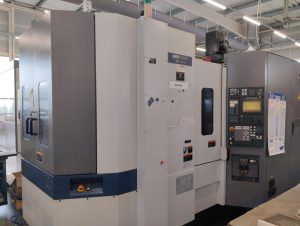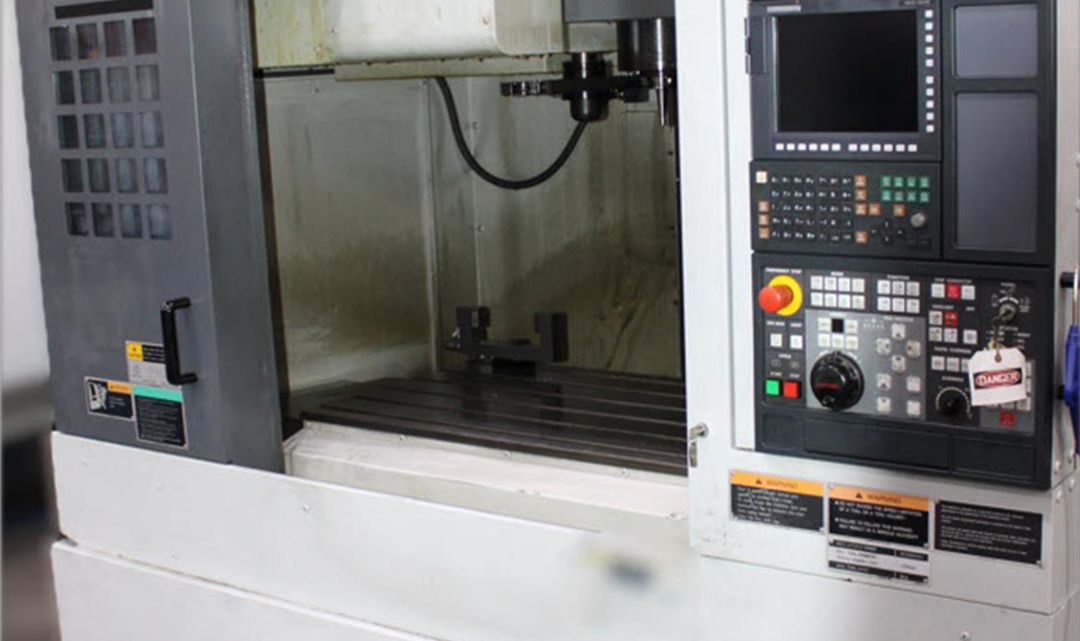
What Should I Pay Attention To When Buying a Second-Hand, Pre-Owned, Surplus, Used Mori Seiki NV5000α1A/40 CNC Vertical Machining Center made in Japan?
Here is a detailed checklist and guidance for what to watch out for when evaluating a used Mori Seiki NV5000 α1A / 40 (or NV5000A/40 variant) vertical machining center. Because this is a high-end Japanese machine, wear or hidden faults can be costly. Use this as your “on-site / due diligence” checklist. I can also help you walk through a particular listing if you like.
Understanding the machine & baseline specs
First, get the spec sheet (or confirm with the seller) so you know what “as new” performance should look like. Here are some published specs for the NV5000 α1A / 40 or NV5000A/40 versions:
- Travels: X = 800 mm, Y = 510 mm, Z = 510 mm
- Table: 1100 × 600 mm, table load capacity ~ 1,000 kg
- Spindle: BT40, power ~ 18.5 kW; max speed up to 20,000 rpm (or in some versions 14,000 rpm)
- Tool magazine: 30 tools
- Rapid traverse: ~ 42 m/min typical in X / Y / Z
- Weight / footprint: ~6,500 kg, footprint ~2,460 × 2,710 mm
- Control: often MSX-series (e.g., MSX-511 in listings)
Use these as benchmarks: if a candidate machine is significantly off (much slower, smaller travels, worn axes), that’s a red flag.
Subsystems & inspection checklist
Below is a breakdown of what to inspect, test, and verify in each subsystem. Wherever possible, ask to see live test parts or run the machine under load.
| Area | What to Check / Test | Why It Matters / What to Watch For |
|---|---|---|
| Frame, structure & alignment | • Inspect the machine’s base, columns, castings for cracks, weld repairs, distortions, or evidence of impact. • Check mounting and foundation: is the machine level, stable, and rigid? • Use a straightedge, granite surface plate or laser alignment tools to verify that guide surfaces across the width and depth remain true and not bowed. | Structural damage or warpage is extremely expensive to correct, and introduces geometric errors forever. |
| Guideways / linear axes | • Jog each axis (X, Y, Z) slowly through full travel; feel for smoothness, binding, step changes in friction, “sticky spots”. • Reverse direction and test for backlash or play. • Use indicators / measuring tools to check straightness, linearity, or deviations. • Look for scoring, pitting, embedded chips, corrosion on guide surfaces. | Wear or damage in linear slides is a major source of accuracy loss. If the guides are worn badly, rebuilding or replacement is costly. |
| Ball screws / drive trains | • Move axes at different speeds and see whether the screw / nut assembly moves smoothly. • Check for axial play, backlash, or “lash” when reversing direction. • Visually inspect threads (where accessible) for wear, pitting, damage, or lubrication failure. • Inspect couplings between motor and screw for misalignment or looseness. | Worn or failed screws / nuts are expensive to replace and degrade repeatability and positioning. |
| Spindle & bearings | • Run the spindle at low, mid, and high speeds; listen for abnormal noise, vibration, hums, or grinding. • Mount a precision test bar or a known straight bar and measure radial (and axial) runout using a suitable indicator setup. • Let the spindle run for some time to warm up; measure the housing temperature to detect overheating (which hints at bearing wear). • Inspect spindle nose / taper interface: look for nicks, wear, corrosion, or damage. • Check spindle cooling, lubrication (if oil or liquid cooled) systems if present. | The spindle and its bearings are among the most expensive components. Any serious bearing damage or high runout can make the machine unusable for precision work. |
| Tool changer / magazine / tool handling | • Cycle tool changes repeatedly; check indexing, tool insertion / removal, speed, consistency, and any mispositioning. • Inspect magazine carousel, rails, switches, sensors, grippers, and drive mechanisms for wear, play, misalignment. • If the machine supports 4th/5th axes or rotary tables, test their interface and synchronization with the tool changer. | Tool changer problems cause downtime, crashes, or misalignment during machining. Parts may be harder to find. |
| Table, clamping & workholding | • Check table surface for wear, corrosion, scratches, flatness. • Verify T-slots or clamping features for deformation or damage. • Load the table (within spec) and test deflection / rigidity if possible. • Test table travel and accuracy in axes under load conditions. | Table deformation or wear degrades fixturing accuracy, part geometry, and vice life. |
| Motion accuracy & calibration | • Use metrology tools (laser interferometer, ballbar, gauge blocks) to test positional accuracy, straightness, angular error, repeatability. • Do “test part” machining of a known reference geometry, and verify tolerances, surface finish, and repeatability. • After some running time, re-measure to detect drift or thermal expansion issues. | A machine may look clean, but if accuracy is lost, it’s functionally useless for precision parts. |
| Control, electronics & wiring | • Power up and watch boot diagnostics; check for errors, missing modules, I/O failures. • Inspect drive cabinets, fan cooling, heat sinks, wiring, connectors, signs of burns or corrosion. • Test axis referencing, homing, limit switches, soft-limits. • Run sample programs, tool paths, interpolation, complex moves. • Check encoder feedback, wiring integrity, signal noise or dropouts. • Verify parameter backups, calibration tables, firmware versions, and ability to restore from backups. • Look inside the electrical cabinet for dust, electrical damage, signs of moisture ingress. | A perfect mechanical machine is worthless without healthy control electronics. Missing or faulty electronics can be costly or impossible to replace. |
| Coolant / lubrication / fluid systems | • Test coolant pump, filters, plumbing, hoses, nozzles; verify flow and pressure. • Inspect coolant tank: look for sludge, metal chips, contamination, corrosion. • Check lubrication lines for linear axes, spindle, turret (if applicable) — verify that delivery is working, lines are clear and no blockages. • Check for leaks, hose condition, seals. • If the machine has temperature control or coolant chilling units, inspect them too. | Poor or failing fluid systems cause accelerated wear, thermal instability, and part defects. |
| Chip management, guards, covers & sealing | • Look for chip accumulation in interior zones, around guides or under turrets. • Check that all guards, covers, bellows, wipers are intact and functioning properly. • Inspect seals and shielding that keep contaminants out of critical systems. | Chips and contamination in precision areas cause scoring, wear, and alignment drift. |
| Thermal effects / drift / stability | • Run the machine under load for an extended period (30–60 min or more). • Observe how temperatures stabilize, whether axes / parts drift. • Re-measure key dimensions or reference points after warm-up to see if offsets change. | Even a well-maintained machine can drift thermally. Excessive drift is a sign of design or wear problems. |
| Maintenance history & usage profile | • Ask for machine age, spindle hours, cutting hours, cycle counts. • Request maintenance records: what parts have been replaced (bearings, screws, guides, electronics). • Ask about crash history, misuse, power incidents, or any structural repairs. • Know the environment: was the machine used in a clean, climate-controlled shop or in harsh conditions (dust, coolant spray, humidity)? • Ask whether any retrofits or modifications have been done (e.g. control upgrades, additional axes). | Good records and a clean background greatly reduce the risk of hidden problems. |
| Parts, support & documentation | • Confirm whether spare parts (drive modules, encoders, screws, bearings) are still available for the NV5000 series. • Check whether DMG Mori or authorized service support exists in your region (Turkey / Europe). • Insist on obtaining original documentation: operation manual, maintenance manual, wiring diagrams, parts list, calibration / compensation tables, backup parameter files. • Ask for any spare modules, backup electronics, cables, or consumable spares if the seller has them. | Without parts, repairs or downtime can become prohibitively expensive. |
| Shop readiness / infrastructure & installation | • Verify your local power supply: voltage, phases, current capacity, stable supply. • Ensure good grounding, clean electrical distribution, and protection against surges. • Check that your shop floor is rigid, flat, and able to support the machine load without vibration or deflection. • Ensure proper clearance for maintenance, tool changes, full axis movement, and service access. • Confirm you have chip / coolant management, filtration, drainage systems in place. • Check ventilation, temperature control, dust / humidity control. • Ensure safety guards, doors, interlocks, emergency stops comply with your local safety / regulatory standards. | Even a perfectly good machine will fail in a poorly prepared shop environment. |
Negotiation & risk management strategies
- Adjust price for likely required refurbishments — e.g. replacing worn guides, spindle bearings, screws, or control modules.
- Insist on acceptance / trial clause — that the machine must pass your own benchmark part test after installation.
- Require inclusion of documentation, backups, spare parts — often sellers have old modules or spare boards.
- Bring along an expert — someone familiar with DMG Mori machines or metrology to assist inspection.
- Calculate total cost including transport, rigging, alignment, calibration — these often add significantly.
- Split payments tied to performance — e.g. final payment after a test cut and dimensional validation.
- Check warranty / liability terms — even used, see if seller gives limited guarantee or accept liability for hidden defects.