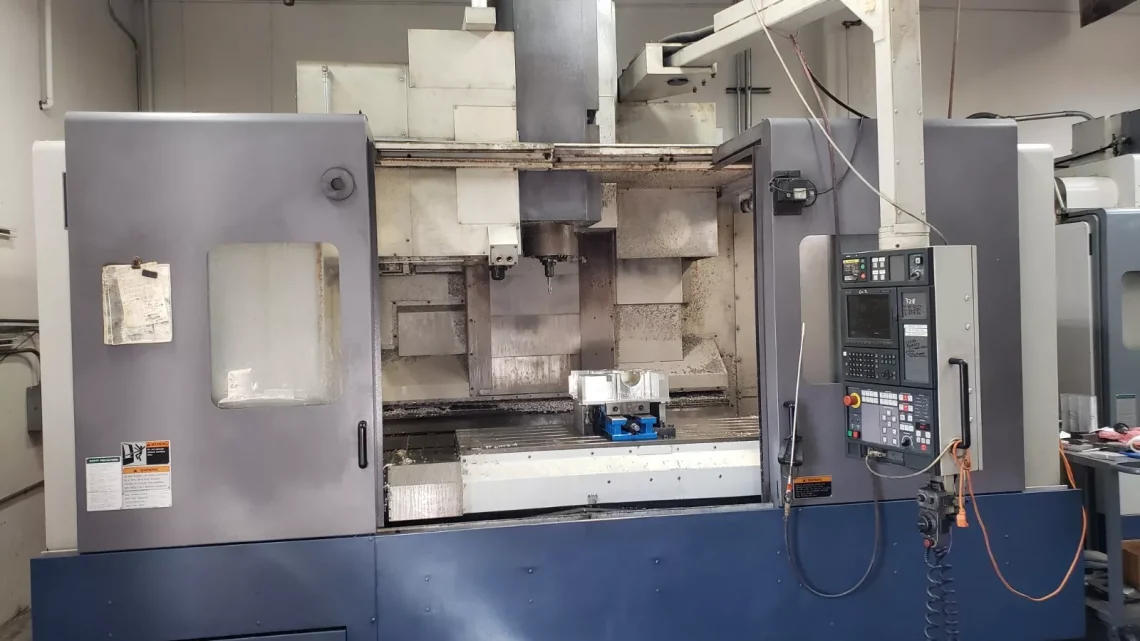
What Should I Pay Attention To When Buying a Second-Hand, Pre-Owned, Surplus, Used Mori Seiki MV-653/50 CNC VMC made in Japan?
When buying a second-hand Mori Seiki MV-653/50 (a Japanese-made CNC vertical machining center), you want to go well beyond the price tag. Used machines vary enormously in condition and usability — the goal is to avoid surprises (poor accuracy, downtime, unexpected repair costs) and get a machine that can operate reliably for years.
Here’s a complete checklist of what to pay attention to:
1. Machine History & Documentation
✔️ Usage history: Was it used for light precision work, or heavy cutting?
✔️ Operating hours / table cycles: High hours can mean wear.
✔️ Maintenance records: Regular lube, spindle checks, alignment checks are extremely valuable.
✔️ Reason for sale: Downsizing? Malfunction? Obsolescence?
✔️ Original manuals, parts list & service documentation: These aid in maintenance and troubleshooting.
2. Physical & Mechanical Condition
Frame & Structure
- Look for cracks, repairs, welds, or signs of accidental damage.
- Check for rust or corrosion, especially in coolant areas.
Guideways & Ballscrews
- Check wear on ways — uneven wear leads to loss of precision.
- Look for pitting or scoring.
- Confirm ballscrew backlash is within tolerance.
Spindle
- Check for spindle noise, vibration, runout. Excessive runout → bad bearings or worn taper.
- Ask for spindle speed history and maintenance logs.
- Confirm spindle holds runout within spec.
Axis Movement
- Move all axes lock-to-lock: listen for grinding, backlash, steps lost, uneven motion.
- Check all limit/home switches operate correctly.
Tool Changer & Magazine
- Check for chatter, jams, misloads, broken inserts.
- Count tools and examine tool holders & pockets.
Coolant & Chip Management
- Condition of pumps, filters, hoses
- Look for clogs, rust, leaks
- Check chip conveyor operation
3. Electrical & Control System
Controller
- Confirm it has the right controller/version (FANUC/MORI control specs).
- Ask for backup files/parameters.
- Check for unusual error history or alarms in the log.
Wiring
- Inspect for burn marks, frayed cabling, loose connections.
- Make sure grounding is proper.
Displays, Panels & Switches
- All keys/buttons should work; look for dead pixels, ghosting, cracked screens.
Servo Drives & Motors
- Confirm each axis works smoothly.
- Listen for servo faults, thermal shutdowns.
4. Performance Checks
If possible, run the machine:
Test Run
- Run a G-code program and watch for smooth motion.
- Check acceleration, deceleration, contouring, feed accuracy.
Cutting Test
- A short test part will reveal:
- Surface finish
- Dimensional accuracy
- Machine chatter / vibration
- Thermal drift
Precision
Ask for or conduct:
- Ballbar test
- Laser interferometry
- Squareness & backlash measurement
5. Parts & Support Availability
This is often overlooked but critical:
- Availability of replacement parts for MV-653/50
- Lead times & cost of parts (bearings, linear guides, drives, spindles)
- Service support / technicians familiar with Mori Seiki in your region
6. Spare Parts Inventory
Does the seller include:
- Tool holders
- Collets & chucks
- Extra belts, fuses, connectors
These save costs early on.
7. Logistics & Installation
✔️ Rigging & transport cost (heavy mill → expensive move).
✔️ Leveling and foundation requirements.
✔️ Electrical supply compatibility (voltage, frequency!).
✔️ Coolant & air supply needs.
8. Pricing & Valuation
Don’t pay based on age alone. Consider:
- Hours / cycles
- Condition & maintenance history
- Included accessories (probes, tool presetter, fixtures, software)
- Warranty or inspection report
Suggested pricing strategy:
✔️ Start with market comps for similar machines
✔️ Deduct for:
- Excess hours / poor maintenance
- Missing documentation
- Repair needs
9. Inspection & Pre-Purchase Check
Whenever possible:
Bring a machine tech or inspector experienced with Mori Seiki/VMCs.
Get a pre-purchase inspection report.
10. Common Problem Areas for Older VMCs
Watch out for:
- Way wear
- Ballscrew backlash
- Spindle bearing wear
- Faulty tool changer mechanisms
- Coolant pump failures
- Control board age/failures
Checklist to Print & Use On-Site
Before buying, tick off:
| Item | Pass / Fail | Notes |
|---|---|---|
| Guideway condition | ☐ | |
| Spindle runout | ☐ | |
| Axis backlash | ☐ | |
| Controller errors | ☐ | |
| Test cut performance | ☐ | |
| Tool changer function | ☐ | |
| Coolant system health | ☐ | |
| Electrical panel condition | ☐ | |
| Documentation complete | ☐ | |
| Spare parts included | ☐ |
Summary of Key Areas
Mechanical health → Control reliability → Performance test → Documentation → Support availability