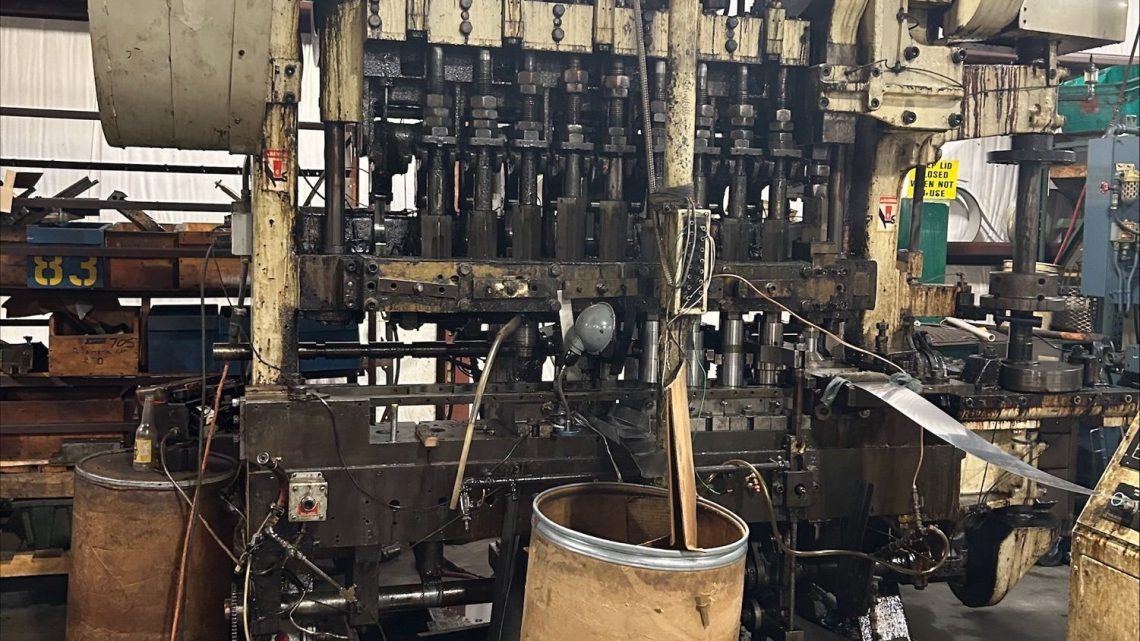
Avoid Costly Mistakes: Professional Tips for Purchasing a Pre-Owned, Surplus, Second-Hand, Used Waterbury Farrel 200-11 Crank Eyelet Transfer Press 8 Inch Stroke made in USA
Purchasing a pre-owned Waterbury Farrel 200-11 Crank Eyelet Transfer Press can be a sound investment for manufacturers involved in high-volume metal forming, eyelet production, or transfer press operations. However, due to the mechanical complexity and age profile of these presses, inadequate evaluation can result in costly downtime, safety risks, or unexpected refurbishment expenses.
This guide outlines professional inspection priorities and verification steps that industry buyers should follow before committing to a used or surplus unit.
1. Verify Machine Identity and Origin
Before any technical evaluation, confirm the machine’s identity and provenance.
Key checks:
- Machine model: 200-11
- Press type: Crank Eyelet Transfer Press
- Stroke: 8 inches
- Country of manufacture: United States
- Serial number plate originality and legibility
Serial numbers should be cross-checked against manufacturer records or historical documentation where available. Missing or altered identification plates are a red flag and should be investigated before proceeding.
2. Inspect the Crank and Drive Mechanism
The crankshaft assembly is a critical wear component in transfer presses.
Professional inspection should include:
- Evidence of crankshaft scoring, pitting, or heat discoloration
- Excessive backlash or irregular rotation
- Condition of bearings and bushings
- Alignment between crank, connecting rods, and slide
Any abnormal vibration during rotation (manual or powered) can indicate internal wear that may require costly disassembly and machining.
3. Evaluate Slide, Stroke Accuracy, and Guiding System
An 8-inch stroke press must maintain precise slide motion to ensure tooling integrity and part consistency.
Inspection points:
- Vertical slide play under load
- Wear patterns on slide ways and gibs
- Stroke repeatability across multiple cycles
- Evidence of prior over-adjustment or shimming
Uneven wear often indicates long-term operation outside design tolerances or insufficient lubrication.
4. Assess Transfer Mechanism and Synchronization
Transfer presses rely heavily on timing accuracy.
Check for:
- Smooth operation of transfer fingers or carriers
- Mechanical synchronization between press stroke and transfer movement
- Bent, modified, or non-original transfer components
- Signs of emergency repairs or welded elements
Improper synchronization can lead to tooling crashes, scrap production, and accelerated wear.
5. Review Lubrication and Oil Circulation Systems
Many failures in used presses stem from neglected lubrication systems.
Confirm:
- Oil pump operation and pressure consistency
- Cleanliness of oil lines and distribution points
- Condition of reservoirs and filters
- Absence of sludge, metal particles, or contamination
A compromised lubrication system significantly reduces remaining machine life, even if the press appears operational.
6. Electrical and Control System Considerations
Depending on retrofit history, control systems may range from original electromechanical setups to later upgrades.
Evaluate:
- Electrical cabinet condition and wiring integrity
- Compliance with current safety standards
- Availability of replacement electrical components
- Documentation of any retrofits or control upgrades
Lack of schematics or undocumented modifications increases long-term maintenance risk.
7. Tooling, Die Interface, and Compatibility
Tooling compatibility directly affects installation cost and commissioning time.
Check:
- Die mounting surfaces for damage or distortion
- Original shut height specifications versus current configuration
- Compatibility with existing dies or required adapters
- Evidence of tool crashes or emergency stops under load
Always assume tooling re-qualification costs unless documented otherwise.
8. Safety Systems and Compliance
Older presses often predate modern safety regulations.
Critical checks:
- Mechanical guards and access protections
- Emergency stop functionality
- Clutch and brake response times
- Ability to retrofit light curtains or interlocks
Budget for safety upgrades if the machine will be operated in regulated production environments.
9. Documentation and Service History
A professionally maintained press typically includes:
- Maintenance logs
- Rebuild or overhaul records
- Parts replacement history
- Operating manuals and wiring diagrams
Absence of documentation does not automatically disqualify a machine, but it increases uncertainty and inspection depth requirements.
10. Practical Buyer Recommendation
Before finalizing a purchase:
- Conduct an on-site inspection under power if possible
- Use a press specialist or mechanical engineer familiar with transfer presses
- Factor in relocation, foundation requirements, and commissioning costs
- Avoid assumptions based solely on cosmetic condition
A Waterbury Farrel 200-11 press can remain productive for decades when properly maintained—but only if its mechanical integrity, alignment, and safety systems are thoroughly verified before purchase.
Machine Technical Details
Machine Type: Crank Eyelet Transfer Press
Manufacturer: Waterbury Farrel
Model: 200-11
Country of Manufacture: USA
Press Drive: Mechanical crank
Stroke Length: 8 inches
Operation Type: Transfer press / eyelet forming
Frame Type: Heavy-duty cast frame (typical for this series)
Application Range: High-volume eyelet, small formed components, progressive transfer operations
Power Transmission: Flywheel, clutch & brake system
Lubrication: Centralized mechanical lubrication (verification required)
Control Type: Electromechanical (retrofits possible; must be verified)