What is Wire Butt Welding Machine?
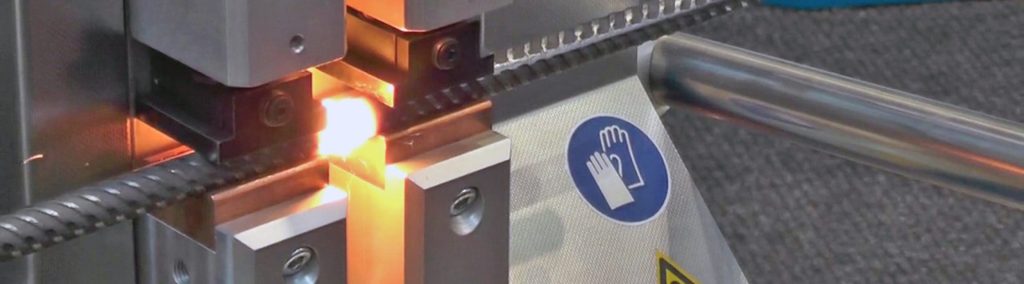
A wire butt welding machine is a specialized piece of equipment designed for joining metal wires end-to-end (butt-to-butt) using a welding process, typically resistance butt welding or flash butt welding. These machines are widely used in industries such as wire manufacturing, automotive, construction, and electronics for producing continuous wire lengths, rings, or components like cables, springs, or reinforcing meshes. The process ensures a strong, seamless joint with minimal material waste, maintaining the wire’s mechanical and electrical properties. Unlike arc welding, which uses a filler material, butt welding relies on the direct fusion of wire ends through heat generated by electrical resistance or arcing, making it ideal for high-volume production where precision and efficiency are critical.Wire butt welding machines are valued for their ability to achieve consistent welds with tensile strengths often exceeding 90% of the parent material’s strength (e.g., >500 MPa for mild steel wires). They are engineered to handle wire diameters ranging from 0.5 mm to over 25 mm, depending on the machine’s capacity, and can weld materials like mild steel, stainless steel, copper, aluminum, and alloys. These machines are typically semi-automatic or fully automatic, integrating clamping, alignment, and welding controls to minimize operator intervention and ensure repeatability.Technical ExplanationCore Components and FunctionalityA wire butt welding machine comprises several key subsystems: the clamping and alignment system, the welding power source, the electrode assembly, and the control system. Below is a detailed breakdown:
- Clamping and Alignment System:
- Purpose: Securely holds and aligns the wire ends to ensure precise contact during welding. Proper alignment is critical to avoid defects like offset joints or incomplete fusion.
- Mechanism: Consists of two opposing clamps (fixed and movable) with V-shaped or grooved jaws tailored to the wire diameter. Clamps apply forces typically ranging from 100 N to 10 kN, depending on wire size and material.
- Material: Clamps are made from high-strength steel or copper alloys to withstand heat and mechanical stress. For high-temperature applications, water-cooled clamps prevent overheating.
- Alignment Precision: Ensures wire ends are coaxial within ±0.05 mm to prevent angular misalignment. Some machines use laser or optical sensors for auto-alignment.
- Actuation: Pneumatic or hydraulic cylinders for larger wires (e.g., >10 mm); manual levers or servomotors for smaller wires. The movable clamp advances the wire ends together during the welding cycle.
- Upset Mechanism: Applies controlled pressure (upset force) to forge the heated wire ends together, ensuring a solid-state bond. Upset force can range from 500 N to 50 kN, adjustable via springs or servos.
- Welding Power Source:
- Type: Typically a low-voltage, high-current AC or DC transformer (e.g., 5-50 V, 1-100 kA) designed for resistance or flash welding.
- Resistance Butt Welding: Current passes through the wire ends in contact, generating heat (I²R) to reach the material’s forging temperature (e.g., ~1200°C for steel). Weld time is short (0.1-2 seconds).
- Flash Butt Welding: Wires are brought close but not touching, creating an arc that melts the ends. The arc is sustained for 0.5-5 seconds, followed by an upset force to forge the joint.
- Power Rating: Machines are rated by welding capacity (e.g., 10 kVA to 200 kVA), with larger units handling thicker wires or high-conductivity materials like copper.
- Cooling: Transformers and electrodes are water-cooled to manage heat dissipation, especially in high-duty-cycle operations (e.g., 50-100 welds/min).
- Type: Typically a low-voltage, high-current AC or DC transformer (e.g., 5-50 V, 1-100 kA) designed for resistance or flash welding.
- Electrode Assembly:
- Electrodes deliver current to the wire ends via the clamps or directly to the wire. Made from copper alloys (e.g., Cu-Cr-Zr) for high conductivity and durability.
- Design: Electrodes are shaped to maximize contact area and minimize resistance losses. Replaceable inserts reduce wear from arcing or spatter.
- Maintenance: Electrodes require periodic dressing to remove pitting or oxide buildup, ensuring consistent current flow.
- Control System:
- PLC/CNC Interface: Modern machines use programmable logic controllers (PLCs) or computer numerical control (CNC) for precise control of weld parameters:
- Current and Voltage: Adjustable to match material properties (e.g., 10-20 kA for steel, 5-15 kA for aluminum).
- Weld Time: Programmable from milliseconds to seconds, critical for avoiding burn-through or weak welds.
- Upset Force and Timing: Synchronized to apply pressure at the peak of material plasticity.
- Monitoring: Real-time sensors track current, voltage, and clamp displacement. Some systems include force transducers or thermocouples to detect weld quality.
- Automation: Fully automatic machines feature wire feeders, cutters, and robotic arms for continuous operation, achieving cycle times as low as 1-2 seconds per weld.
- Safety: Interlocks, emergency stops, and shielding comply with ISO 13849 safety standards to protect operators from electrical hazards or moving parts.
- PLC/CNC Interface: Modern machines use programmable logic controllers (PLCs) or computer numerical control (CNC) for precise control of weld parameters:
Types of Wire Butt Welding Machines
- Manual Butt Welders: Operator aligns and clamps wires, then triggers the weld. Suitable for low-volume or repair work (e.g., joining broken cables). Example: Bench-top models for wires 0.5-5 mm.
- Semi-Automatic Butt Welders: Automated clamping and welding with manual wire loading. Used in medium-volume production (e.g., wire mesh manufacturing). Example: Machines with foot-pedal or push-button controls.
- Fully Automatic Butt Welders: Integrated with wire feeders, cutters, and CNC controls for high-speed production. Used in wire drawing mills or automotive component manufacturing. Example: Machines for continuous wire loops or rings.
- Specialized Variants:
- Micro Butt Welders: For fine wires (0.1-1 mm) used in electronics or medical devices, with precision controls for low-heat input.
- Heavy-Duty Butt Welders: For large-diameter wires (10-25 mm) in construction (e.g., rebar or cable production), with high upset forces and robust frames.
Technical Advantages in the Welding Sector
- High-Strength Joints: Butt welds achieve near-parent-material strength (e.g., 90-95% of original wire tensile strength), critical for load-bearing applications like suspension springs or power cables.
- Efficiency: Cycle times of 1-5 seconds enable high throughput (up to 100 welds/min in automatic setups). Reduces labor costs by 30-50% compared to manual welding.
- Minimal Material Waste: No filler material is required, and flash butt welding removes only minimal material (0.1-1 mm) as flash, which can be ground off.
- Versatility: Handles a wide range of materials (steel, stainless, copper, aluminum) and diameters. Adjustable parameters accommodate different wire compositions and coatings.
- Consistency: Automated alignment and control ensure repeatable weld quality, reducing defects like porosity or incomplete fusion (common in manual welding, leading to 5-15% rejection rates).
- Limitations:
- Setup Costs: Initial investment for high-capacity machines ($10,000-$100,000) and custom tooling can be significant.
- Material Constraints: Wires must be clean and free of coatings (e.g., zinc or oil) to avoid weak welds. Pre-cleaning or annealing may be required.
- Maintenance: Electrodes and clamps wear over time, requiring regular maintenance to maintain tolerances.
Applications in the Welding Sector
- Wire Manufacturing: Joining wire coils to create continuous lengths for drawing or spooling.
- Automotive: Producing wire-based components like springs, cables, or seat frames.
- Construction: Welding rebar or wire mesh for reinforced concrete structures.
- Electronics: Joining fine copper or aluminum wires for conductors or connectors.
- Jewelry/Ornamental: Creating seamless wire rings or chains with micro butt welders.
Standards and Considerations
- Weld Quality: Must meet standards like AWS D17.2 (Resistance Welding for Aerospace) or ISO 14373 (Resistance Welding). Welds are tested for tensile strength, bend resistance, and microstructure (e.g., minimal heat-affected zone).
- Material Preparation: Wires should be cut squarely and cleaned to ensure proper fusion. Chamfering or annealing may be needed for high-carbon steels.
- Machine Selection: Choose based on wire diameter, material, and production volume. For example, a 50 kVA machine suits 5-10 mm steel wires, while a 10 kVA machine is adequate for 1-3 mm copper wires.
ConclusionWire butt welding machines are critical tools in the welding sector, offering precision, efficiency, and strength for joining wires in diverse applications. Their integration of clamping, welding, and control systems enables high-quality, repeatable welds with minimal operator input. For implementation, consult manufacturers’ specifications for capacity and material compatibility, and adhere to relevant welding standards to ensure performance and safety