What is Jig Welding Machine?
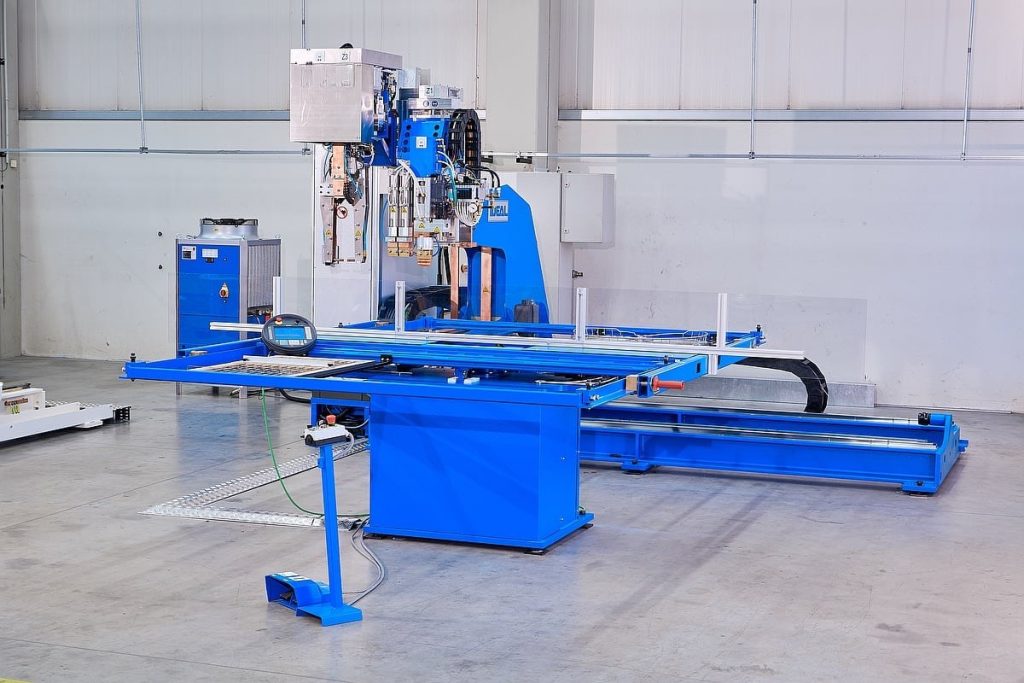
In the welding sector, a “jig welding machine” typically refers to a specialized automated or semi-automated welding system that integrates a welding jig—a custom-designed fixture or holding device—with welding equipment such as resistance spot welders, MIG/MAG welders, or robotic arms. Unlike manual welding setups, these machines are engineered for high-precision, repetitive production environments, where maintaining exact part alignment is critical to ensure weld quality, structural integrity, and efficiency. The term “jig” originates from manufacturing tooling, where it serves to guide and secure workpieces during operations like welding, drilling, or assembly. In welding, jig welding machines are prevalent in industries such as automotive, aerospace, furniture fabrication, and metalworking, where mass production of components like frames, brackets, or wire products is common.The primary goal of a jig welding machine is to eliminate human error in positioning, reduce setup times, and achieve tolerances as tight as ±0.03 inches (0.76 mm), which is essential for load-bearing welds that must withstand forces from heat, vibration, and mechanical stress. These machines can be manual (operator-assisted), semi-automatic, or fully automated with programmable controls, often incorporating features like servo motors for precise movement and quick-change tooling for versatility.Technical ExplanationCore Components and FunctionalityA jig welding machine consists of three main subsystems: the jig/fixture assembly, the welding mechanism, and the control system. Here’s a breakdown:
- Jig/Fixture Assembly:
- This is the foundational element, acting as a rigid brace or frame that clamps and positions workpieces (e.g., metal sheets, tubes, or assemblies) in a predetermined orientation. Jigs differ from simple fixtures in that they often include guiding elements (e.g., templates for spot weld placement or slots for electrode alignment) to direct the welding process.
- Materials: Commonly constructed from mild steel (for cost-effectiveness and moderate heat resistance), aluminum (for lightweight and non-stick properties against slag/sparks), or stainless steel (for high-temperature durability). Mild steel, for instance, is easy to machine and weld but may deform under prolonged exposure to extreme heat (>1000°C in arc welding). Aluminum jigs expand thermally during welding, so they are ideal for short-duration tasks but require cooling periods in high-volume runs.
- Design Features:
- Clamping Mechanisms: Pneumatic, hydraulic, or manual clamps (e.g., De-Sta-Co style) secure parts with forces up to several tons, preventing movement during welding. Quick-release levers are used for ergonomic operation with gloves.
- Locating Elements: Pins, V-blocks, or modular plates ensure repeatability. For example, in tube welding, curved cradles maintain alignment for right-angle joints.
- Modularity: Many jigs feature interchangeable mounts or NC (numerical control) axes for X, Y, Z adjustments, allowing adaptation to different part sizes without full redesign. Precision is achieved via machined tolerances and sometimes integrated sensors for auto-calibration.
- Heat Management: Jigs are designed to dissipate heat from the weld pool, often with water-cooling channels or heat sinks, to avoid distortion (warping) in the workpiece or jig itself.
- Welding Mechanism:
- Integrated with the jig, this includes the power source, electrodes, and delivery system. Common types:
- Resistance Spot Welding (RSW): Electrodes apply pressure and current (typically 5-20 kA) to create localized fusion at contact points. Jigs position electrodes precisely (e.g., 0.1 mm accuracy) for automotive body panels.
- MIG/MAG or TIG Arc Welding: Automated torches follow programmed paths along the jig-held parts. Servo-driven heads allow rotation (0°-360°) for accessing complex geometries.
- Projection or Seam Welding: For wire or sheet metal, jigs incorporate rotary tables or linear slides to move parts under the welder.
- Automation Levels: Entry-level machines use 2-axis (X-Y) movement for simple linear welds, while advanced models employ multi-axis robotics (up to 6 degrees of freedom) with servo-adjustable heights. Dual-jig setups enable continuous operation: one jig loads/unloads while the other welds, boosting throughput by 50-100%.
- Force and Precision: Clamping forces range from 100-5000 N, with weld cycle times of 0.5-5 seconds per spot. Tolerances ensure minimal gap (≤0.5 mm) between parts, critical for fusion weld strength per standards like AWS D1.1 (Structural Welding Code).
- Integrated with the jig, this includes the power source, electrodes, and delivery system. Common types:
- Control System:
- Modern jig welding machines use PLC (Programmable Logic Controllers) or CNC interfaces for intuitive programming. Features include:
- Position Sensors: Detect jig orientation for auto-program selection (e.g., welding different parts on alternating jigs).
- Safety Interlocks: Fences, light curtains, and emergency stops comply with ISO 13849 standards for machine safety.
- Monitoring: Real-time feedback on current, voltage, and temperature via thermocouples or IR sensors to prevent defects like porosity or cracks.
- Programming: Touchscreen interfaces allow editing weld parameters (e.g., current ramp-up, dwell time) and jig movements. For vertical applications, freely programmable tongs ensure consistent bead formation.
- Modern jig welding machines use PLC (Programmable Logic Controllers) or CNC interfaces for intuitive programming. Features include:
Types of Jig Welding Machines
- Manual Jig Welders: Operator loads parts into the jig and triggers the weld. Suitable for low-volume, custom work (e.g., prototype frames).
- Semi-Automatic Jig Welders: Pneumatic or hydraulic actuation for clamping/welding cycles, with limited automation (e.g., 2-4 axis). Used in small-batch production like furniture ramps.
- Fully Automatic Jig Welders: Robotic integration (e.g., Versaweld™ series) with NC servo cylinders for high-speed, high-precision tasks. Examples include CSR-102 models for wire products, capable of 360° rotation and multi-part welding.
- Specialized Variants: Frame welding jigs (attached to tables for large assemblies) or rotisserie jigs (rotating for all-around access in tubular structures like vehicle chassis).
Technical Advantages in the Welding Sector
- Precision and Quality: Maintains alignment to prevent distortion, ensuring welds meet tensile strength requirements (e.g., >400 MPa for structural steel). Reduces defects like misalignment (common in manual welding, leading to 10-20% rework).
- Efficiency and Productivity: Setup times drop from hours to minutes with quick-change systems; cycle times enable 10-50 parts/hour. Dual-jig designs minimize downtime, increasing OEE (Overall Equipment Effectiveness) by 30-50%.
- Ergonomics and Safety: Reduces operator fatigue by automating positioning; minimizes exposure to fumes/heat. Jigs handle forces up to 600 lbs without deflection.
- Versatility: Adaptable for materials like steel, aluminum, or stainless, and processes from spot to seam welding. In high-volume sectors, ROI is achieved within 6-12 months via labor savings.
- Limitations: Initial design costs (e.g., CAD modeling for custom jigs) can be high ($5,000-$50,000); thermal expansion in jigs requires periodic recalibration. Not ideal for one-off jobs where manual clamping suffices.
Applications in Welding
- Automotive: Welding chassis frames or body panels with spot jig machines for repeatability.
- Fabrication: Building ramps, furniture, or machinery guards using modular table jigs.
- Aerospace/Medical: Precision TIG welding of titanium parts with CNC-controlled jigs for tolerances <0.01 mm.
- Wire Products: Automated jig welders for grilles or baskets, incorporating rotary heads.
In summary, jig welding machines represent a cornerstone of modern welding technology, blending mechanical fixturing with automated controls to deliver consistent, high-quality results. For implementation, consult standards like ISO 3834 for welding quality management and consider custom fabrication based on specific production volumes.