What is Tensile Tester Compression?
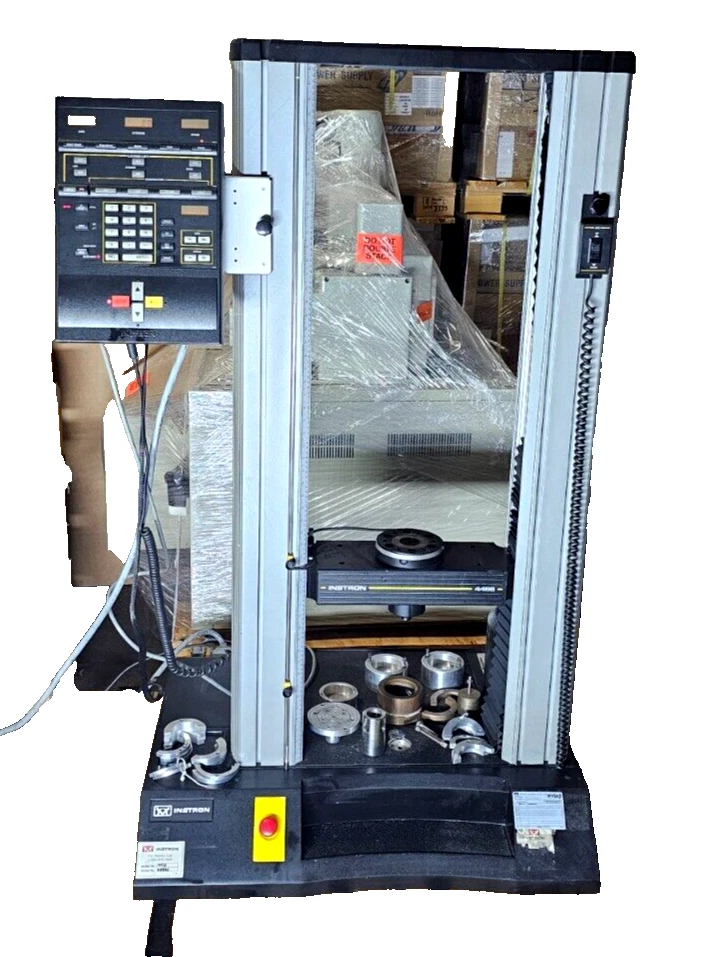
A Tensile Tester Compression refers to the compression testing mode of a tensile testing machine, a device used in material testing to evaluate the mechanical properties of materials under compressive forces. While tensile testing measures a material’s behavior under tension (pulling forces), compression testing assesses how a material responds when subjected to crushing or compressive forces. This is critical in industries like manufacturing, construction, aerospace, and materials science for quality control, research, and design.Technical Explanation of Tensile Tester Compression1. Principle of Compression TestingCompression testing involves applying a compressive force to a material specimen until it deforms, fractures, or reaches a predefined limit. The tensile testing machine, equipped with compression platens or fixtures, applies a controlled force to the specimen, and the resulting deformation (strain) and force (stress) are measured to determine the material’s compressive properties.Key properties evaluated include:
- Compressive Strength: The maximum stress a material can withstand before failure under compression.
- Compressive Modulus: The stiffness of the material, defined as the ratio of compressive stress to strain in the linear elastic region.
- Yield Strength: The stress at which the material begins to deform plastically under compression.
- Deformation Behavior: How the material deforms (e.g., buckling, crushing, or barreling) under compressive load.
- Energy Absorption: The amount of energy the material can absorb before failure.
2. Components of a Tensile Tester for Compression TestingA tensile tester adapted for compression typically includes:
- Load Frame: A rigid structure that houses the specimen and applies force.
- Compression Platens: Flat, parallel plates that apply uniform compressive force to the specimen. These are often interchangeable with tensile grips.
- Load Cell: A sensor that measures the applied force with high precision (typically in Newtons or pounds).
- Extensometer or Displacement Sensor: Measures the deformation or reduction in height of the specimen during compression.
- Control System: Software or a control unit that manages the test parameters (e.g., force rate, displacement rate) and records data.
- Fixtures: Specialized fixtures may be used for specific specimens, such as cylindrical or irregularly shaped samples.
3. Test ProcedureThe compression test process involves the following steps:
- Specimen Preparation: The material sample is prepared according to standards (e.g., ASTM, ISO) with specific dimensions (e.g., cylindrical, cubic, or prismatic shapes). The specimen’s geometry is critical for accurate results.
- Setup: The specimen is placed between the compression platens, ensuring proper alignment to avoid uneven loading or buckling.
- Test Execution: The machine applies a compressive force at a controlled rate (e.g., constant displacement or force rate). The load cell and displacement sensors record the force and deformation in real-time.
- Data Collection: The system generates a stress-strain curve, which plots the compressive stress (force per unit area) against strain (deformation relative to original dimensions).
- Analysis: The stress-strain curve is analyzed to determine key mechanical properties like compressive strength, modulus, and failure mode.
4. Key Measurements and Calculations
- Stress (σ): Calculated as σ = F/A, where F is the applied force (N) and A is the initial cross-sectional area (m²).
- Strain (ε): Calculated as ε = ΔL/L₀, where ΔL is the change in length (deformation) and L₀ is the original length.
- Compressive Modulus (E): Determined from the linear portion of the stress-strain curve, E = σ/ε.
- Failure Point: The point at which the material fractures, crushes, or exhibits significant plastic deformation.
5. Applications in the Measuring SectorCompression testing using a tensile tester is widely used to assess materials in various industries:
- Construction: Testing concrete, bricks, or composites for compressive strength to ensure structural integrity.
- Metals and Alloys: Evaluating the compressive behavior of metals for applications in forging or machining.
- Polymers and Plastics: Determining the ability of plastics to withstand compressive loads in packaging or automotive components.
- Biomedical: Testing biomaterials (e.g., bone scaffolds) for compressive strength in medical implants.
- Aerospace: Assessing lightweight composites for their ability to resist compressive forces in structural components.
6. Standards and ProtocolsCompression tests are conducted according to standardized protocols to ensure repeatability and accuracy. Common standards include:
- ASTM C39: For compressive strength of concrete.
- ASTM D695: For compressive properties of rigid plastics.
- ISO 604: For determining compressive properties of plastics.
- ASTM E9: For compression testing of metallic materials.
7. Challenges in Compression Testing
- Specimen Alignment: Misalignment can cause uneven loading, leading to inaccurate results or premature failure (e.g., buckling).
- Barreling Effect: Cylindrical specimens may deform non-uniformly, causing a barrel-shaped deformation due to friction at the platen-specimen interface.
- Material Behavior: Brittle materials (e.g., ceramics) may shatter, while ductile materials (e.g., metals) may exhibit complex deformation patterns.
- Fixture Design: Specialized fixtures are needed for non-standard specimens to ensure uniform load distribution.
8. Advanced Features in Modern Tensile TestersModern tensile testers used for compression often include:
- Automated Control Systems: Allow precise control of test parameters and real-time data acquisition.
- High-Resolution Sensors: Provide accurate force and displacement measurements.
- Environmental Chambers: Enable testing under specific temperatures or humidity conditions.
- Data Analysis Software: Generates detailed reports and stress-strain curves for in-depth analysis.
SummaryTensile tester compression is a critical technique for evaluating a material’s mechanical properties under compressive forces. By applying controlled loads and measuring the resulting deformation, it provides essential data on compressive strength, modulus, and failure behavior. This information is vital for material selection, quality assurance, and design in industries requiring robust, reliable materials. The process is governed by precise standards and requires careful attention to specimen preparation, alignment, and test conditions to ensure accurate and reproducible results.