What is An Ultraviolet Light Curing System is used to initiate fast ultraviolet light polymerization of adhesives and coatings in an efficient inline process?
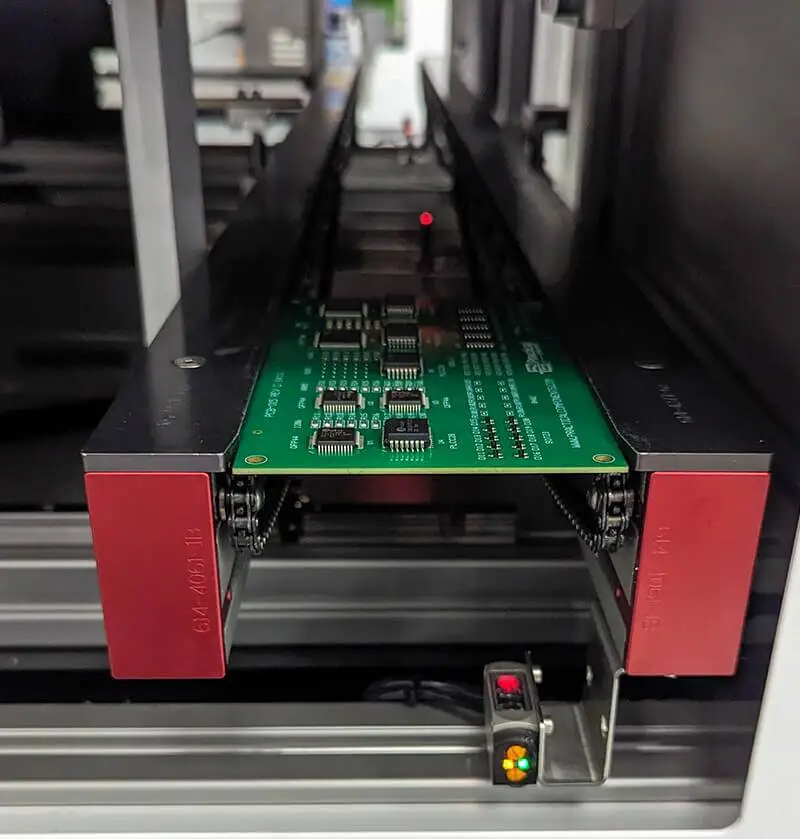
An Ultraviolet (UV) Light Curing System is a technology used to rapidly cure or harden adhesives, coatings, inks, and other materials through a photochemical process called UV polymerization. This process involves exposing UV-sensitive materials (containing photoinitiators) to ultraviolet light, triggering a rapid chemical reaction that transforms liquid or semi-liquid materials into a solid, cross-linked polymer network. The system is widely used in industrial applications for its speed, efficiency, and ability to produce high-quality finishes in inline manufacturing processes.Technical Explanation1. Principle of UV PolymerizationUV curing relies on photoinitiators, which are chemical compounds mixed into the adhesive or coating formulation. When exposed to UV light of a specific wavelength (typically 200–400 nm, within the UV-A, UV-B, or UV-C spectrum), these photoinitiators absorb the light energy and generate reactive species (free radicals or cations). These reactive species initiate a chain polymerization reaction, rapidly cross-linking monomers and oligomers in the material to form a solid polymer matrix.The key steps in the photochemical reaction are:
- Absorption: The photoinitiator absorbs UV photons.
- Activation: The absorbed energy excites the photoinitiator, causing it to break down into reactive species (e.g., free radicals or cations).
- Initiation: These reactive species interact with monomers or oligomers, starting the polymerization process.
- Propagation: The reaction propagates as additional monomer units are added to the growing polymer chain.
- Termination: The reaction stops when reactive species are consumed or neutralized, forming a stable, cross-linked polymer network.
2. Components of a UV Curing SystemA UV curing system typically consists of the following components:
- UV Light Source: The core component that emits UV light. Common sources include:
- Mercury Vapor Lamps: Emit broadband UV light (200–400 nm) and are widely used for general-purpose curing.
- LED UV Systems: Emit narrowband UV light (typically 365–405 nm) and are energy-efficient, with longer lifespans and precise wavelength control.
- Xenon Lamps: Used for specific applications requiring pulsed UV light.
- Optical System: Lenses, reflectors, or light guides that focus or direct UV light onto the target material to ensure uniform exposure.
- Conveyor or Transport System: In inline processes, a conveyor moves the substrate (e.g., coated or adhesive-applied parts) through the UV exposure zone at a controlled speed to achieve consistent curing.
- Cooling System: UV lamps generate heat, so air or water cooling systems are used to prevent overheating and maintain optimal performance.
- Control Unit: Regulates light intensity, exposure time, and conveyor speed to ensure precise curing conditions.
- Shielding: Protects operators from UV radiation, which can be harmful to skin and eyes.
3. Process in an Inline Manufacturing SetupIn an inline process, the UV curing system is integrated into a production line for continuous, high-speed processing. The workflow typically involves:
- Material Application: The UV-curable adhesive or coating is applied to a substrate (e.g., plastic, glass, metal, or paper) using methods like spraying, roll coating, or dispensing.
- Exposure to UV Light: The coated substrate passes under the UV light source on a conveyor. The exposure time (dwell time) is typically milliseconds to seconds, depending on the material’s formulation, thickness, and the light source’s intensity.
- Curing: The UV light triggers the polymerization reaction, hardening the material almost instantly.
- Post-Curing (if needed): Some materials may undergo additional thermal or ambient curing to achieve final properties.
4. Key Technical Parameters
- Wavelength: The UV light source must match the absorption spectrum of the photoinitiator (e.g., 365 nm for many UV-A systems).
- Intensity (Irradiance): Measured in mW/cm² or W/cm², this determines the energy delivered to the material. Higher intensity accelerates curing but may generate more heat.
- Energy Dose: Measured in mJ/cm², this is the total energy delivered (intensity × exposure time). Proper dosing ensures complete curing without overexposure.
- Curing Depth: UV light penetration depends on wavelength and material opacity. Shorter wavelengths (e.g., UV-C) are better for surface curing, while longer wavelengths (e.g., UV-A) penetrate deeper.
- Substrate Compatibility: The substrate must withstand UV exposure and heat without degrading.
5. Advantages of UV Curing Systems
- Speed: Curing occurs in seconds, enabling high-throughput production.
- Energy Efficiency: Especially with LED UV systems, which consume less power than traditional lamps.
- Precision: Controlled curing ensures consistent results.
- Environmental Benefits: UV-curable materials often contain fewer volatile organic compounds (VOCs) compared to solvent-based systems.
- Versatility: Applicable to a wide range of substrates and industries, including electronics, automotive, medical devices, and printing.
6. Applications
- Adhesives: Bonding components in electronics, medical devices, and optics (e.g., assembling lenses or displays).
- Coatings: Protective or decorative coatings on plastics, metals, or wood (e.g., UV-cured clear coats in automotive parts).
- Inks: UV-curable inks for high-speed printing (e.g., packaging, labels).
- 3D Printing: Post-curing of resin-based 3D-printed parts to achieve final strength.
7. Challenges and Considerations
- Material Limitations: Only UV-curable formulations (with photoinitiators) can be used.
- Shadowing: UV light requires a direct line of sight; shadowed areas may not cure properly.
- Safety: UV radiation is hazardous, requiring shielding and operator protection.
- Equipment Cost: High initial investment for UV lamps or LED systems, though operational costs are often low.
- Oxygen Inhibition: In some free-radical systems, oxygen can inhibit surface curing, requiring inert atmospheres (e.g., nitrogen blanketing) for optimal results.
SummaryA UV light curing system initiates fast polymerization of adhesives and coatings by exposing UV-sensitive materials to specific wavelengths of UV light, triggering a photochemical reaction. Its integration into inline processes allows for rapid, efficient, and high-quality curing, making it ideal for industries requiring precision and speed. The system’s performance depends on factors like light source type, intensity, wavelength, and material formulation, with considerations for safety and process optimization.