How many Bearings types are there in the Machinery Sector?
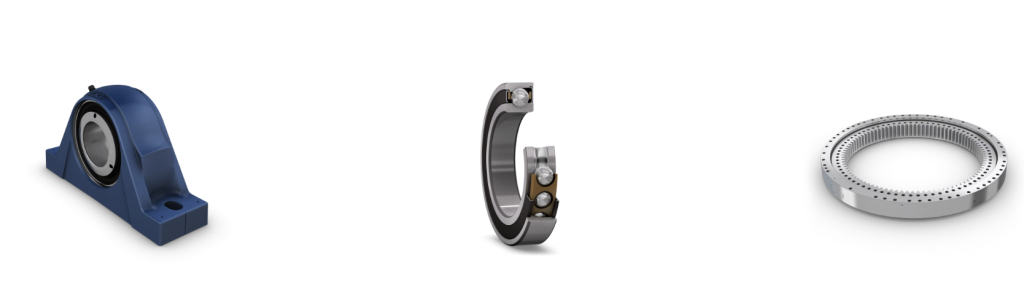
Bearings are critical components in the machinery sector, enabling smooth motion, reducing friction, and supporting loads in rotating or moving parts. The variety of bearing types reflects the diverse requirements of machinery across industries, such as automotive, aerospace, manufacturing, food processing, motorsport, and aviation. Below, I provide a detailed explanation of the main bearing types, focusing on the specific types you mentioned, including their designs, applications, and relevance to specialized industries like food, motorsport, and aviation.Overview of Bearing TypesBearings can be broadly classified into two major categories based on their rolling elements:
- Ball Bearings: Use spherical balls as the rolling element, ideal for high-speed, low-to-moderate load applications.
- Roller Bearings: Use cylindrical, tapered, or spherical rollers, suited for higher loads and specific alignment needs.
Within these categories, there are numerous subtypes designed for specific applications, load capacities, speeds, and environmental conditions. In addition to ball and roller bearings, other types like plain bearings, fluid bearings, and magnetic bearings exist, but the focus here will be on rolling-element bearings as specified.Detailed Explanation of Bearing TypesBelow is a comprehensive breakdown of the bearing types you listed, along with their characteristics, applications, and relevance to the machinery sector.1. Ball BearingsBall bearings use spherical balls to reduce friction between rotating parts. They are versatile, handling radial and thrust loads, and are widely used due to their low friction and high-speed capabilities.
- Characteristics:
- Low friction due to point contact between balls and raceways.
- Suitable for high-speed applications.
- Can handle radial and axial (thrust) loads, though axial load capacity is lower than roller bearings.
- Available in sealed, shielded, or open configurations.
- Applications:
- Electric motors, pumps, fans, conveyors, and household appliances.
- Automotive components like wheels and transmissions.
- General machinery requiring smooth, high-speed operation.
2. Deep Groove Ball BearingsA subset of ball bearings, deep groove ball bearings are the most common bearing type due to their versatility and simplicity.
- Design:
- Feature deep raceway grooves in both inner and outer rings, allowing them to handle radial loads and moderate axial loads in both directions.
- Available in single-row and double-row configurations.
- Can be sealed (with rubber seals) or shielded (with metal shields) to protect against contaminants.
- Characteristics:
- High-speed capability due to low friction.
- Quiet operation, making them ideal for precision machinery.
- Moderate load capacity compared to roller bearings.
- Applications:
- Electric motors, gearboxes, and pumps in industrial machinery.
- Automotive applications like alternators and starters.
- Household appliances like washing machines and air conditioners.
- Specialized Use:
- In the food industry, deep groove ball bearings with food-grade lubricants and stainless steel construction are used in processing equipment to meet hygiene standards.
- In motorsport, high-performance deep groove ball bearings with ceramic balls are used for reduced weight and higher speed capabilities.
- In aviation, they are used in auxiliary systems, such as pumps and actuators, where reliability and lightweight design are critical.
3. Miniature and Extra Small BearingsThese are small-scale ball bearings with bore diameters typically less than 10 mm (miniature) or 20 mm (extra small).
- Design:
- Similar to deep groove ball bearings but scaled down for precision applications.
- Available in metric and inch sizes, often with stainless steel or chrome steel construction.
- Can be open, sealed, or shielded.
- Characteristics:
- High precision and low friction for small, high-speed components.
- Limited load capacity due to their size.
- Often used in tight spaces or lightweight assemblies.
- Applications:
- Precision instruments like dental drills, gyroscopes, and small motors.
- Computer hard drives, cooling fans, and miniature pumps.
- Medical devices and robotics.
- Specialized Use:
- In the food industry, miniature bearings with corrosion-resistant materials are used in small-scale processing or packaging equipment.
- In motorsport, they are used in sensors or small actuators where space is limited.
- In aviation, miniature bearings are critical in avionics, navigation systems, and small control mechanisms due to their precision and compact size.
4. Angular Contact Ball BearingsAngular contact ball bearings are designed to handle combined radial and axial loads, with a focus on high axial load capacity in one direction.
- Design:
- Raceways are angled relative to the bearing axis, allowing the bearing to support significant axial loads.
- Available in single-row (for axial loads in one direction) and double-row (for bidirectional axial loads).
- Contact angles typically range from 15° to 40°, with higher angles increasing axial load capacity.
- Characteristics:
- High-speed capability with good axial and radial load handling.
- Often used in pairs (back-to-back or face-to-face arrangements) for stability.
- Require precise alignment to avoid premature wear.
- Applications:
- Machine tool spindles, where high precision and speed are required.
- Automotive differentials and transmissions.
- Pumps and compressors handling combined loads.
- Specialized Use:
- In the food industry, angular contact bearings with stainless steel and food-safe lubricants are used in high-speed mixers or conveyors.
- In motorsport, they are used in suspension systems and high-speed rotating components like turbochargers.
- In aviation, they are critical in jet engine components and landing gear systems, where combined loads and high reliability are essential.
5. Self-Aligning Ball BearingsSelf-aligning ball bearings are designed to accommodate misalignment between the shaft and housing, making them ideal for applications with shaft deflection or mounting errors.
- Design:
- Feature two rows of balls and a spherical outer raceway, allowing the inner ring to tilt relative to the outer ring.
- Typically have a low axial load capacity but handle radial loads well.
- Characteristics:
- Excellent for applications with misalignment or shaft deflection.
- Low friction and moderate speed capability.
- Available in sealed or open configurations.
- Applications:
- Agricultural machinery, where misalignment is common due to uneven terrain.
- Conveyor systems and textile machinery.
- Fans and blowers with long shafts prone to deflection.
- Specialized Use:
- In the food industry, self-aligning bearings are used in conveyors and mixers where slight misalignments occur due to flexible frameworks.
- In motorsport, they are less common but may be used in suspension components where misalignment is possible.
- In aviation, they are used in non-critical applications like auxiliary systems, where misalignment tolerance is beneficial.
6. Cylindrical Roller BearingsCylindrical roller bearings use cylindrical rollers as the rolling element, providing high radial load capacity.
- Design:
- Rollers are guided by flanges on the inner or outer ring, ensuring linear contact with raceways.
- Available in single-row, double-row, or multi-row configurations.
- Variants include NU (non-locating), NJ (one-direction axial load), and NUP (bidirectional axial load).
- Characteristics:
- High radial load capacity due to line contact between rollers and raceways.
- Moderate speed capability compared to ball bearings.
- Limited axial load capacity unless specifically designed (e.g., NJ or NUP types).
- Applications:
- Heavy machinery like rolling mills, gearboxes, and large electric motors.
- Cranes, wind turbines, and industrial pumps.
- Automotive axles and transmissions.
- Specialized Use:
- In the food industry, cylindrical roller bearings with corrosion-resistant coatings are used in heavy-duty mixers or grinders.
- In motorsport, they are used in drivetrain components like gearboxes, where high radial loads are common.
- In aviation, they are used in heavy-duty applications like engine gearboxes or landing gear systems.
7. Tapered Roller BearingsTapered roller bearings are designed to handle large radial and axial loads, particularly in one direction.
- Design:
- Feature tapered rollers and raceways, with the inner and outer rings forming a cone shape.
- Typically used in pairs to handle bidirectional axial loads.
- Adjustable preload for precise applications.
- Characteristics:
- High load capacity for both radial and axial forces.
- Suitable for moderate speeds.
- Requires precise alignment and preload adjustment.
- Applications:
- Automotive wheel hubs and differentials.
- Heavy machinery like construction equipment and mining machinery.
- Railway axle boxes and industrial gearboxes.
- Specialized Use:
- In the food industry, tapered roller bearings with food-grade lubricants are used in heavy-duty conveyors or canning equipment.
- In motorsport, they are used in wheel assemblies and suspension systems for their ability to handle combined loads.
- In aviation, they are critical in landing gear and propeller systems, where high loads and reliability are essential.
8. Spherical Roller BearingsSpherical roller bearings are designed to handle heavy radial loads and misalignment, similar to self-aligning ball bearings but with higher load capacity.
- Design:
- Feature barrel-shaped rollers and a spherical outer raceway, allowing misalignment compensation.
- Available in single-row or double-row configurations.
- Often include a cage to guide rollers and reduce friction.
- Characteristics:
- High radial load capacity and moderate axial load capacity.
- Excellent for heavy-duty applications with misalignment or vibration.
- Moderate speed capability.
- Applications:
- Vibrating screens, crushers, and heavy industrial machinery.
- Paper mills, steel mills, and wind turbines.
- Conveyor systems and large gearboxes.
- Specialized Use:
- In the food industry, spherical roller bearings are used in heavy-duty mixers or conveyors, often with stainless steel or sealed designs.
- In motorsport, they are used in high-load, high-vibration components like suspension systems.
- In aviation, they are used in engine mounts or heavy auxiliary systems where misalignment and vibration are concerns.
9. Thrust BearingsThrust bearings are designed to handle axial (thrust) loads, with minimal radial load capacity.
- Design:
- Available as ball thrust bearings (using balls) or roller thrust bearings (using cylindrical, tapered, or spherical rollers).
- Types include single-direction (axial load in one direction) and double-direction (bidirectional axial loads).
- Roller thrust bearings handle higher loads than ball thrust bearings.
- Characteristics:
- High axial load capacity, especially for roller thrust bearings.
- Limited speed capability due to higher friction.
- Often used in combination with radial bearings.
- Applications:
- Automotive clutches, crane hooks, and vertical pumps.
- Machine tool spindles and extruders.
- Marine propeller shafts and wind turbine yaw systems.
- Specialized Use:
- In the food industry, thrust bearings with food-safe materials are used in vertical mixers or processing equipment.
- In motorsport, they are used in clutch systems or steering mechanisms.
- In aviation, thrust bearings are critical in jet engine thrust management and helicopter rotor systems.
10. Special Application Bearings for Food, Motorsport, and Aviation IndustriesThese bearings are tailored to meet the unique demands of specific industries, often incorporating specialized materials, coatings, or lubricants.
- Food Industry:
- Requirements: Hygiene, corrosion resistance, and food-safe lubricants.
- Design: Bearings are often made of stainless steel or plastic to resist corrosion from frequent washdowns. Food-grade lubricants comply with FDA or NSF standards. Sealed or shielded designs prevent contamination.
- Examples:
- Deep groove ball bearings in stainless steel for conveyor systems.
- Spherical roller bearings in mixers or grinders, with sealed designs.
- Plastic bearings for lightweight, corrosion-resistant applications in packaging.
- Applications: Food processing equipment (e.g., mixers, slicers, conveyors), bottling lines, and packaging machinery.
- Motorsport:
- Requirements: High speed, lightweight design, and durability under extreme conditions.
- Design: Often use ceramic balls or rollers for reduced weight and higher speed. Advanced coatings (e.g., DLC or diamond-like carbon) reduce friction and wear. Precision manufacturing ensures reliability under high loads and vibrations.
- Examples:
- Ceramic hybrid angular contact bearings for turbochargers.
- Tapered roller bearings for wheel assemblies.
- Miniature bearings for sensors or actuators.
- Applications: Engine components, suspension systems, gearboxes, and steering mechanisms in race cars.
- Aviation:
- Requirements: Lightweight, high reliability, and performance under extreme temperatures and loads.
- Design: Use high-strength materials like titanium or advanced steels. Bearings are often customized for specific applications, with precision tolerances and advanced lubricants for high-altitude or high-temperature environments.
- Examples:
- Angular contact bearings in jet engine turbines.
- Tapered roller bearings in landing gear.
- Miniature bearings in avionics and control systems.
- Applications: Jet engines, landing gear, flight control systems, and auxiliary power units.
Total Number of Bearing TypesWhile the exact number of bearing types depends on classification granularity, the machinery sector typically recognizes dozens of bearing types when considering all variations. The nine types listed (deep groove ball bearings, miniature/extra small bearings, angular contact bearings, self-aligning ball bearings, cylindrical roller bearings, tapered roller bearings, spherical roller bearings, thrust bearings, and special application bearings) represent the major categories. Subtypes and specialized variants (e.g., hybrid ceramic bearings, sealed vs. open designs, or industry-specific bearings) can expand this to hundreds of specific designs.Additional Notes
- Other Bearing Types: Beyond the listed types, other bearings like needle roller bearings, magnetic bearings, and fluid bearings are used in niche machinery applications but were not specified in your query.
- Selection Criteria: Choosing the right bearing involves considering load type (radial, axial, or combined), speed, misalignment tolerance, environmental conditions (e.g., temperature, contamination), and maintenance requirements.
- Industry Trends: In 2025, advancements in bearing technology include smart bearings with embedded sensors for predictive maintenance, eco-friendly lubricants for sustainability, and lightweight materials for aviation and motorsport.
ConclusionThe machinery sector relies on a wide range of bearing types, with ball and roller bearings forming the backbone. The nine specified types—deep groove ball bearings, miniature/extra small bearings, angular contact bearings, self-aligning ball bearings, cylindrical roller bearings, tapered roller bearings, spherical roller bearings, thrust bearings, and special application bearings—cover most applications, from general machinery to specialized industries like food, motorsport, and aviation. Each type is engineered for specific load, speed, and environmental demands, ensuring optimal performance and reliability.