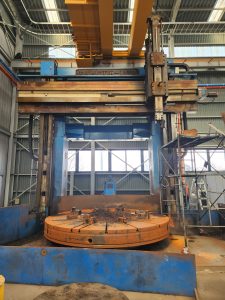
What is Bolt Production Boltmaker Machine?

Based on the query, “Bolt Production Boltmaker Machine” appears to refer to specialized industrial machinery used in the manufacturing of bolts (and related fasteners like screws, rivets, and nuts) through a process known as cold forging or bolt forming. These are not a single branded product but a category of high-precision, automated machines commonly called bolt formers, bolt makers, or multi-station progressive bolt forming machines. They are essential in the fastener industry for producing bolts at scale, particularly for applications in automotive, construction, aerospace, and machinery sectors. Companies like National Machinery (now part of National Kayser), Chun Zu Machinery, Jin Qi, and Ningbo Anchors produce such equipment, with models like the 13B-4S/84S or CBF-84S being typical examples.These machines enable efficient, high-volume production of bolts from raw wire or rod stock (e.g., medium carbon alloy steel equivalent to 10.9 high-strength grade) without heating the material, leveraging cold deformation for superior strength and surface finish. Below, I’ll explain the technical aspects in detail, including working principles, components, process, specifications, and advantages.Technical Working PrincipleBoltmaker machines operate on the cold forging (or cold heading) principle, a metalworking process where force is applied to plastically deform cold (room-temperature) metal stock into the desired shape. This is achieved through progressive multi-station forming, where the workpiece is transferred between dies and punches in sequential operations. The process exploits the ductility of metals like low- to medium-carbon steel, stainless steel (SS), or alloys, allowing them to be shaped without cracking or losing material properties.Key physical principles involved:
- Plastic Deformation: Under compressive forces (typically 10–500 tons per station, depending on machine size), the metal yields beyond its elastic limit but remains below its fracture point. This is governed by the material’s yield strength (e.g., ~400–600 MPa for medium-carbon steel) and strain hardening, which increases hardness during forming.
- Shear and Extrusion: Initial cutting shears the wire to length, followed by extrusion-like upsetting to form the bolt head.
- Automation and Precision: Servo-motors, pneumatic transfers, and variable-speed drives ensure repeatability within tolerances of ±0.01–0.05 mm, minimizing defects like burrs or uneven heads.
- No Heat Treatment in Core Process: Unlike hot forging, cold forging avoids thermal distortion, resulting in bolts with higher tensile strength (up to 10.9 grade, ~1000 MPa ultimate tensile strength) due to work hardening.
The machines are rated by the maximum shank diameter (e.g., M10 for 10 mm bolts) and length they can handle, with production speeds tied to material properties, lubrication, and die quality. For instance, optimal speeds are calculated based on the product’s shape, size, and material, often limited by the shear modulus and friction in the dies.Key ComponentsA typical multi-station boltmaker machine (e.g., a 4-die, 4-blow model like the Chun Zu CBF-84S) consists of the following technical components:
- Wire Payoff and Straightening Unit:
- Driven payoff reel with speed control feeds coiled wire (diameter: 5–25 mm) into the machine.
- Straightening rolls (e.g., carbide-tipped) align the wire to prevent buckling, using adjustable rollers to apply bending forces.
- Shearing Mechanism:
- Hydraulic or mechanical shear cuts the wire to precise lengths (e.g., up to 100–200 mm).
- Shear force: Calculated as F=τ×AF = \tau \times A
F = \tau \times A, where τ\tau\tauis shear strength (~300–500 MPa for steel) and ( A ) is cross-sectional area.
- Transfer System:
- Pneumatic kick-out (PKO), transfer fingers, or servo-driven arms move the blank between stations.
- Initial Forge Out (IFO) ejects partially formed parts; timing is synchronized via cams or PLC controls.
- Forming Stations (Dies and Punches):
- Multi-station setup (3–6 stations common; e.g., 4-die/4-blow for hex bolts).
- Station 1 (Cutting/Upsetting): Cuts and upsets the end to form the head blank.
- Station 2–3 (Heading/Extrusion): Progressively shapes the head (e.g., hex, flange, or socket) via punches applying 50–200 tons of force.
- Station 4 (Pointing/Trimming): Forms the shank tip and trims excess material.
- Dies: Tungsten carbide or tool steel, with tolerances <0.02 mm; interchangeable for different bolt types.
- Punches: Bolster-supported for even load distribution.
- Multi-station setup (3–6 stations common; e.g., 4-die/4-blow for hex bolts).
- Drive and Control System:
- AC motor (e.g., 15–50 kW) with frequency inverter for variable speeds (70–220 parts per minute, PPM).
- PLC (Programmable Logic Controller) or CNC integration for automation, including safety interlocks and fault detection (e.g., overload sensors).
- Clutch and brake system for precise stop-start cycles.
- Auxiliary Systems:
- Lubrication: High-pressure oil mist to reduce friction (coefficient ~0.05–0.1).
- Cooling: Air or water jets to manage heat from deformation (temperature rise <100°C).
- Ejection: Knockout (KO) rods and conveyors for part discharge.
Standard accessories include trial tools, spare parts (e.g., die locking screws, ratchet wheels), electrical panels, and safety bolts.Manufacturing Process Step-by-StepThe process for producing a standard hex bolt (e.g., M10 x 75 mm from 10.9-grade steel) is progressive and automated:
- Wire Feeding and Cutting: Wire (Ø10 mm) is uncoiled, straightened, and sheared to length (~80 mm, accounting for upset volume).
- Transfer to Station 1: Blank is gripped and moved; initial upset forms a cylindrical head preform via 20–50 ton compression.
- Progressive Forming (Stations 2–4):
- Extrusion shapes the shank and head; e.g., hex head formed by six-sided die cavity.
- Forces: Up to 100 tons/station, with strain rates of 10–100 s⁻¹.
- Pointing and Trimming: Tip is pointed (tapered for threading); flash (excess metal) trimmed via PKO.
- Ejection and Sorting: Finished bolt ejected onto conveyor; optional vision systems sort for defects.
- Post-Processing (Not Core to Machine): Bolts may go to thread rolling machines for threading, but some integrated models include pointing/threading attachments.
Cycle time: 0.3–1 second per bolt, yielding 100–200 PPM for simple shapes. Material utilization: >90%, with waste mainly from shear flash.Typical Specifications and CapabilitiesSpecifications vary by model, but here’s a comparison of common 4-station machines (e.g., for MS/SS hex bolts):
| Parameter | Chun Zu CBF-84S (Example) | National Kayser S1 (Example) | 13B-4S/84S (Ningbo Anchors) |
|---|---|---|---|
| Max. Wire Diameter | 10 mm | 24 mm | 13 mm |
| Max. Bolt Length | 85–100 mm | 200 mm | 84 mm |
| Stations/Blows | 4 die / 4 blow | 4 die / 4 blow | 4 stations |
| Production Speed | 70–220 PPM | Up to 150 PPM | Up to 200 PPM (material-dependent) |
| Force per Station | 50–100 tons | 100–300 tons | 80–150 tons |
| Power Requirement | 15–22 kW AC motor | 30–50 kW | 20 kW with transducer |
| Suitable Materials | Medium carbon steel, SS, alloys (up to 10.9 grade) | High-strength steels | Medium carbon alloy steel |
| Applications | Hex bolts, flange bolts, carriage bolts | Heavy-duty bolts (e.g., M24) | Hex cap screws, U-bolts, rivets |
| Dimensions (approx.) | 3m x 1.5m x 2m | 4m x 2m x 2.5m | 2.5m x 1.2m x 1.8m |
| Weight | ~5–7 tons | 10–15 tons | 6 tons |
- Capacity Factors: Max. shear diameter based on medium-carbon steel; e.g., for Ø13 mm wire, suitable product diameter ~10–12 mm. Speeds drop 20–50% for harder materials like SS.
- Versatility: Can produce hex bolts, socket bolts, carriage bolts, U-bolts, eye bolts, and non-standard parts for industries like automotive (wheel bolts) or rail (track bolts).
Advantages and LimitationsAdvantages:
- Efficiency: High throughput (up to 3000 pieces/hour) with low labor; automation reduces cycle time by 50–70% vs. manual forging.
- Quality: Cold forming yields dense, grain-refined structures with better fatigue resistance; surface finish Ra <1.6 μm.
- Cost-Effective: Minimal material waste; energy use ~0.5–1 kWh per 1000 bolts.
- Scalability: Modular designs allow upgrades (e.g., adding stations for complex shapes).
Limitations:
- Material Constraints: Limited to ductile metals; brittle alloys require pre-heating.
- Tool Wear: Dies last 10,000–50,000 cycles; carbide tooling costs $500–2000 per set.
- Setup Time: Die changes take 1–4 hours for different bolt sizes.
- Maintenance: Requires regular lubrication and alignment; downtime ~5–10% annually.
In summary, bolt production boltmaker machines are advanced cold forging systems that transform wire into precision bolts through multi-station deformation, offering high-speed, automated manufacturing for the global fastener market (valued at >$100 billion annually).