What is Steel Pipe CNC Chamfering Machine?
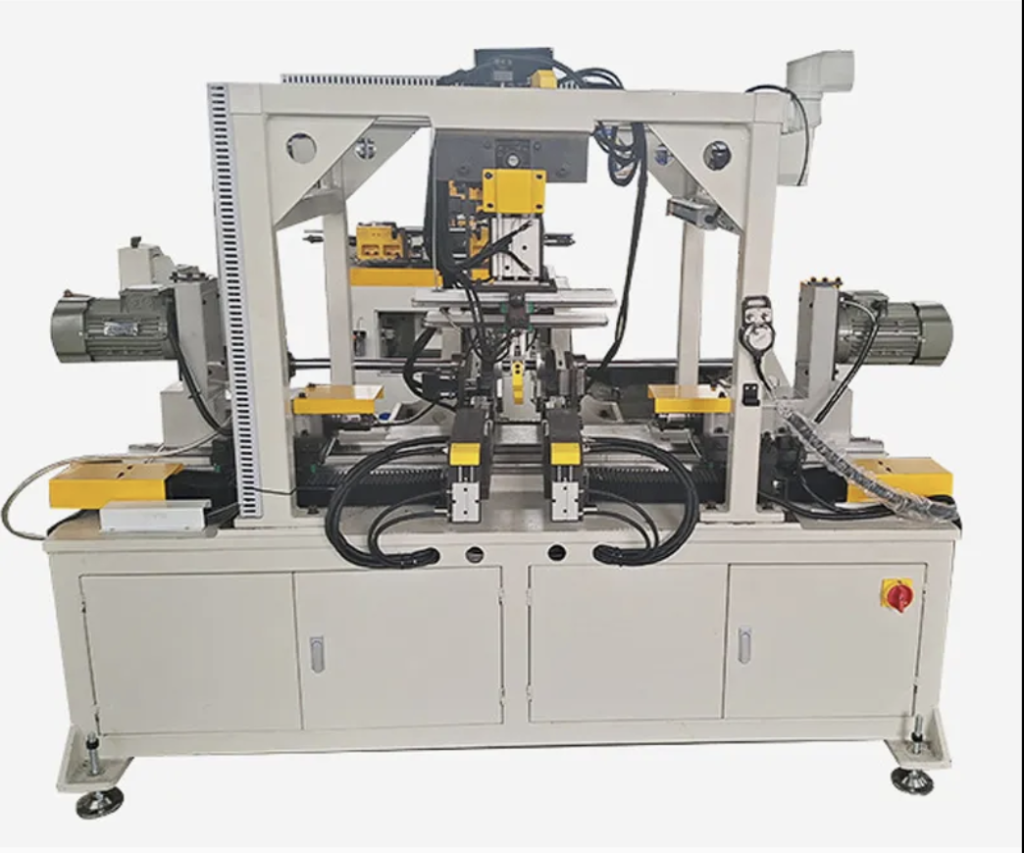
A Steel Pipe CNC Chamfering Machine is a specialized CNC machining system designed to automatically cut chamfers (beveled edges) on the ends of steel pipes or tubes.
Chamfering is the process of creating an angled edge (commonly 30°, 37.5°, or 45°) at the pipe end. This edge preparation is critical in welding, assembly, and flow applications where clean, burr-free, angled edges improve weld penetration, reduce stress concentration, and prevent fluid turbulence.
Unlike manual grinders or lathes, a CNC chamfering machine is dedicated and automated — it handles large volumes of pipes efficiently, with uniform quality.
1. Role in the Sheet Metal & Pipe Fabrication Sector
Steel pipe chamfering is essential in industries such as:
- Sheet Metal Fabrication – Pipes are structural members, and chamfering ensures clean weld joints in frames, exhausts, supports.
- Oil & Gas Pipelines – Pipe ends must be beveled/chamfered for strong circumferential welds.
- Boilers, Pressure Vessels, Heat Exchangers – Tube ends require precise chamfers for tube-to-sheet welding.
- Automotive & Aerospace – Exhaust pipes, hydraulic tubes, and chassis tubing demand smooth chamfered edges.
- Furniture & Construction – Decorative steel tubes require clean edges for safety and aesthetics.
2. Working Principle
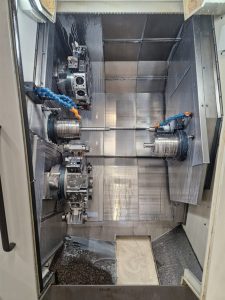
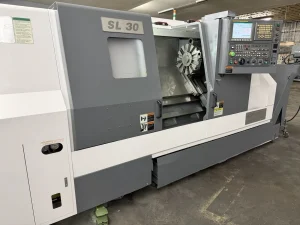
The machine works similarly to a CNC lathe, but it’s purpose-built for pipes:
a. Pipe Loading & Clamping
- Pipes are fed into the machine manually, semi-automatically, or fully automatically (with magazine or conveyor).
- Hydraulic or pneumatic chucks/clamps hold the pipe securely.
- Many machines support single-pipe or multi-pipe simultaneous chamfering.
b. CNC-Controlled Tooling
- A servo-driven tool slide approaches the pipe end.
- Chamfering tools (carbide inserts, HSS tools, or form tools) cut the bevel.
- Tooling can also remove burrs and create facing cuts (squaring pipe ends).
c. Machining Cycle
- Pipe is clamped.
- CNC slide positions tool to pipe OD and ID.
- Tool machines:
- OD chamfer (outer bevel)
- ID chamfer (inner bevel)
- Facing cut (flat squaring of end face)
- Tools retract, and finished pipe is released.
d. Automation
- Advanced models integrate with sawing lines: after cutting a pipe to length, the same line chamfers it.
- Robots or feeders can load/unload pipes continuously.
3. Types of CNC Chamfering Machines
- Single-Head Chamfering Machine
- Processes one pipe end at a time.
- Double-End Chamfering Machine
- Machines both ends simultaneously, increasing productivity.
- Especially useful in high-volume sheetmetal and pipe shops.
- Multi-Pipe Chamfering Machine
- Can chamfer several pipes in one cycle (common in small-diameter tubing industries).
4. Technical Features
- Pipe Diameter Range → Machines are rated for ranges, e.g. Ø10–300 mm.
- Wall Thickness → Must handle light tubes (thin sheetmetal) up to heavy thick-wall pipes.
- Chamfer Angles → Adjustable, typically 30°–45°, but some support custom angles.
- CNC Control → Enables programmable feed rates, chamfer lengths, multi-angle cuts.
- Tooling → Replaceable carbide inserts for long tool life.
- Cycle Time → High-speed models can chamfer a pipe in 5–15 seconds.
- Spindle Drive → High torque for large-diameter, thick pipes.
- Clamping System → Hydraulic clamping ensures concentricity and repeatability.
- Safety Enclosure → Fully enclosed machines reduce risk and contain chips.
5. Chamfering Operations
A Steel Pipe CNC Chamfering Machine can perform:
- Outer Chamfering – Creates external bevel on pipe OD.
- Inner Chamfering – Removes sharp edges inside bore.
- Facing – Squares pipe end.
- Compound Bevels – For welding prep (multi-angle chamfers).
- Deburring – Removes micro-burrs and sharp edges.
This makes it more than just a “beveling” tool — it’s a pipe end-finishing center.
6. Advantages Over Manual / Lathe Chamfering
✅ Productivity – Processes dozens of pipes per hour, continuous operation.
✅ Consistency – Uniform chamfer angles and finish across batches.
✅ Safety – Enclosed cutting environment reduces operator exposure to sparks and chips.
✅ Integration – Can be linked with saw-cutting, drilling, and pipe handling lines.
✅ Versatility – Handles different diameters and wall thicknesses with quick setup changes.
✅ Reduced Labor – Semi-automatic and fully automatic versions need minimal operators.
7. Challenges & Maintenance
⚠️ Tool Wear – Chamfering inserts dull quickly with hard alloys (stainless, Inconel).
⚠️ Chip Removal – Burrs and chips must be evacuated; good chip conveyor is essential.
⚠️ Pipe Holding – Oval or bent pipes may slip unless clamping system compensates.
⚠️ Wall Thinness – Thin-walled sheetmetal tubes can deform during clamping/cutting.
⚠️ Coolant System – Without coolant/lubrication, edges may overheat and lose quality.
Conclusion
A Steel Pipe CNC Chamfering Machine is a dedicated, automated pipe end-finishing solution used in sheetmetal and tube fabrication. It performs OD/ID chamfering, facing, and deburring quickly and consistently, which is critical for welding, assembly, and safety in industries like oil & gas, boilers, automotive, and construction.
Compared to manual grinding or general-purpose lathes, it offers higher speed, consistency, automation, and integration into pipe production lines.