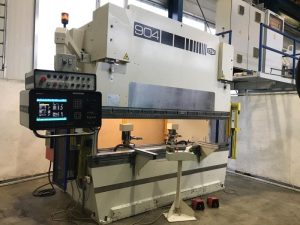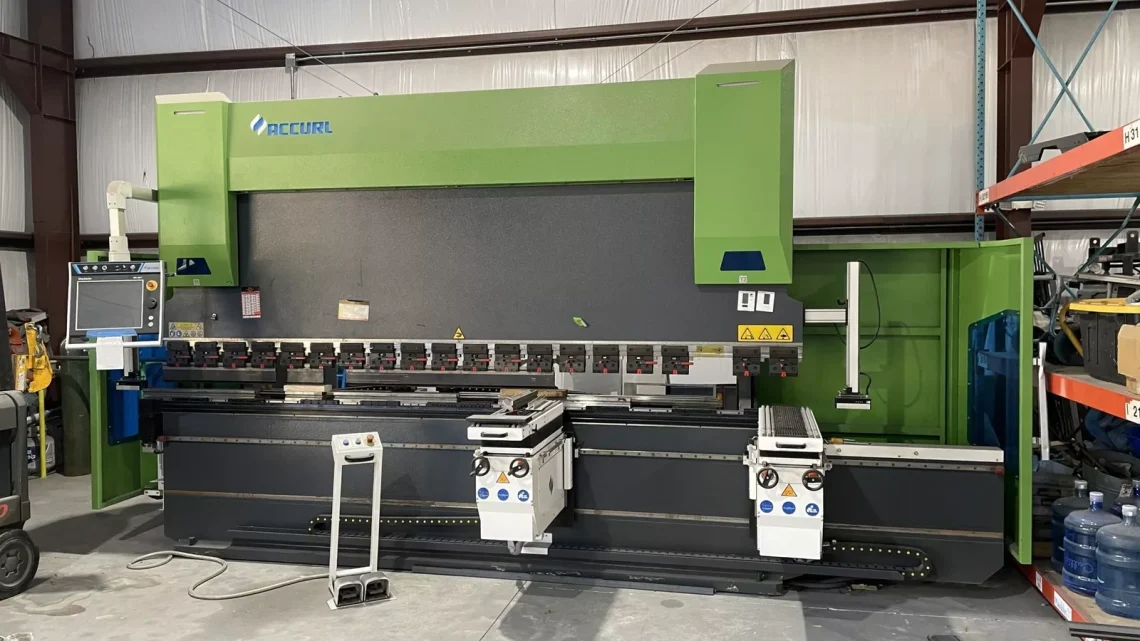
What Do Buyers Look for Before Investing in a Pre-Owned, Used, Secondhand, Surplus CNC Equipment Before Purchase Accurl Genius Pro B40220 CNC Press Brake 242 Tonnes 6 + 1 Axis made in China
If you are considering buying a pre-owned / secondhand / surplus CNC press brake such as the Accurl Genius Pro B40220 (≈ 242–245 tonnes, 6 + 1 axis), there are many critical checks, risk factors, and “red flags” to watch for. Below is a comprehensive checklist and guidance based on industry best practices. You can use this as a due-diligence framework when evaluating a specific machine or negotiating purchase terms.
Key Considerations Before Purchase
Here are the major categories of criteria a buyer should evaluate. Some are general for any used industrial machinery; others are specific to press brakes / CNC press brakes.
| Category | What to Check / Ask / Verify | Why It Matters / What Risks to Watch Out |
|---|---|---|
| Machine identity & specification match | – Confirm the model, serial number, year, and configuration (axis count, tonnage, bed length, tooling type). – Compare against published specs for the Accurl Genius Pro B40220 (or equivalent B40220 “Euro Pro / Genius B-series”) to ensure what you are being told matches what was actually built. – Determine which CNC/control system is installed (e.g. Delem DA-66T or other). | Sellers sometimes mislabel machines, or the machine may have been modified. Knowing exactly what you’re getting ensures compatibility with your intended work. |
| Usage history & maintenance records | – Ask for logs, service/repair records, hours of operation, downtime history. – Ask about major rebuilds, part replacements, or damage events (e.g. collisions, overloads, hydraulic failures). – Inquire whether it has had consistent preventative maintenance (hydraulic oil changes, filter replacements, alignment checks, lubrication, etc.). | A well-documented maintenance history is a strong indicator of reliability. Hidden or undocumented issues often cause expensive surprises. |
| Structural integrity & alignment | – Check the ram (upper beam) and bed (lower die table) for wear, deformation, cracks, gouges, or unevenness. – Check whether the side frames are square, and that the beam motion is smooth without binding or “slop.” – Inspect for any signs of welding repairs, cracks, or distortion. – Check all guideways, slides, columns for wear. | Structural wear or deformation can degrade bending accuracy, cause inconsistent angles along the length, or require costly rework. |
| Hydraulic system & seals | – Inspect all hydraulic cylinders for leaks, scoring, pitting, or corrosion on cylinder rods. – Check whether seals have been replaced recently or show signs of wear. – Examine the hydraulic tank: is it clean, free of sludge, metal particles, or contamination? – Review hydraulic pumps, valves, hoses, filters. – Confirm system pressure and that the machine holds pressure under load (no leaks or drift). | Leaky or failing hydraulics are one of the most common causes of downtime in press brakes. Repairing cylinders or valves, or flushing a contaminated hydraulic system, can be costly. |
| CNC / control electronics / wiring / drives | – Power the machine up and test the CNC control system thoroughly (menus, motion, display, alarms). – Check for error logs, fault history. – Examine wiring harnesses, connectors, cables for damage, corrosion, insulation wear. – Inspect servo drives, motors (if CNC axes), limit/home switches, encoders. – Ask whether spare controllers or boards are available or compatible. | The electronics are often the most fragile part of a used machine. If the control or drives are obsolete or unsupported, it can be very expensive (or impossible) to replace. |
| Axes, backgauge & motion systems | – For a 6 + 1 axis machine, verify that each axis (X1, X2, R, Z1, Z2, etc.) is operational, smooth, precise, and properly referenced. – Check backlash, repeatability, drift. – Check the backgauge mechanism (rails, ball screws, guides, motors) and that it moves consistently and accurately. – Check for any missed steps, jerky motion, or axis stalling under load. – Inspect the crowning / compensation (if equipped) and whether it works properly. | If any axis is degraded or inoperable, your ability to produce accurate bends or handle complex bending sequences is compromised. Repairs or replacement of ball screws, guides, motors, or backgauge components can be expensive. |
| Tooling, holders, clamps | – Check the tooling (upper punches, lower dies) for wear, damage, cracks, bending, chipping. – Check how the tooling is held (clamping system) and whether the machine is compatible with tooling you already own or can source. – Evaluate whether quick-change tooling or special clamps are included and functional. | Tooling is often sold with a machine or expected to be replaced, and poor tooling or lack of compatibility can add large extra costs. |
| Safety systems / compliance | – Verify the presence and functionality of safety devices: light curtains, emergency stop (E-stop), guards, safety interlocks. – Check whether it meets local safety/regulation requirements for press brakes in your jurisdiction (CE, OSHA, ISO, etc.). – Check whether the machine’s safety system wiring has been tampered with or bypassed. | A press brake without proper safety systems can expose you to serious liability, litigation, or risk of injury. Ensuring safety compliance is essential. |
| Electrical / power condition & supply | – Check the machine’s electrical wiring, panels, circuit breakers, fuses, ground connections, and condition of cables. – Test the power stability, ensure no voltage drops, fluctuations, or noise. – Confirm that your facility’s available power (voltage, phase, frequency) matches the machine’s requirements. – Check for any overheating in past usage (burnt wires, discoloration, insulation damage). | A poor or mismatched electrical installation may limit the machine’s performance and cause component failures. |
| Operational trials & test bends | – Run the machine unloaded to see how it behaves: move all axes, check speeds, erratic behavior, noise, vibration. – Perform test bending with your material (or similar) and check whether desired angles, tolerances, repeatability, and accuracy are achieved. – Inspect the flatness and angular consistency across the entire bend length. – Under load test: bend thicker parts within the machine’s claimed tonnage to see if it holds up (but cautiously). – Observe the machine over several cycles to detect creeping issues, pressure loss, drift, or instability. | This is probably the clearest way to assess whether the machine can meet your required specifications in real-world use. |
| Parts availability & support | – Research whether spare parts (hydraulic seals, pumps, valves, electronics cards, motors, CNC parts) are readily available — either through Accurl (or their agents), aftermarket suppliers, or salvage sources. – Determine whether the original manufacturer (Accurl or its distributor) still provides support, service, firmware updates, or upgrades. – Check whether any modifications or third-party substitutions have been made that could complicate parts sourcing. | Even a good machine can become unusable if you can’t get replacement parts in a reasonable time. Excessive downtime due to waiting for parts can negate cost savings. |
| Transport, shipping, installation, infrastructure | – Determine the machine’s weight, footprint, and required rigging for transport and installation. – Check if there is a pit, foundation anchoring, or special floor requirements. – Ensure you have sufficient crane / forklift capacity to move the machine. – Confirm whether disassembly and reassembly will be needed, and whether documentation or skilled technicians will be available. – Plan for site utilities: sufficient floor space, operator access, electrical supply, hydraulic connections, cooling or air supply (if applicable). | The cost and risk of moving a large press brake are nontrivial. Damage in transit or during rigging is a real risk. |
| Price benchmarking & depreciation | – Compare the asking price to other similar used machines (tonnage, age, condition, features) in your region and globally. – Use published guides for valuation of used press brakes (factors include age, condition, control system, features). – Account for the cost of repairs, upgrades, shipping, installation, and downtime in your total landed cost. – Negotiate conditional acceptance (e.g. contingent on final testing, or refund if hidden defects found). | A “cheap” machine with hidden costs may turn out more expensive than buying a more reliable used or new machine. |
| Contract terms, warranty, acceptance terms | – Try to obtain a warranty (even limited or short-term) from the seller, especially for major components (CNC, hydraulics). – Insist on a period of “inspection and acceptance” after delivery, where you can test and reject if significant issues arise. – Clarify responsibilities: who pays for transport damage, who insures in transit, who handles installation and alignment, who supplies tooling. – Get everything in writing: condition representation, remedy for defects, liability clauses, spare parts or support commitments. | A well-structured contract mitigates your risk. Many disputes come down to ambiguous verbal promises not honored. |
| Resale / residual value and obsolescence risk | – Consider how easy it will be to resell the machine later, given its brand, control, condition, and features. – Assess whether the CNC system is likely to become obsolete or unsupported in the near future. – Check how adaptable the machine is for future upgrades (e.g. adding axes, retrofitting controls). | The more future-proof and maintainable the machine is, the lower your long-term total cost of ownership. |
Specific Checks for the Accurl Genius Pro B40220 / B40220 Series
Given your interest in this model (≈ 242–245 ton, 6 + 1 axis, Chinese / Accurl manufacture), here are some points tailored to this series:
- The published specifications for the Accurl “Euro Pro / Genius B” series show that these machines often feature multiple axes (X, R, Z1, Z2, etc.) and include options like crowning, CNC backgauges, quick tool change, and safety systems.
- The B40220 designation is used for a 220-ton / 4000 mm version in Accurl’s literature.
- In real-world used listings, B40220 machines are sold at ~245 tons, 13′ (≈ 4000 mm) working length, equipped with Delem DA-66T 2D/3D CNC, 6 axes + optional crowning, laser safety, etc.
- Because these are relatively “modern” machines (2020s era), their control electronics, hydraulic systems, and parts may still be supported — but you must confirm locally whether support is available in your region (Türkiye / Bursa).
Thus, when inspecting such a machine, pay special attention to:
- All axes (especially Z axes, crowning, R axis) – confirm full travel and repeatability
- The CNC controller (especially Delem DA-66T) – assess firmware version, spare parts, any hack or local modifications
- Hydraulic systems under multi-axis load
- Tooling compatibility with your existing tooling (punches/dies)
- Safety laser/DSP systems (laser guards, safety interlock) — ensure they are present and functioning
- Whether crowning (if installed) is working properly
- Confirm that the 242–245 ton rating is accurate under full length (some machines are derated or worn)
“Red Flags” & Warning Signs (Things That Should Make You Hesitate)
- Absence of a functioning test or acceptance trial
- Significant hydraulic leaks (especially in cylinders)
- Control or drive electronics are obsolete, discontinued, or unsupported
- Major structural damage (cracks, welded repairs)
- Tooling missing or severely worn/unusable
- Safety systems disabled or removed
- Excessive noise, vibration, or inconsistent motion
- No documentation or maintenance records
- The seller refuses your right to reject after inspection
- The transport / installation risk is too great (poor packaging, no disassembly plan)
Practical Steps for Due Diligence & Inspection
- Pre-visit document review
Ask the seller for: specification sheet, wiring diagrams, control manuals, maintenance logs, photographs/video of running machine, and a “walkthrough” video. - On-site inspection checklist
Use the table above to systematically inspect each subsystem (mechanical, hydraulic, CNC, motion, safety). Bring your own instruments (dial indicators, lasers, multimeter, infrared thermometer, etc.). - Test bending runs
If possible, bring sample plate pieces of your typical material and thickness, and run a bending program to check angle accuracy, consistency, springback compensation, and full-length uniformity. - Offer a conditional purchase
Negotiate terms where the final payment or acceptance depends on passing the tests in your shop (within a few days) or third-party inspection. - Plan for spare parts / startup support
Ensure you or the seller can ship critical spare parts (seals, electronic boards) proactively, and that you have or can contract someone experienced with Accurl/CNC press brakes for setup/adaptation. - Budget for refurbishment / calibration
Even a “good” used machine often needs fresh hydraulic fluid, seal replacement, alignment, calibration of axes, and sometimes minor electrical fixes upon arrival.
Summary & Recommendation
Buying a used CNC press brake like the Accurl Genius Pro B40220 can give you high capability at lower cost — but only if you do your homework. The risk is that hidden faults, obsolete controls, or wear can erode the savings or make the machine unserviceable. Use the checklist above as your inspection guide, insist on proofs and acceptance testing, and structure your purchase contract to protect yourself.