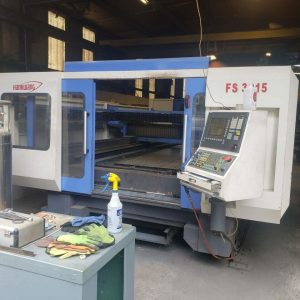
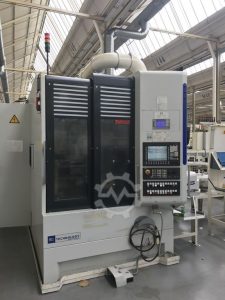
What is CNC Pipe Coupling Threading Machine?

What is a CNC Pipe Coupling Threading Machine?
A CNC Pipe Coupling Threading Machine is a special-purpose CNC turning center designed to machine internal and/or external threads on pipe couplings (connectors used in oil & gas, water, construction, and other pipeline applications).
These machines are engineered to cut highly accurate threads (API, BSPT, NPT, premium connections, etc.) on heavy, short-length cylindrical parts like pipe couplings, collars, and casing/tubing connectors, ensuring tight sealing and mechanical strength in pipeline systems.
1. Application in Metalworking & Industry
- Oil & Gas Industry – Threading of OCTG (Oil Country Tubular Goods) couplings for casing and tubing pipes (API 5CT, premium threads).
- Water and Gas Pipelines – Couplings for PVC/steel pipes with NPT/BSPT threads.
- Hydraulic & Pneumatic Systems – High-pressure couplings requiring precision thread finishes.
- General Construction & Plumbing – Standard threaded pipe connectors.
Coupling threading machines are critical because pipe joints are the weakest point in pipelines — if threads are off-spec, leaks, pressure loss, or mechanical failure occurs.
2. Technical Working Principle
A CNC Pipe Coupling Threading Machine works similarly to a CNC lathe, but is purpose-built:
a. Workholding
- Couplings are short, heavy rings — held via hydraulic/manual chucks or special fixtures.
- Typically, front and rear chucks are used to clamp large-diameter couplings securely.
b. Spindle
- Large-bore spindle (to fit thick pipe couplings).
- Heavy-duty bearings to withstand interrupted cutting of tough alloys (alloy steel, stainless steel, Inconel).
c. Tooling System
- CNC turret with thread cutting tools (carbide inserts, form tools).
- Threading inserts matched to API / NPT / BSPT standards.
- Boring bars for internal threads, OD tools for external threads.
d. Thread Cutting
- CNC controls synchronize spindle rotation with tool feed to generate precise thread pitch.
- Can produce:
- Tapered threads (e.g., NPT, BSPT, API round)
- Straight threads (e.g., API buttress, premium threads)
- Multi-pass cycle ensures correct depth and surface finish.
e. Coolant & Chip Control
- Heavy-duty coolant system to flush chips out of deep threads.
- Chip conveyors or screw-type chip removers for continuous production.
f. Automation
- Many modern coupling threading machines include auto-loading systems (gantry, robot, or hydraulic loader) because couplings are heavy and repetitive.
3. Machine Configurations
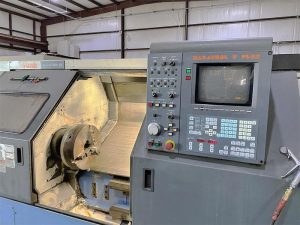
- Horizontal CNC Coupling Threading Lathe
- Looks like a heavy-duty CNC lathe.
- Dedicated for coupling threading, short Z-axis travel, large spindle bore.
- Double-End Coupling Threading Machine
- Simultaneously machines both ends of a coupling.
- Two spindles facing each other, synchronized CNC control.
- Greatly reduces cycle time.
- Multi-Spindle / Special Purpose Coupling Threaders
- For mass production of standard couplings.
- Often used in oilfield pipe shops.
4. Technical Features to Look For
- Spindle Bore Diameter → Must fit your maximum coupling OD (often 200–400 mm).
- Chuck System → Dual hydraulic chuck with automatic centering.
- Threading Range → Must support API, BSPT, NPT, or custom premium thread standards.
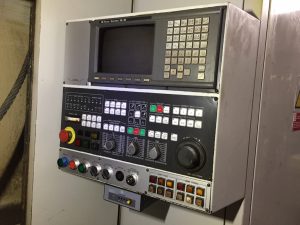
- Control System → CNC controller with threading cycles (Fanuc, Siemens, OSP, etc.).
- Turret Type → Servo-driven with fast indexing, 6–12 tools.
- Power → High spindle torque (for large-diameter steel couplings).
- Tailstock / Steady Rest → For longer parts (collars, pipe sections).
- Measuring System → Integrated gauges / laser probes for online thread inspection.
5. Example Use Case (Oilfield Coupling)
- Workpiece: API 5CT Casing coupling Ø244 mm, length 200 mm.
- Operation:
- Clamp in hydraulic chuck.
- Bore internal diameter for precision fit.
- Cut internal taper thread (e.g., API buttress).
- Measure thread profile with a gauge.
- Deburr & finish.
Cycle time: 3–5 minutes per coupling (depending on size).
6. Advantages of CNC Coupling Threading Machines
✅ High accuracy in pitch, taper, depth, and finish.
✅ Faster production compared to manual lathes.
✅ Can cut API, BSPT, NPT, premium connections with CNC programmability.
✅ Consistency across large batches.
✅ Reduced operator dependency (automation possible).
✅ Safer handling of heavy couplings.
7. Challenges / Maintenance Points
⚠️ Thread insert wear → must be monitored to avoid out-of-tolerance threads.
⚠️ Chip evacuation → poor coolant flow causes chip packing in threads.
⚠️ Workholding slippage → couplings are heavy and smooth, requiring strong hydraulic grip.
⚠️ Heat generation → deep threading in alloy steel builds heat → coolant and cutting speed must be optimized.
⚠️ Calibration of gauges → API threads require certified gauges for acceptance.
Conclusion
A CNC Pipe Coupling Threading Machine is essentially a specialized CNC lathe optimized for cutting precision internal/external threads on pipe couplings.
It is indispensable in industries like oil & gas, pipeline, hydraulics, and construction, where leak-proof and mechanically strong threaded connections are critical. Buyers should evaluate spindle bore size, chucking system, thread standards supported, automation level, and whether the machine includes API-certified thread cutting capability.