What is Paper Box Making/Forming Machine?
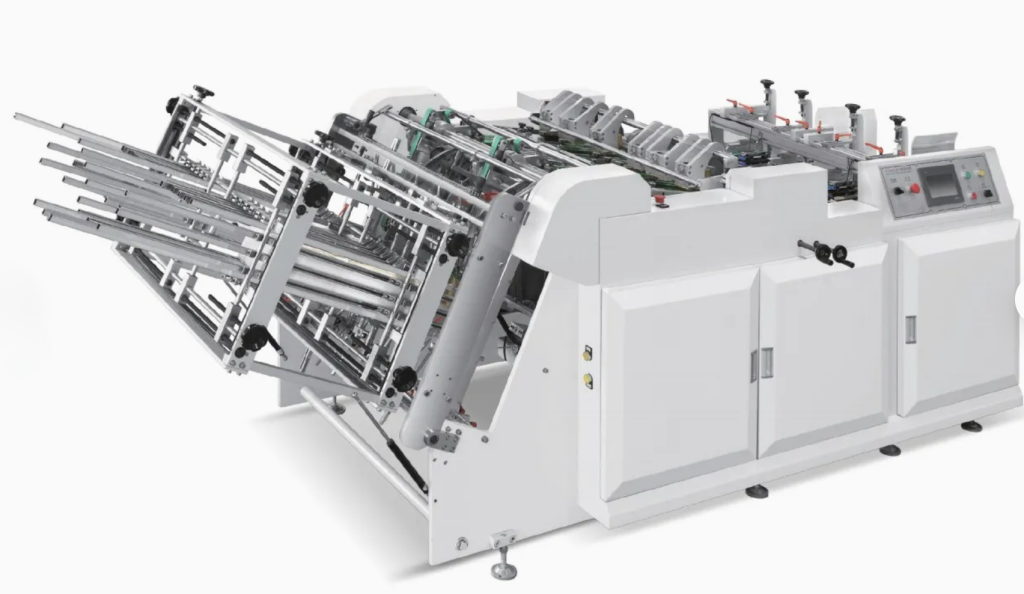
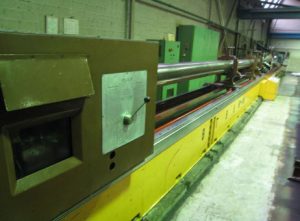
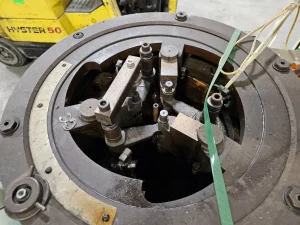
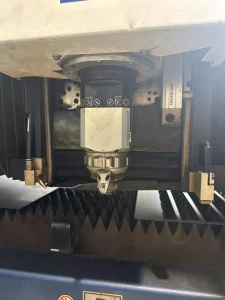
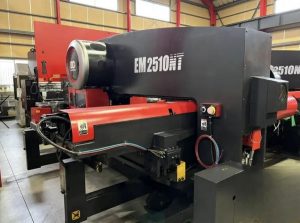
A Paper Box Making/Forming Machine, often referred to interchangeably as a carton erector, box forming machine, or corrugated box maker in the packaging sector, is an automated or semi-automated industrial equipment designed to convert flat paper-based materials—such as cardboard, corrugated board, or paperboard—into three-dimensional boxes or cartons ready for filling and sealing. These machines are critical in the packaging industry, where they enable efficient, scalable production of custom or standard packaging solutions for sectors like e-commerce, food and beverage, pharmaceuticals, agriculture, and logistics. By automating the forming process, they reduce labor costs, minimize material waste, and ensure consistent box quality, aligning with sustainability goals through just-in-time (JIT) production that cuts down on excess inventory.The image you provided depicts a typical semi-automatic or automatic paper box forming machine, characterized by its robust white metal frame, multiple mechanical arms and levers for folding, a digital control panel for operation, and conveyor-like structures for handling flat blanks. This setup suggests a focus on erecting and folding corrugated or paperboard sheets into boxes, with features like adjustable slots for creasing and gluing stations.Technical ExplanationFrom a technical standpoint, these machines operate on principles of mechanical engineering, materials science, and automation control systems. They process paper-based substrates (e.g., kraft paper, duplex coated paperboard, or single/double-wall corrugated board) through a series of sequential operations to transform flat die-cut blanks (pre-cut and pre-scored sheets) into erect boxes. The core goal is to achieve precise folding, adhesion, and structural integrity while accommodating variables like material thickness (typically 1-7 mm for corrugated board), box dimensions (e.g., up to 1200 mm in length for large models), and production speed (up to 30-50 boxes per minute in high-end systems).Key ComponentsA standard paper box making/forming machine integrates the following modular components, often mounted on a sturdy steel frame for stability and vibration dampening:
- Material Feeding System: Utilizes conveyor belts or vacuum suction feeders to load flat blanks from a stack or roll. Roll-fed systems (common for corrugated board) involve unwinding continuous paper webs, while sheet-fed systems handle pre-cut blanks. Sensors (e.g., photoelectric or ultrasonic) detect material alignment to prevent jams, ensuring a feed rate synchronized with downstream processes.
- Printing and Scoring/Creasing Unit: For customization, flexographic or digital printing heads apply graphics, barcodes, or branding using water-based inks suitable for paper substrates. The creasing mechanism employs rotary dies or flatbed platens with heated steel rules to score fold lines, reducing fiber tearing in the paperboard. This step is crucial for materials like corrugated board, where flute orientation (A, B, C, or E flute) affects compression strength.
- Slotting and Cutting Station: Rotary slotter heads with carbide-tipped knives cut slots for flaps and handles. In advanced models, servo-driven motors allow precise adjustments for box styles (e.g., Regular Slotted Container – RSC, or Full Overlap – FOL). Waste ejection uses air blasts or scrapers to remove trimmings, minimizing downtime.
- Gluing and Folding Mechanism: Applies hot-melt or water-based adhesives via nozzles or wheel applicators to designated flaps. Pneumatic or hydraulic cylinders (operating at 4-6 bar pressure) fold the blanks along creased lines into a 3D shape. For example, in a tray erector, four-side folding arms erect the base and walls simultaneously. Temperature-controlled heating elements (up to 200°C) ensure strong bonds on PE-coated papers, preventing delamination.
- Erection and Squaring Unit: The forming stage uses mechanical clamps or vacuum cups to square the box, ensuring perpendicular walls for stability. In fully automatic systems, robotic arms or linear actuators position the box upright for downstream filling.
- Control and Automation System: A Programmable Logic Controller (PLC) or Human-Machine Interface (HMI) touchscreen (as seen in the image’s digital panel) manages operations. Integrated sensors monitor parameters like glue viscosity, temperature, and speed via feedback loops. Industry 4.0 features, such as IoT connectivity, enable real-time data analytics for predictive maintenance. Power requirements typically range from 5-20 kW, with safety interlocks compliant with standards like CE or UL.
- Output and Stacking: Completed boxes are ejected onto a conveyor, often with counter-ejectors for stacking. Optional integrations include sealing stations for tape or labels.
Working Principle and Process FlowThe machine follows a linear or rotary process flow, governed by kinematics and fluid dynamics for smooth operation:
- Input Preparation: Flat blanks (e.g., 300-500 gsm paperboard) are loaded. For corrugated board, the substrate consists of a fluted medium sandwiched between liners, providing compressive strength (e.g., Edge Crush Test values of 20-40 N/cm).
- Processing Sequence:
- Feeding and Alignment: Blanks advance at speeds of 100-200 m/min, aligned via side guides.
- Scoring and Slitting: Creasing applies compressive force (up to 10 tons in platen systems) to create hinge-like folds without fracturing the paper fibers. Mathematical modeling often uses finite element analysis (FEA) to predict strain distribution, where paperboard’s anisotropic properties (due to fiber orientation) are simulated with Young’s modulus of 2-5 GPa along the machine direction.
- Gluing: Adhesive is dispensed at 0.5-2 g/m² coverage. Bond strength is tested via shear or peel tests, ensuring >5 N/cm² adhesion.
- Folding and Forming: Cylinders or cams drive 90°-180° rotations for flap closure. In thermoforming variants (for molded pulp boxes), infrared heaters soften the material to 80-120°C, allowing deep-draw forming into complex shapes without cracking, as modeled by viscoelastic deformation equations.
- Erection: Vacuum or mechanical grippers hold and release the box, achieving squaring accuracy within ±1 mm.
- Output: Boxes are formed at rates of 10-100 per minute, depending on model (e.g., Mitsubishi’s EVOL series achieves high-speed mass production via optimized conveyor syncing).
Energy efficiency is enhanced through variable frequency drives (VFDs) on motors, reducing consumption by 20-30% during idle periods. For paper lunch box variants (e.g., CHJ-D model), mechanical cams replace servos for cost-effective operation, focusing on hot-air bonding of PE-coated sheets.Technical Specifications and VariationsSpecifications vary by application:
- Capacity: 500-5000 boxes/hour.
- Material Compatibility: Paperboard (150-600 gsm), corrugated (up to 7-ply).
- Box Types: RSC, die-cut trays, punnets for fruits, or custom e-commerce boxes.
- Variations:
- Semi-Automatic: Manual loading, ideal for small runs (e.g., the image’s lever-operated design).
- Fully Automatic: Integrated with robotics (e.g., Packsize X-Series for JIT e-commerce, producing boxes in 3.5 seconds).
- Corrugated-Specific: Includes corrugators for flute formation using starch adhesives.
- Thermoforming: For molded paper composites, using vacuum forming to achieve 3D shapes with minimal material stretch (strain <5%).
In the packaging sector, these machines address challenges like material recyclability (paperboard is 100% recyclable) and customization for e-commerce surges, with market growth projected at 6.5% CAGR through 2030 due to sustainable demands.Applications and Benefits in the Packaging Sector
- E-commerce and Logistics: Enables on-demand sizing to reduce void fill (up to 30% material savings), integrating with fulfillment lines for high-volume shipping.
- Food and Pharma: Hygienic forming for lunch boxes or medical packaging, compliant with FDA standards for food-contact materials.
- Agriculture: Tray formers for produce punnets, optimizing ventilation via slotted designs.
- Benefits: Boosts throughput (e.g., 24/7 operation with remote diagnostics), lowers costs (ROI in 1-2 years via waste reduction), and supports sustainability by using fiber-based alternatives to plastics. Technical support often includes lifetime maintenance and PLC programming for custom integrations.
In summary, these machines represent a fusion of precision mechanics and automation, transforming raw paper into functional packaging with high reliability, making them indispensable for modern, efficient production lines.