What is Industrial Single-Shaft Gas Turbine Generator?
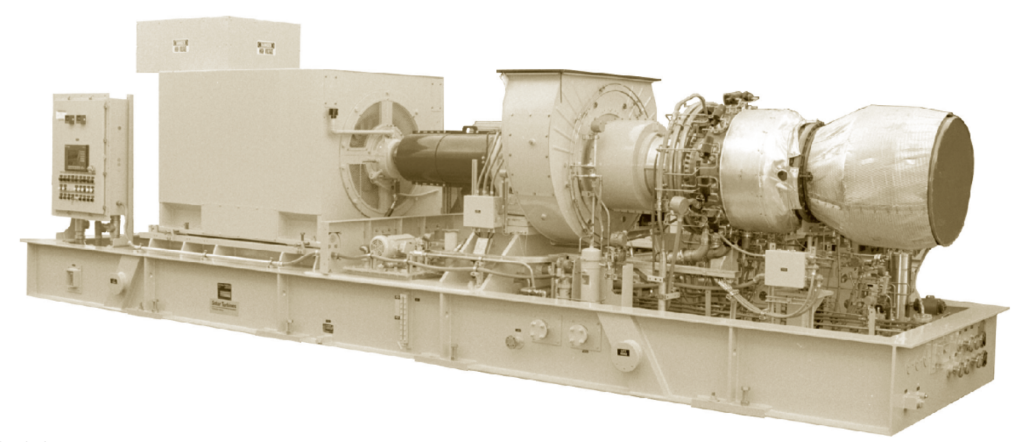
An Industrial Single-Shaft Gas Turbine Generator is a power generation system that integrates a gas turbine and an electric generator on a single rotating shaft, designed for efficient electricity production in industrial and utility-scale applications within the energy sector. Below is a technical explanation of its components, working principle, and applications, tailored for an energy sector audience.Components
- Gas Turbine:
- Compressor: Draws in ambient air, compresses it to high pressure, increasing its density and temperature. Typically, an axial compressor with multiple stages is used for high efficiency.
- Combustor: Injects fuel (natural gas, diesel, or other hydrocarbons) into the compressed air, where it is ignited to produce high-temperature, high-pressure combustion gases (typically 1200–1500°C).
- Turbine: Expands the hot combustion gases, converting thermal and kinetic energy into mechanical work. The turbine blades are designed to withstand high temperatures and stresses, often using advanced materials like nickel-based superalloys and thermal barrier coatings.
- Single Shaft: The compressor, turbine, and generator are mechanically coupled on a single shaft, rotating at the same speed (typically 3000 or 3600 RPM for 50 Hz or 60 Hz grids, respectively). This design simplifies the system but requires precise synchronization with the grid.
- Electric Generator:
- Converts mechanical energy from the rotating shaft into electrical energy via electromagnetic induction. Typically, a synchronous generator is used, producing alternating current (AC) at grid frequency.
- Equipped with an excitation system to maintain voltage stability and a cooling system (air, hydrogen, or water) to manage heat from electrical losses.
- Auxiliary Systems:
- Fuel System: Delivers and regulates fuel supply to the combustor.
- Lubrication System: Ensures smooth operation of bearings and other rotating components.
- Control System: Advanced digital control systems (e.g., PLC or DCS) monitor and optimize performance, ensuring safe operation, load control, and grid synchronization.
- Cooling and Ventilation: Manages heat dissipation from the turbine and generator.
- Exhaust System: Channels exhaust gases through a heat recovery steam generator (HRSG) in combined-cycle setups or directly to a stack, often with emissions control (e.g., SCR for NOx reduction).
Working Principle
- Air Intake and Compression: Ambient air is filtered and drawn into the compressor, where it is compressed to 10–30 bar, raising its temperature (up to ~500°C).
- Combustion: Fuel is injected into the combustor, mixed with compressed air, and ignited. The resulting high-temperature, high-pressure gas (combustion products) expands rapidly.
- Turbine Expansion: The hot gases pass through the turbine, driving the blades to rotate the shaft. This mechanical work powers both the compressor (consuming ~50–60% of turbine output) and the generator.
- Power Generation: The generator converts the shaft’s mechanical energy into electrical power, synchronized with the grid’s frequency and voltage.
- Exhaust: Exhaust gases, still at high temperatures (400–600°C), are either released or used in a combined-cycle system to generate steam for additional power generation.
Technical Characteristics
- Power Output: Ranges from 5 MW to over 300 MW, depending on the turbine model (e.g., GE 7F, Siemens SGT5-4000F).
- Efficiency: Simple-cycle efficiency is typically 30–40%. In combined-cycle configurations (using HRSG and steam turbines), efficiency can exceed 60%.
- Fuel Flexibility: Can operate on natural gas, liquid fuels, or syngas, with some models supporting hydrogen blends for decarbonization.
- Speed: Fixed rotational speed (e.g., 3000 RPM for 50 Hz grids) due to single-shaft design, requiring precise grid synchronization.
- Start-Up Time: Typically 10–30 minutes for full load, faster than steam turbines but slower than aero-derivative gas turbines.
- Emissions: NOx and CO emissions are controlled using low-NOx combustors, dry low-emission (DLE) systems, or post-combustion treatments like selective catalytic reduction (SCR).
Advantages
- Compact Design: Single-shaft configuration reduces mechanical complexity and footprint compared to multi-shaft systems.
- High Reliability: Fewer moving parts enhance durability and reduce maintenance needs.
- Grid Stability: Synchronous generators provide inertia and reactive power support, critical for grid stability.
- Efficiency in Combined Cycle: Ideal for combined-cycle power plants, maximizing energy extraction from fuel.
Disadvantages
- Limited Flexibility: Single-shaft design ties compressor and generator speeds, limiting operational flexibility compared to multi-shaft systems.
- Start-Up Constraints: Slower ramp-up times compared to aero-derivative turbines, less suited for peaking plants.
- Maintenance Costs: High-temperature components require periodic maintenance, including blade inspections and combustor replacements.
Applications in the Energy Sector
- Base-Load Power Plants: Used in large-scale power plants for continuous electricity supply, especially in combined-cycle configurations.
- Cogeneration (CHP): Provides both electricity and process heat for industrial facilities (e.g., refineries, chemical plants).
- Grid Support: Supplies stable power and grid services (e.g., frequency regulation, voltage support).
- Industrial Facilities: Powers large industrial complexes with high electricity and heat demands.
- Renewable Integration: Complements intermittent renewable sources (e.g., wind, solar) by providing dispatchable power.
Example Models
- Siemens SGT5-8000H: ~400 MW, >60% efficiency in combined cycle.
- GE 9HA: ~500 MW, designed for high efficiency and fuel flexibility.
- Mitsubishi M701J: ~500 MW, optimized for combined-cycle applications.
Trends and Innovations
- Hydrogen Compatibility: Adapting turbines for hydrogen or hydrogen-natural gas blends to support decarbonization.
- Digitalization: Integration of AI and IoT for predictive maintenance and performance optimization.
- Higher Efficiencies: Advances in materials (e.g., ceramic matrix composites) and cooling technologies to boost efficiency and operating temperatures.
- Hybrid Systems: Pairing with energy storage or renewables for enhanced flexibility.
ConclusionThe industrial single-shaft gas turbine generator is a cornerstone of modern power generation, offering high efficiency, reliability, and grid stability for industrial and utility applications. Its single-shaft design simplifies construction but limits operational flexibility, making it best suited for base-load or combined-cycle plants. Ongoing advancements in materials, digital controls, and fuel flexibility are enhancing its role in the transition to cleaner energy systems.