What is Manual Carton Box Making Board Corner Pasting Machine?
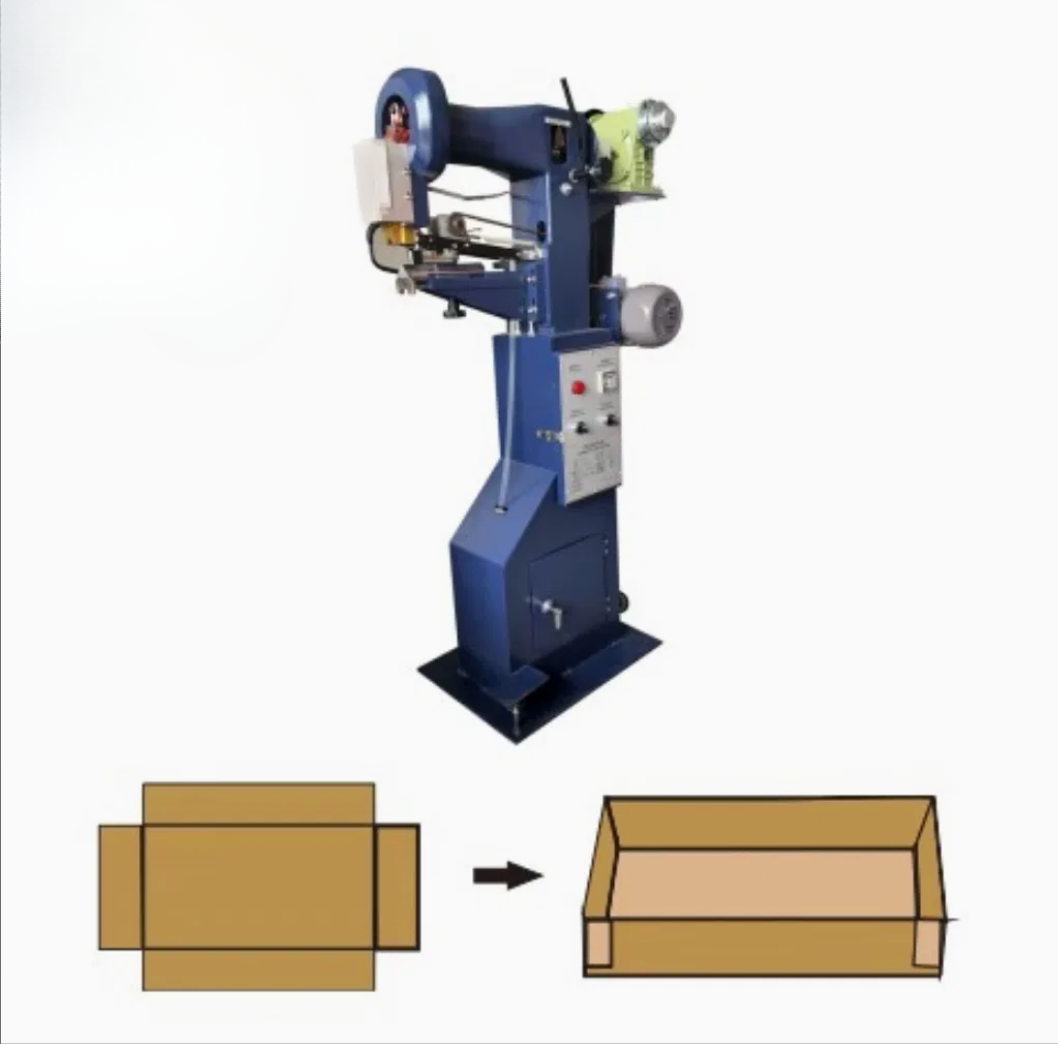
In the packaging sector, particularly for the production of carton boxes (including corrugated and rigid varieties), a Manual Carton Box Making Board Corner Pasting Machine is a specialized semi-automatic or fully manual piece of equipment designed for the final assembly stage of box fabrication. This machine focuses on the precise application of adhesive (pasting) to the corners of pre-formed cardboard or corrugated board structures, ensuring secure bonding and structural integrity. It is commonly used in small-to-medium-scale packaging operations where high-volume automation is not feasible, such as custom box making for e-commerce, food packaging (e.g., sweet boxes), electronics, or logistics. Unlike fully automatic systems that integrate slitting, slotting, and gluing in one line, this machine targets the corner reinforcement step to create durable, right-angled boxes with minimal material waste and operator intervention.The term “board corner pasting” refers to the process of adhering the edges or flaps of cardboard boards (typically 3-11 ply corrugated or rigid sheets) at the four corners, forming a stable box frame. “Manual” indicates that while the machine may incorporate pneumatic or mechanical aids for glue application and pressing, the primary operations—like loading the board, positioning, and initiating the pasting cycle—are performed by hand, making it cost-effective for low-run productions (e.g., 100-1000 units per hour).Technical ExplanationCore Functionality and ProcessThe machine operates on a modular workflow tailored to the packaging industry’s need for quick, repeatable box assembly without compromising on strength. Here’s a step-by-step technical breakdown:
- Material Preparation and Input:
- Input Material: Corrugated board sheets (e.g., single-wall or double-wall flute types like A, B, C, or E flutes) or rigid cardboard panels, pre-cut via upstream processes such as slitting and creasing. Typical board thickness ranges from 1-7 mm, with dimensions accommodating max shaping sizes of 400-600 mm length × 400-500 mm width × 200-300 mm height (e.g., models like ZM-LR-40 handle up to 400×480×250 mm).
- Manual Loading: The operator manually places the semi-assembled board (e.g., a flat-folded box blank with flaps) into a positioning jig or clamp. This jig uses adjustable guides (often made of hardened steel or aluminum) to align the board precisely, ensuring corners are at 90° angles to prevent distortion. Alignment tolerances are typically ±0.5 mm to maintain box squareness, critical for stacking stability in transit.
- Adhesive Application (Pasting Mechanism):
- Glue Delivery System: Employs a manual or semi-automatic glue applicator, usually a roller or nozzle-based dispenser that applies water-based PVA (polyvinyl acetate) adhesive or hot-melt glue to the corner edges. The glue viscosity is controlled (e.g., 500-2000 cps) to ensure even spreading without excess drip, which could weaken bonds or contaminate the board.
- In manual modes, the operator triggers a pneumatic pump (operating at 0.4-0.6 MPa air pressure) to dispense glue via a foot pedal or hand lever.
- Technical Precision: The applicator head features adjustable nozzles (e.g., 2-4 mm diameter) for targeted corner pasting, covering 10-20 mm of edge length per corner. This prevents over-gluing, which could lead to warping due to uneven drying (curing time: 5-15 minutes at ambient conditions).
- Corner-Specific Design: Four independent pasting stations (one per corner) use servo-assisted or mechanical arms to fold and press the flaps. This ensures 100% corner coverage, enhancing burst strength (up to 200-300 kPa per ASTM standards) and resistance to compression (e.g., edge crush test values >32 ECT for single-wall boxes).
- Glue Delivery System: Employs a manual or semi-automatic glue applicator, usually a roller or nozzle-based dispenser that applies water-based PVA (polyvinyl acetate) adhesive or hot-melt glue to the corner edges. The glue viscosity is controlled (e.g., 500-2000 cps) to ensure even spreading without excess drip, which could weaken bonds or contaminate the board.
- Pressing and Forming:
- Pressing Mechanism: Hydraulic or pneumatic presses (force: 500-1000 N per corner) clamp the corners for 10-30 seconds, allowing adhesive penetration into the board’s flutes or fibers. This step uses heated platens (optional, up to 60-80°C) for faster curing in humid environments, reducing cycle time.
- Forming Jig: A collapsible mold or vice maintains box geometry during pressing, with rubberized pads to avoid board damage. Min shaping sizes start at 30×30 mm for small inserts, supporting diverse packaging needs like jewelry boxes or produce trays.
- Output: The finished box is ejected manually or via a simple conveyor, ready for stacking. Production speed: 20-50 boxes per minute (1000 units/hour max for semi-manual variants), depending on operator skill and board complexity.
Key Technical Specifications (Typical for Models like ZM-LR-40 or Similar)Based on standard industry models, here’s a summarized table of parameters relevant to packaging applications:
| Parameter | Specification | Technical Relevance in Packaging |
|---|---|---|
| Max Box Dimensions | 400 mm (L) × 480 mm (W) × 250 mm (H) | Accommodates standard e-commerce cartons; scalable for custom sizes to minimize void fill and shipping costs. |
| Min Box Dimensions | 30 mm (L) × 30 mm (W) × 20 mm (H) | Enables micro-packaging for small items like cosmetics, reducing material waste by 20-30%. |
| Board Thickness | 1-5 mm (corrugated); up to 7 mm (rigid) | Compatible with 3-7 ply boards; ensures flute integrity for stacking loads up to 50 kg/box. |
| Speed | 20-50 boxes/min (manual operation) | Balances labor efficiency with quality; ideal for short runs (e.g., 500-5000 boxes/day) in SMEs. |
| Power Requirements | 220V/50Hz, 0.5-1 kW | Low energy use (under 1 kWh/hour); suitable for non-industrial setups with basic electrical infrastructure. |
| Air Pressure | 0.4-0.6 MPa (pneumatic models) | Drives glue pumps and presses; prevents leaks for consistent bonding strength (adhesion >5 N/cm²). |
| Weight/Dimensions | 150-300 kg; 1.2 m × 0.8 m × 1.5 m | Compact footprint for space-constrained factories; easy relocation with forklift compatibility. |
| Glue Type | Water-based or hot-melt | Eco-friendly options reduce VOC emissions; hot-melt for faster curing in high-humidity packaging environments. |
Advantages in the Packaging Sector
- Structural Integrity: Corner pasting reinforces boxes against shear forces during transit, improving drop-test performance (e.g., surviving 1-meter drops per ISTA standards) and extending shelf life for perishable goods.
- Cost Efficiency: Manual operation reduces upfront costs (₹50,000-₹2,00,000 or $600-$2,500) compared to full automation ($50,000+), with low maintenance (e.g., annual blade sharpening). It cuts labor by 30-50% versus pure hand-assembly while yielding uniform bonds that prevent leaks in liquid packaging.
- Customization and Sustainability: Adjustable for various board types (e.g., recycled kraft paper), supporting eco-packaging trends. It minimizes waste by precise glue application (usage: 0.5-1 g per corner), aligning with regulations like EU Directive 94/62/EC on packaging waste.
- Limitations: Relies on operator skill for consistency, potentially introducing variability (±1-2 mm in angles). Not ideal for high-speed lines (>100 boxes/min), where automatic folder-gluers are preferred.
In summary, this machine bridges manual craftsmanship and semi-automation in carton production, optimizing the corner pasting step for robust, tailored packaging solutions.