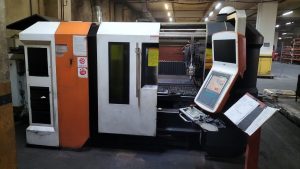
What is Dust Extraction System & Dust Extractor Collector Vacuum?
A Dust Extraction System and Dust Extractor Collector Vacuum are specialized systems designed to remove dust, debris, and particulate matter from the air in industrial, commercial, or workshop environments. These systems are critical for maintaining air quality, ensuring worker safety, complying with regulations, and protecting equipment from dust-related damage. Below is a technical explanation of both systems, their components, and their operation.
Dust Extraction SystemA dust extraction system is a comprehensive setup used to capture, convey, and collect airborne dust and particulates generated during industrial processes (e.g., woodworking, metalworking, cutting, grinding, or sanding). It is designed to improve air quality, prevent health hazards (e.g., respiratory issues from inhaling fine particles), and reduce fire or explosion risks caused by combustible dust.Components of a Dust Extraction System
- Capture Hoods/Inlets:
- Located at the dust source (e.g., near a saw, grinder, or CNC machine).
- Designed to capture dust at the point of generation using suction.
- Types include fixed hoods, flexible hoses, or articulated arms.
- Engineered to maximize capture velocity (the speed of air required to entrain dust particles, typically 0.5–2 m/s depending on particle size).
- Ducting System:
- A network of pipes or ducts that transport dust-laden air from the capture point to the collector.
- Made of materials like galvanized steel, stainless steel, or PVC, depending on the dust type (e.g., corrosive, abrasive, or combustible).
- Designed to maintain sufficient transport velocity (typically 15–25 m/s for most dusts) to prevent dust settling in ducts.
- Dust Collector:
- The core component that separates dust from the air stream.
- Common types include:
- Cyclone Separators: Use centrifugal force to separate heavier particles from the air. Effective for coarse dust (>10 µm).
- Baghouse Filters: Use fabric bags to filter fine particles (down to 1 µm or less). Common in large-scale industrial applications.
- Cartridge Collectors: Use pleated filter cartridges for higher efficiency and compact design, suitable for finer dust.
- Wet Scrubbers: Use liquid (e.g., water) to capture dust, ideal for sticky or combustible dusts.
- Efficiency depends on filter media (e.g., polyester, PTFE) and particle size distribution.
- Fan/Blower:
- Generates the airflow (suction) needed to move dust through the system.
- Typically centrifugal fans, sized based on required airflow (measured in cubic feet per minute, CFM, or m³/h) and static pressure (resistance in the system, measured in inches of water gauge or Pascals).
- Fan performance is governed by the system’s total pressure drop, calculated as:ΔPtotal=ΔPhood+ΔPduct+ΔPcollector\Delta P_{\text{total}} = \Delta P_{\text{hood}} + \Delta P_{\text{duct}} + \Delta P_{\text{collector}}
\Delta P_{\text{total}} = \Delta P_{\text{hood}} + \Delta P_{\text{duct}} + \Delta P_{\text{collector}}
- Dust Storage/Disposal:
- Collected dust is stored in bins, hoppers, or bags for disposal or recycling.
- Systems may include rotary valves or screw conveyors for continuous dust removal in large-scale setups.
- Control Systems:
- Automated controls (e.g., PLCs) for monitoring airflow, pressure, and filter condition.
- May include differential pressure sensors to detect filter clogging and trigger cleaning (e.g., pulse-jet cleaning in baghouses).
Working Principle
- Dust is captured at the source by suction created by the fan.
- The dust-laden air travels through ducts to the collector, where particles are separated via filtration, centrifugal force, or other mechanisms.
- Clean air is either exhausted to the atmosphere or recirculated into the workspace (if compliant with air quality standards, e.g., HEPA filtration for particles <0.3 µm).
- Collected dust is stored for disposal or further processing.
Technical Specifications
- Airflow (CFM or m³/h): Determines the system’s capacity to handle dust volume. For example, a woodworking shop may require 500–2000 CFM.
- Static Pressure: Must overcome resistance from ducts, filters, and hoods (typically 2–10 inches of water gauge).
- Filtration Efficiency: Measured as the percentage of particles removed (e.g., 99.97% for HEPA filters).
- Power Requirements: Fans typically range from 1–50 HP, depending on system size.
- Noise Levels: Typically 70–90 dB, requiring noise attenuation in some setups.
Applications
- Woodworking: Captures sawdust and wood chips.
- Metalworking: Removes metal dust and fumes.
- Pharmaceuticals: Handles fine powders in cleanroom environments.
- Construction: Controls silica dust from cutting or grinding.
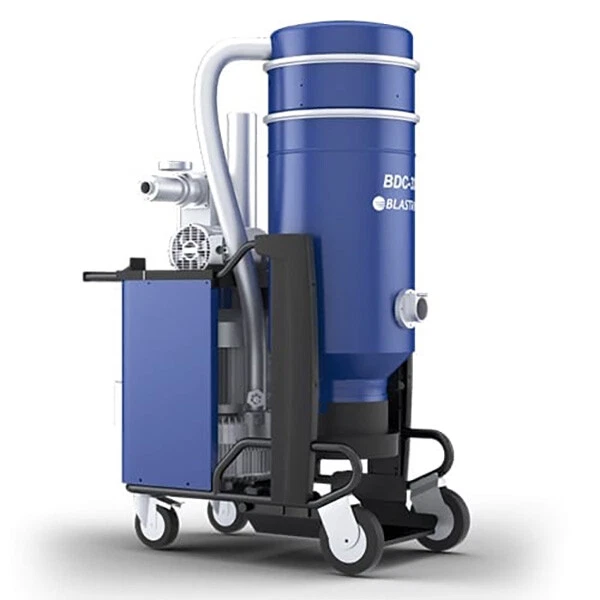
Dust Extractor Collector VacuumA Dust Extractor Collector Vacuum (often called a shop vacuum or industrial vacuum) is a portable or semi-portable device designed for smaller-scale dust collection, typically used in workshops, construction sites, or small industrial settings. It combines the functions of dust capture, filtration, and collection in a single unit, offering flexibility for localized dust control.Components of a Dust Extractor Collector Vacuum
- Suction Inlet/Hose:
- A flexible hose with attachments (e.g., nozzles, brushes) to capture dust at the source.
- Inlet size and design affect suction efficiency (e.g., 1–4 inches in diameter).
- Motor and Fan:
- Typically an electric motor (1–5 HP) driving a centrifugal impeller to create suction.
- Provides airflow (50–200 CFM) and suction power (measured in inches of water lift, typically 50–100 inches).
- Filtration System:
- Includes primary filters (e.g., cloth or paper bags) and secondary filters (e.g., HEPA or cartridge filters).
- Filtration efficiency varies (e.g., 99% for standard filters, 99.97% for HEPA).
- Some units use cyclonic pre-separation to extend filter life.
- Collection Canister:
- A removable container (e.g., 5–20 gallons) for storing collected dust and debris.
- May include disposable bags or bagless designs for easy emptying.
- Mobility Features:
- Wheels or handles for portability.
- Compact designs for use in tight spaces.
Working Principle
- The motor-driven fan creates a vacuum, drawing dust and air through the hose.
- Larger particles settle in the canister or are separated via cyclonic action.
- Fine particles are trapped by the filter(s), and clean air is exhausted.
- The system is typically manually operated and connected to tools (e.g., sanders, saws) via hose attachments.
Technical Specifications
- Suction Power: Measured in water lift (e.g., 60–100 inches) or air watts.
- Airflow: Typically 50–150 CFM for small units, sufficient for single-tool use.
- Filter Rating: MERV (Minimum Efficiency Reporting Value) ratings of 12–16 or HEPA (99.97% efficiency at 0.3 µm).
- Tank Capacity: 2–20 gallons, depending on the model.
- Power: 1–2 kW for most units, powered by standard 120V or 240V outlets.
Applications
- Workshops: Connects to power tools like sanders, routers, or table saws.
- Construction Sites: Cleans up drywall dust, concrete dust, or debris.
- Home Use: General cleaning of sawdust, dirt, or small particles.
Key Differences
| Feature | Dust Extraction System | Dust Extractor Collector Vacuum |
|---|---|---|
| Scale | Large-scale, fixed installations | Portable, smaller-scale |
| Airflow (CFM) | 500–10,000+ CFM | 50–200 CFM |
| Applications | Industrial processes, multi-tool setups | Single-tool or localized cleanup |
| Filtration | Advanced (e.g., baghouse, HEPA) | Basic to HEPA, depending on model |
| Ducting | Extensive duct network | Flexible hose, no ducting |
| Cost | $5,000–$100,000+ | $100–$2,000 |
Technical Considerations
- Dust Characteristics:
- Particle Size: Fine dust (<10 µm) requires high-efficiency filters (e.g., HEPA). Coarse dust (>50 µm) can use cyclones or basic filters.
- Combustibility: Combustible dusts (e.g., wood, aluminum) require explosion-proof systems compliant with NFPA 652 or ATEX standards.
- Toxicity: Toxic dusts (e.g., silica, lead) necessitate stringent filtration and containment.
- System Design:
- Capture Velocity: Must match the dust’s settling velocity to ensure capture (e.g., 0.5 m/s for fine dust, 2 m/s for heavy particles).
- Transport Velocity: Ducts must maintain sufficient velocity to prevent clogging (e.g., 20 m/s for wood dust).
- Pressure Drop: Calculated to size the fan and ensure efficient operation.
- Regulatory Compliance:
- OSHA and EPA standards for workplace air quality (e.g., PEL for respirable dust).
- ATEX (Europe) or NFPA (USA) for combustible dust safety.
- Local exhaust ventilation (LEV) guidelines for hood design and airflow.
- Maintenance:
- Regular filter cleaning/replacement to prevent clogging and maintain efficiency.
- Inspection of ducts for dust buildup to avoid fire hazards.
- Monitoring fan performance to ensure consistent airflow.
ConclusionA Dust Extraction System is a robust, fixed solution for large-scale industrial dust control, featuring extensive ducting, high-capacity collectors, and powerful fans. A Dust Extractor Collector Vacuum is a portable, compact device for smaller-scale or localized dust collection, ideal for workshops or single-tool use. Both systems rely on principles of airflow, filtration, and particle separation but differ in scale, mobility, and application. Selection depends on the dust type, volume, and workspace requirements, with careful consideration of technical parameters like airflow, filtration efficiency, and regulatory compliance.