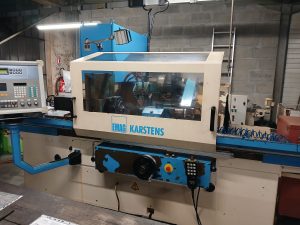
What is Diamond Cup Grinder used for perfect metallographic sample preparation glass fiber reinforced plastics and printed circuit boards glass, ceramics, rocks, hard metal?

A Diamond Cup Grinder is a specialized tool used in metallographic sample preparation, particularly for grinding and polishing materials like glass fiber-reinforced plastics (GFRP), printed circuit boards (PCBs), glass, ceramics, rocks, and hard metals. Its primary function is to achieve a flat, smooth, and defect-free surface for subsequent microscopic analysis or quality control. Below is a technical explanation of its use, tailored to the materials mentioned:Purpose and FunctionDiamond cup grinders are equipped with diamond-impregnated grinding surfaces, typically in the form of a rotating disc or wheel. The diamond particles, known for their extreme hardness (Mohs 10), enable efficient material removal and surface refinement, even for very hard or brittle materials. In metallographic sample preparation, the goal is to produce a surface suitable for microscopic examination, which requires:
- Flatness: To ensure uniform focus under a microscope.
- Minimal Damage: Avoiding subsurface cracks, scratches, or deformation.
- Reproducible Surface Finish: Consistent roughness for accurate analysis.
The diamond cup grinder is ideal for initial coarse grinding and intermediate surface preparation steps, removing material quickly while maintaining control over surface quality.Applications for Specific Materials
- Glass Fiber-Reinforced Plastics (GFRP):
- Challenge: GFRP is a composite with hard glass fibers embedded in a softer polymer matrix, leading to differential material removal rates.
- Role of Diamond Cup Grinder: The diamond abrasive cuts through both the glass fibers and the polymer matrix uniformly, preventing fiber pull-out or matrix smearing. Coarse diamond grits (e.g., 60–120 µm) are used for initial grinding to remove bulk material, followed by finer grits (e.g., 15–30 µm) for smoother surfaces.
- Technical Consideration: Low grinding forces and adequate cooling (e.g., water or lubricant) are critical to prevent thermal damage to the polymer matrix.
- Printed Circuit Boards (PCBs):
- Challenge: PCBs consist of layered materials, including copper, epoxy, and glass fibers, with varying hardness and ductility.
- Role of Diamond Cup Grinder: The grinder ensures precise material removal to expose cross-sections for inspection of solder joints, vias, or layer interfaces. Diamond abrasives maintain edge retention and prevent smearing of soft copper layers.
- Technical Consideration: Controlled grinding speed (e.g., 200–500 RPM) and light pressure minimize delamination or cracking of the PCB layers.
- Glass:
- Challenge: Glass is brittle and prone to chipping or cracking during grinding.
- Role of Diamond Cup Grinder: Diamond abrasives provide controlled material removal, creating a smooth surface for optical or structural analysis. Progressive grinding with decreasing grit sizes (e.g., from 125 µm to 9 µm) ensures a polished finish.
- Technical Consideration: Wet grinding is essential to reduce frictional heat and prevent microcracks. A rigid sample holder ensures stability.
- Ceramics:
- Challenge: Ceramics are extremely hard and brittle, requiring abrasives capable of cutting without causing fractures.
- Role of Diamond Cup Grinder: Diamond cup grinders efficiently remove material from ceramics like alumina or zirconia, preparing flat surfaces for microstructural analysis. Coarse grinding removes surface irregularities, while finer grits refine the surface for polishing.
- Technical Consideration: High rotational speeds (e.g., 1000–1500 RPM) and consistent coolant flow prevent thermal shock and maintain surface integrity.
- Rocks:
- Challenge: Rocks vary widely in composition (e.g., quartz, feldspar), hardness, and texture, requiring versatile grinding tools.
- Role of Diamond Cup Grinder: The grinder prepares thin sections or polished surfaces for petrographic analysis under a polarizing microscope. Diamond abrasives handle hard minerals like quartz (Mohs 7) effectively.
- Technical Consideration: Sequential grinding with progressively finer diamond grits ensures minimal subsurface damage, critical for accurate mineral identification.
- Hard Metals (e.g., Tool Steels, Tungsten Carbide):
- Challenge: Hard metals have high hardness and toughness, resisting material removal.
- Role of Diamond Cup Grinder: Diamond abrasives efficiently cut through hard metals, producing flat surfaces for hardness testing or microstructural analysis. Coarse grinding removes surface layers, while finer grits prepare the sample for polishing.
- Technical Consideration: High-pressure grinding may be needed, but excessive force can embed diamond particles, requiring careful cleaning before polishing.
Technical Aspects of Diamond Cup Grinders
- Diamond Grit Size: Available in various grit sizes (e.g., 60 µm to 3 µm), allowing for coarse grinding to fine surface preparation. Coarser grits remove material quickly, while finer grits reduce surface roughness.
- Bonding Matrix: Diamond particles are embedded in a metal, resin, or hybrid bond. Metal bonds are durable for hard materials like ceramics and metals, while resin bonds are gentler for softer materials like GFRP or PCBs.
- Cooling Systems: Wet grinding with water or coolant is standard to dissipate heat, reduce friction, and prevent sample damage (e.g., thermal cracking in glass or ceramics).
- Rotational Speed and Pressure: Adjustable speeds (typically 100–1500 RPM) and controlled pressure ensure compatibility with different material properties. Lower speeds and pressures are used for brittle materials to avoid cracking.
- Sample Mounting: Samples are often mounted in resin or clamped to ensure stability during grinding, especially for small or irregularly shaped specimens like rocks or PCBs.
Process Workflow
- Mounting: The sample is embedded in a resin puck or clamped to ensure stability.
- Coarse Grinding: Using a coarse diamond cup grinder (e.g., 60–125 µm) to remove bulk material and achieve flatness.
- Intermediate Grinding: Switching to finer grits (e.g., 15–30 µm) to reduce surface roughness and remove scratches from coarse grinding.
- Polishing (Optional): After grinding, samples may be polished with finer diamond suspensions (e.g., 1–3 µm) on a polishing pad for a mirror-like finish.
- Cleaning: Ultrasonic cleaning or rinsing removes debris and embedded abrasives.
Advantages of Diamond Cup Grinders
- Versatility: Effective for a wide range of materials, from soft polymers to hard ceramics.
- Efficiency: Diamond’s hardness ensures rapid material removal, reducing preparation time.
- Precision: Produces flat, uniform surfaces critical for metallographic analysis.
- Durability: Diamond abrasives have a long lifespan, even with hard materials.
Limitations
- Cost: Diamond cup grinders are more expensive than traditional abrasives like silicon carbide.
- Risk of Damage: Improper settings (e.g., excessive pressure or speed) can cause cracking in brittle materials like glass or ceramics.
- Embedding: Diamond particles may embed in softer materials (e.g., copper in PCBs), requiring thorough cleaning.
ConclusionDiamond cup grinders are essential in metallographic sample preparation for materials like GFRP, PCBs, glass, ceramics, rocks, and hard metals due to their ability to efficiently and precisely grind hard and brittle materials. By selecting appropriate grit sizes, bonding matrices, and grinding parameters (speed, pressure, coolant), they produce high-quality surfaces for microscopic analysis, ensuring minimal damage and accurate results. For optimal outcomes, the grinding process must be tailored to the material’s properties, with careful control of forces and cooling to preserve sample integrity.