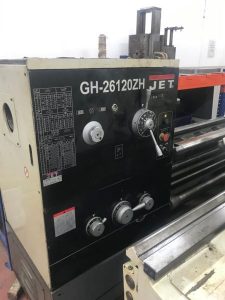
What is Cycle Controlled Lathe?
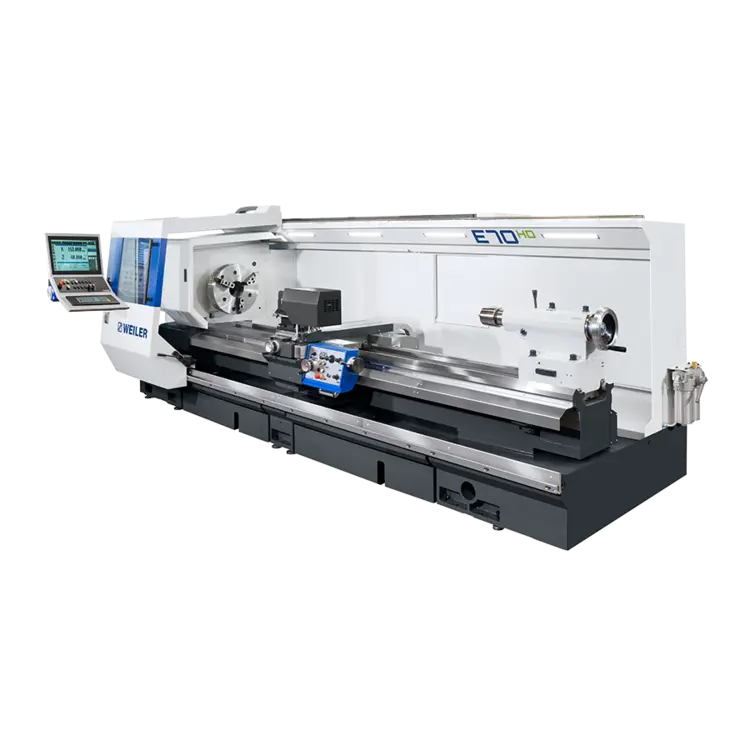
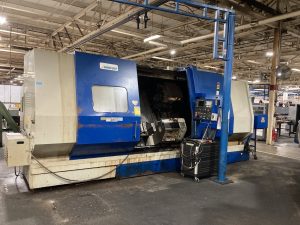
A cycle-controlled lathe is a type of CNC (Computer Numerical Control) lathe that operates using pre-programmed cycles or sequences of machining operations to automate repetitive tasks in metalworking. It bridges the gap between conventional manual lathes and fully programmable CNC lathes, offering a balance of automation, precision, and ease of use for the CNC machine tools and metalworking sectors. Below is a technical explanation tailored to these industries:Definition and PurposeA cycle-controlled lathe is a CNC lathe designed to execute predefined machining cycles (fixed or programmable sequences) for common turning operations, such as facing, turning, threading, drilling, or grooving. These cycles simplify programming by allowing operators to input parameters (e.g., dimensions, feed rates, or depths of cut) via a user-friendly interface, rather than writing complex G-code programs from scratch. This makes it ideal for small to medium batch production in metalworking, where high precision and repeatability are required without the complexity of full CNC programming.Key Components
- CNC Control Unit: The heart of the system, typically featuring a simplified interface (e.g., conversational programming or a graphical user interface) for entering cycle parameters. Common systems include Siemens Sinumerik, Fanuc, or Heidenhain, configured for cycle-based operations.
- Spindle and Chuck: The spindle rotates the workpiece, held by a chuck (3-jaw, 4-jaw, or collet), with variable speed control to suit different materials (e.g., steel, aluminum, or titanium).
- Tool Turret or Tool Post: Holds multiple cutting tools (e.g., turning, boring, or threading tools) that can be indexed automatically to perform sequential operations within a cycle.
- Axes of Motion: Typically, a cycle-controlled lathe operates on two primary axes:
- X-axis: Radial movement (toward or away from the workpiece centerline).
- Z-axis: Longitudinal movement (along the workpiece length).
- Some advanced models may include additional axes (e.g., C-axis for spindle rotation control or Y-axis for off-center milling).
- Tailstock or Sub-Spindle: Supports long workpieces or enables secondary operations (e.g., drilling or parting) in more advanced setups.
- Feedback Systems: Encoders or linear scales provide real-time position feedback to ensure precision, with tolerances often in the range of ±0.01 mm or better.
Operating Principle Cycle-controlled lathes use pre-programmed machining cycles stored in the CNC control unit. These cycles are parameterized, meaning the operator inputs specific values (e.g., diameter, length, depth of cut, or thread pitch) to customize the operation. The control unit then generates the necessary tool paths and motion commands. Key cycles include:
- Turning Cycle (G90/G71): For straight or taper turning, removing material along the Z-axis with defined depths of cut.
- Facing Cycle (G94/G72): For flattening the workpiece face by moving the tool along the X-axis.
- Threading Cycle (G92/G76): For cutting external or internal threads with precise pitch and depth control.
- Grooving Cycle: For creating grooves or recesses.
- Drilling Cycle (G83/G85): For peck drilling or boring operations on the workpiece centerline.
The operator typically inputs parameters via a conversational interface or a teach-in mode, where manual movements are recorded and converted into a cycle. This reduces programming time and skill requirements compared to full G-code programming.Technical Advantages in CNC and Metalworking
- Simplified Programming: Conversational programming or canned cycles reduce the need for extensive G-code knowledge, making it accessible for operators with basic training.
- High Repeatability: Ensures consistent part production with tolerances as tight as ±0.005 mm, critical for industries like aerospace or automotive.
- Flexibility: Suitable for a wide range of materials (e.g., stainless steel, brass, or exotic alloys) and part geometries (e.g., shafts, bushings, or fittings).
- Efficiency: Automated cycles reduce setup and machining time, improving throughput for small to medium batch sizes (e.g., 10–500 parts).
- Tool Management: Integrated tool wear compensation and automatic tool changes enhance productivity and precision.
- Error Reduction: Parameterized cycles minimize manual errors compared to conventional lathes, where operator skill heavily influences outcomes.
Applications in Metalworking Cycle-controlled lathes are widely used in the metalworking sector for:
- Precision Components: Manufacturing parts like shafts, pulleys, or valve bodies for automotive, aerospace, or hydraulic systems.
- Prototyping and Small Batches: Ideal for job shops producing custom or low-volume parts where full CNC programming is impractical.
- Threading and Grooving: Creating complex threads (e.g., metric, UN, or NPT) or grooves for seals and O-rings.
- Repair and Maintenance: Reworking or re-machining worn components in industries like oil and gas or heavy machinery.
Limitations
- Limited Complexity: Less suited for highly complex parts requiring multi-axis machining or intricate contours, where full CNC lathes or machining centers excel.
- Programming Constraints: Predefined cycles may limit flexibility compared to custom G-code programming.
- Initial Cost: Higher upfront investment than manual lathes, though lower than fully advanced CNC lathes.
Comparison to Full CNC LathesUnlike fully programmable CNC lathes, which require detailed G-code or CAM (Computer-Aided Manufacturing) software for complex parts, cycle-controlled lathes prioritize ease of use and speed for standard turning operations. They are less versatile than multi-axis CNC lathes but more automated and precise than manual lathes, making them a cost-effective solution for shops with moderate production demands.Example Workflow
- Setup: The operator mounts the workpiece in the chuck and selects tools (e.g., carbide insert for roughing, diamond-tipped tool for finishing).
- Cycle Selection: Using the CNC interface, the operator chooses a cycle (e.g., G71 for rough turning) and inputs parameters like cutting depth (e.g., 2 mm), feed rate (e.g., 0.2 mm/rev), and spindle speed (e.g., 1200 RPM).
- Execution: The lathe automatically performs the cycle, moving the tool along the X and Z axes to shape the workpiece.
- Inspection: The operator checks dimensions using calipers or CMM (Coordinate Measuring Machine) to ensure tolerances are met.
- Iteration: Additional cycles (e.g., threading or finishing) are applied as needed.
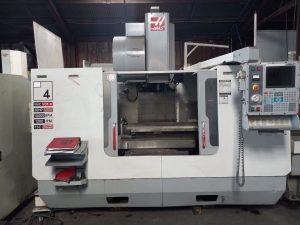
Industry RelevanceIn the CNC machine tools sector, cycle-controlled lathes are valued for their balance of automation and accessibility, particularly in small to medium enterprises (SMEs). They cater to metalworking applications requiring high precision without the overhead of advanced CNC systems. Major manufacturers like DMG Mori, Haas, or Okuma offer models with cycle-controlled features, often marketed as “teach lathes” or “conversational lathes.”ConclusionCycle-controlled lathes are a vital tool in the CNC and metalworking sectors, offering automated, repeatable, and precise machining for standard turning operations. Their parameterized cycles and user-friendly interfaces make them ideal for small-batch production, prototyping, and shops transitioning from manual to CNC machining. While not as versatile as full CNC lathes, their efficiency and ease of use make them a cornerstone for many metalworking applications.