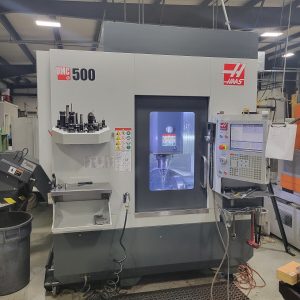
What is CNC Tap Thread Machine?
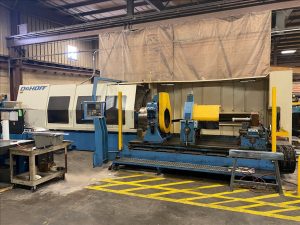
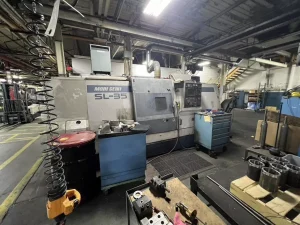
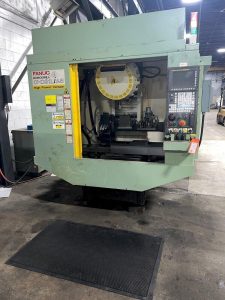
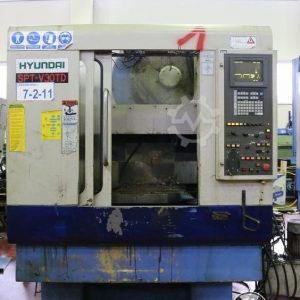
The machine shown is a CNC Tap Thread Machine, also commonly classified as a CNC Tapping Center. It is a single-purpose or tapping-optimized CNC machine tool designed primarily for high-precision, high-speed internal thread cutting (tapping) in metal components.
This type of machine is widely used in automotive, hydraulic, pneumatic, general engineering, and mass-production metalworking environments.
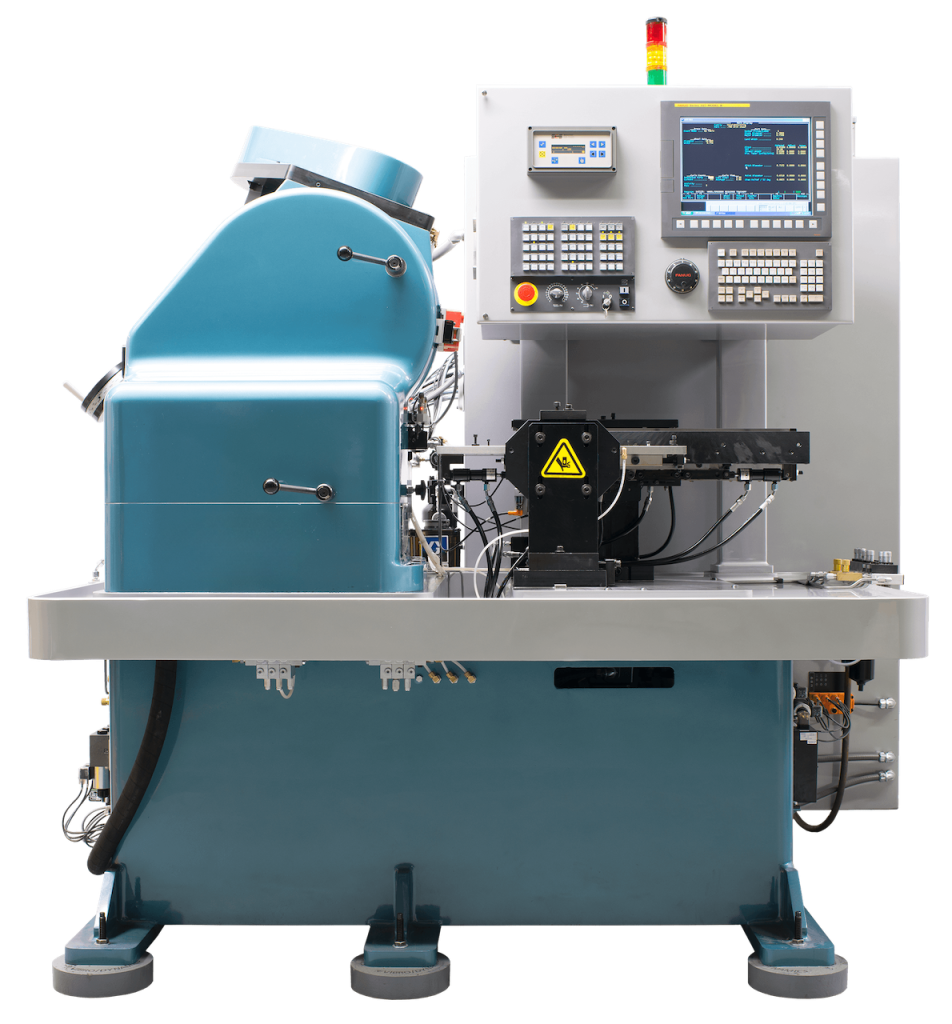
Main Visible Machine Sections
1. Machine Base & Cast Structure
- Heavy cast-iron base for vibration damping
- Ensures rigidity during repeated tapping cycles
- Critical for thread accuracy and tool life
This rigidity is especially important because tapping involves axial cutting forces and frequent spindle reversals.
2. Tapping Head / Spindle Unit (Left Side Housing)
The large enclosed unit on the left contains:
- High-torque spindle
- Precision spindle bearings
- Encoder system for rigid tapping
Key characteristics:
- Optimized for low–to–medium RPM with high torque
- Instant forward/reverse rotation
- Encoder-based synchronization with Z-axis
This is what enables rigid tapping (no floating tap holder required).
3. Workholding & Linear Feed Table (Center Front)
Visible features:
- Horizontal linear slide
- Precision guideways
- Pneumatic or hydraulic clamping zone
Function:
- Positions the workpiece under the tapping spindle
- Allows repeatable, automated tapping of multiple holes
- Often used with custom fixtures for batch production
Some versions support multi-station indexing.
4. CNC Control Panel (Right Side)
The control cabinet includes:
- CNC display (programming & diagnostics)
- Keypad for G-code input
- Manual jog & cycle controls
- Emergency stop & safety controls
- Status tower light (red / yellow / green)
Typical CNC functions:
- G84 tapping cycles
- Depth control
- Pitch synchronization
- Tool life monitoring
- Alarm & overload protection
5. Safety & Automation Components
- Fully enclosed tapping area
- Safety interlocks
- Emergency stop system
- Warning indicators
These machines are designed for continuous unattended operation.
How This CNC Tap Thread Machine Operates (Process Flow)
- Workpiece is clamped in a fixed or indexed fixture
- CNC program starts tapping cycle
- Spindle rotates at programmed RPM
- Z-axis feeds exactly according to thread pitch
- Tap reaches programmed depth
- Spindle reverses instantly
- Tap retracts cleanly without damaging threads
- Cycle repeats for next hole or part
This process can be repeated thousands of times per shift with identical results.
Typical Applications of This Machine Type
- Engine blocks & housings
- Valve bodies
- Hydraulic manifolds
- Gear housings
- Sheet-metal formed parts
- Automotive brackets & frames
- Mass-produced machined components
Especially effective for:
- M3 to M20 threading (depending on spindle size)
- Blind holes
- High-volume production lines
Why This Machine Is Different from a Standard CNC Milling Machine
| Feature | CNC Tap Thread Machine | Standard VMC |
|---|---|---|
| Primary purpose | Thread tapping | Multi-operation |
| Speed optimization | Very high | Moderate |
| Spindle torque | High at low RPM | Balanced |
| Cycle time | Extremely short | Longer |
| Tool change | Limited or optimized | Full ATC |
| Production focus | Mass tapping | Flexible machining |
This machine sacrifices versatility for speed, consistency, and reliability.
Industrial Advantages
- Extremely high tapping accuracy
- Minimal tap breakage
- Consistent thread depth & pitch
- Lower scrap rate
- Reduced operator dependency
- Ideal for automation & robotics
- Long spindle and tap life
Correct Technical Classification
From a professional CNC / metalworking standpoint, this machine should be described as:
CNC Tap Thread Machine / CNC Tapping Center for High-Volume Industrial Threading Applications
A CNC Tap Thread Machine (often called a CNC tapping machine or CNC tapping center) is a computer-controlled machine tool designed specifically to produce internal threads (tapped holes) in metal and other engineering materials with high accuracy, repeatability, and productivity.
In CNC and metalworking environments, tapping is the operation of cutting internal screw threads using a tool called a tap. A CNC tap thread machine automates this process using precise spindle control, synchronized feed motion, and programmable parameters, eliminating the variability and limitations of manual or semi-automatic tapping.
Core Purpose in Metalworking
The primary role of a CNC tap thread machine is to:
- Produce accurate internal threads
- Maintain consistent thread pitch and depth
- Enable high-speed, high-volume production
- Reduce tap breakage and scrap rates
- Integrate seamlessly into modern CNC manufacturing workflows
These machines are widely used in:
- CNC machining workshops
- Automotive and aerospace component manufacturing
- Mold & die production
- Sheet-metal fabrication
- Precision engineering industries
How a CNC Tap Thread Machine Works (Technical Overview)
1. CNC Control System
At the heart of the machine is a CNC controller (commonly FANUC, Siemens, Mitsubishi, etc.) which:
- Executes G-code tapping cycles (e.g., G84 – tapping, G74 – left-hand tapping)
- Controls spindle rotation, feed rate, depth, and reversal
- Synchronizes spindle speed with feed motion for accurate thread pitch
This synchronization is critical—any mismatch between spindle rotation and feed can damage the tap or the workpiece.
2. Rigid Tapping Technology
Modern CNC tap thread machines use rigid tapping, meaning:
- The spindle and Z-axis feed are electronically synchronized
- No floating tap holder is required
- Threads are cut with precise pitch control
- Higher speeds and deeper threads are possible
Rigid tapping allows:
- Faster cycle times
- Improved thread quality
- Longer tool life
3. Spindle System
The spindle is designed for:
- High torque at low RPM (essential for tapping)
- Smooth forward and reverse rotation
- Precise stopping and positioning
Typical spindle characteristics:
- Speed range optimized for tapping (often 50–6,000 RPM)
- Instantaneous direction reversal
- Encoder feedback for real-time synchronization
4. Z-Axis Feed Mechanism
The Z-axis feed:
- Advances the tap into the material at a feed rate equal to thread pitch × spindle RPM
- Reverses exactly at programmed depth
- Retracts the tap without damaging threads
This controlled motion is what differentiates CNC tapping from manual tapping.
5. Tool Holding & Tool Changers
Depending on the machine configuration:
- Fixed tap holders (single-purpose machines)
- Automatic Tool Changers (ATC) in tapping centers
- Hydraulic or collet tap holders for precision and damping
ATC-equipped machines can handle multiple thread sizes and types in one cycle.
Types of CNC Tap Thread Machines
1. Dedicated CNC Tapping Machines
- Designed solely for tapping operations
- Very fast and rigid
- Ideal for mass production
- Limited to threading tasks
2. CNC Tapping Centers
- Compact vertical machining centers optimized for tapping
- Can perform drilling, light milling, and tapping
- High spindle acceleration and rapid tool changes
- Common in automotive and electronics industries
3. CNC Machining Centers with Tapping Capability
- Standard VMCs or HMCs using rigid tapping cycles
- Suitable for mixed operations
- Slightly slower than dedicated tapping centers
Thread Types Produced
A CNC tap thread machine can produce:
- Metric threads (M3, M6, M12, etc.)
- Unified threads (UNC, UNF)
- BSP / NPT threads (with suitable taps)
- Fine-pitch and coarse-pitch threads
- Blind and through threads
- Right-hand and left-hand threads
Materials Commonly Tapped
These machines are engineered to handle a wide range of materials:
- Carbon steel
- Alloy steel
- Stainless steel
- Aluminum alloys
- Brass and copper
- Cast iron
- Engineering plastics (with appropriate parameters)
Cutting parameters are fully programmable based on material hardness and tap geometry.
Advantages Over Manual or Conventional Tapping
| Aspect | CNC Tap Thread Machine |
|---|---|
| Accuracy | Extremely high |
| Repeatability | Consistent across thousands of parts |
| Speed | Much faster cycle times |
| Tool life | Optimized and predictable |
| Scrap rate | Very low |
| Operator dependency | Minimal |
| Automation | Full CNC integration |
Role in Modern CNC Production Lines
In modern metalworking factories, CNC tap thread machines:
- Are integrated with robotic loading systems
- Work in lights-out manufacturing
- Support Industry 4.0 monitoring
- Feed threaded components directly into assembly lines
They are especially valuable where thread integrity is safety-critical, such as:
- Automotive engine components
- Aerospace structural parts
- Hydraulic and pneumatic systems
Summary
A CNC Tap Thread Machine is a specialized, high-precision CNC machine tool dedicated to producing internal threads efficiently and reliably. By combining rigid tapping technology, synchronized spindle-axis control, and CNC automation, it delivers superior thread quality, reduced tool wear, and high productivity—making it an essential asset in advanced CNC machining and metalworking operations.