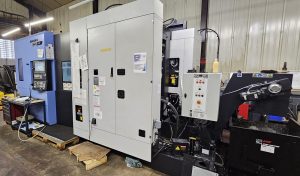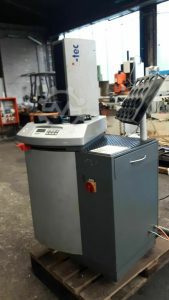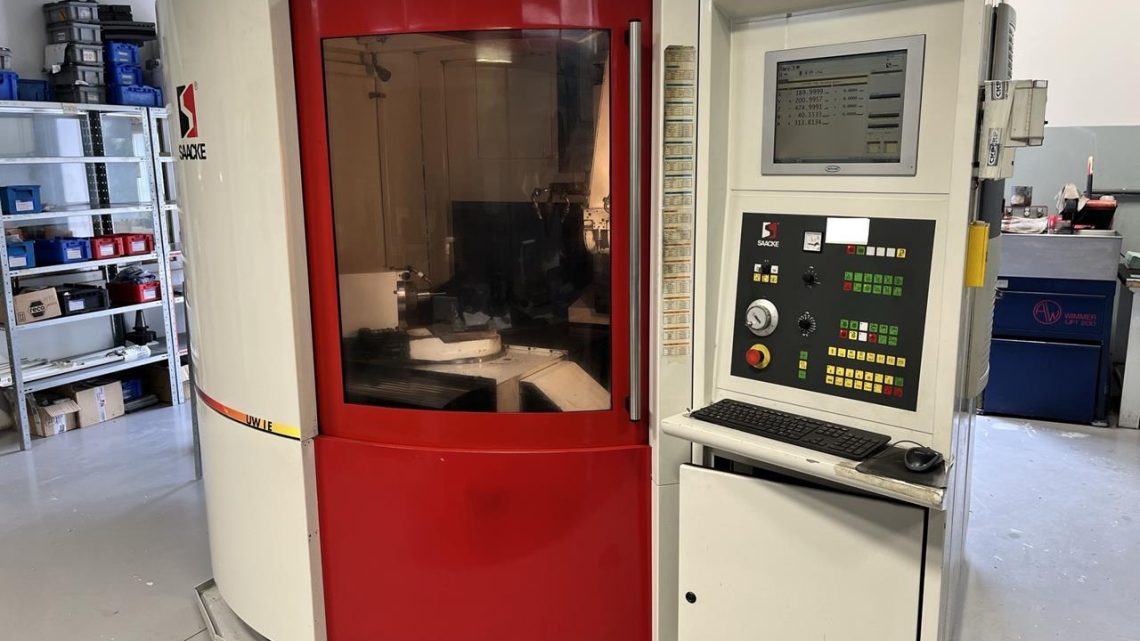
Ultimate Buyer’s Guide: Expert Insights Before Investing in a Pre-Owned, Used, Surplus, Secondhand SAACKE UWIE made in Germany
Here’s a comprehensive, expert-level buyer’s guide you can use before investing in a pre-owned, used, surplus, second-hand SAACKE UWIE machine (made in Germany). This guide focuses on real evaluation criteria, risk factors, verification steps, and ROI considerations — tailored for professionals in manufacturing, maintenance, and procurement.
Ultimate Buyer’s Guide: Expert Insights Before Investing in a Used SAACKE UWIE (Made in Germany)
1. Understand the Machine & Its Purpose
Before evaluating condition, clarify what the machine does and how it fits your needs:
✔ Intended application
- What specific operations is the SAACKE UWIE designed for?
- High-precision vs heavy duty? Power vs speed?
✔ Fit to your process
- Do your parts require the capabilities this model offers?
- Are the required tolerances, cycle times, and materials aligned?
Understanding this ensures you’re buying a solution that improves performance, not just a machine.
2. Verify Identity & Documentation
Start with traceability — essential for used equipment:
✔ Nameplate & serial number
- Confirm on the physical machine and technical docs.
✔ Factory documentation
- Manuals, wiring diagrams, control parameters.
✔ Service & maintenance history
- Rebuilds, major parts replaced, failures logged.
✔ Upgrade/retrofit records
- CNC panel updates, safety retrofits, spindle rebuilds.
A machine with full documentation is worth more and carries less risk.
3. Machine Condition Inspection
This is the heart of your evaluation: objective measurements, not impressions.
3.1 Mechanical Condition
Inspect axes, guides, spindles, and bearings:
✔ Linear guides & ways
- Look for wear, scoring, pitting.
✔ Ball screws / rack & pinion
- Measure backlash; any play > rated tolerance is bad.
✔ Spindle
- Run-out check, vibration, bearing noise.
✔ Frame & weld integrity
- No cracks, no distortion.
Use tools like dial indicators, bar bars, or laser interferometers.
3.2 Electrical & Control
The electronics often cost more to repair than mechanical parts:
✔ Control panel & CNC board health
- BIOS date, parameter backups, error logs.
✔ Power distribution & cables
- Confirm no burnt wires, no fatigue.
✔ Safety circuits
- E-Stops, interlocks, door latches functional.
✔ HMI responsiveness
- No ghosting or input lag.
4. Operational Testing
Never buy unseen and untested.
4.1 Cold Tests
✔ All axis moves
✔ Tool changes (if applicable)
4.2 Load Tests
✔ Run a full part cycle
✔ Measure actual cycle time
✔ Check repeatability and finish
Ask for sample parts or bring your own representative test piece.
5. Accuracy & Calibration Metrics
Only real data tells you what the machine can actually do:
✔ Ballbar test
- Circularity and backlash measurement
✔ Laser interferometry
- Axis straightness and positioning
✔ Thermal drift tests
- Run at operating temp; measure before/after
6. Spare Parts & Service Support
A used German machine can be a great long-term asset only if support exists:
✔ Parts availability
- Critical spares: drives, spindles, controllers
✔ Local support network
- Technicians capable of in-field repair
✔ Documentation availability
- Parts diagrams and schematics
7. Software, Control & Integration
Modern manufacturing needs more than raw hardware:
✔ CNC / PLC version support
- Can you upgrade? Are patches available?
✔ Compatibility with CAM systems
- Post-processor, offline programming
✔ Sensor & data integration
- Condition monitoring, OEE tracking
Without up-to-date software, the machine will be hard to use.
8. Safety & Compliance
Used equipment often sits idle due to missing safety compliance:
✔ Safeguarding
- Guards, light curtains, interlocks
✔ Lockout / tagout capabilities
- Required for servicing
✔ CE, UL, local compliance
- Confirm meets your region’s safety regulations
9. Total Cost & ROI Estimation
Work beyond the machine price:
- Transport & rigging
- Installation & leveling
- Control wiring & safety interlocks
- Operator training
- Tooling & fixtures
- Initial spares inventory
- Maintenance contracts
Use this calculation:
Total Cost = Purchase Price
+ Transport & Installation
+ First-year Maintenance & Spares
+ Software & Training
– Resale Value in 2–3 Years
ROI must weigh production capacity gains vs total cost.
10. Purchase Agreement & Acceptance Test
Before closing the deal:
✔ Acceptance testing criteria in contract
✔ Right to reject if performance criteria not met
✔ Warranties on key components
✔ Demo running conditions
✔ Penalties for delivery delays
This protects you from surprises on arrival.
Quick Buyer’s Checklist
✔ Nameplate & serial verification
✔ Mechanical & electrical inspection
✔ Cold & loaded test runs
✔ Precision measurement results
✔ Parts & support availability
✔ Software & CNC compatibility
✔ Safety compliance
✔ Total cost & ROI estimate
✔ Acceptance criteria in contract
Summary
Investing in a used SAACKE UWIE machine can be highly rewarding if you:
- Understand what you really need to produce
- Validate actual performance
- Confirm serviceability and documentation
- Account for total cost of ownership
This is a technical evaluation — not a sales pitch — so you can make decisions based on measurable value, not impressions.