Unlock Hidden Value: What Professionals Know Before Purchasing a Used, Pre-Owned, Secondhand, Surplus TITAN SC 22 CNC Double Column Vertical Turning Lathe made in Romania?
Here’s a professional-grade guide to what experts check before purchasing a used/pre-owned TITAN SC 22 CNC Double Column Vertical Turning Lathe (made in Romania). This type of machine is a large VTL (vertical turning lathe) designed for heavy workpieces, often with table diameters around ~2000 mm and swing diameters up to ~2200 mm.
1. Technical & Mechanical Condition
✅ General Structural Inspection
• Columns, guideways and castings:
Check for cracks, repair marks, excessive wear, or signs of poor maintenance — these are critical for rigidity and precision.
• Table and spindle assembly:
Verify runout, lubrication status, backlash, and whether the table rotates smoothly under load. For heavy workpieces, table balance and drive condition are vital.
✅ Precision Components
• Linear guides, ball screws, bearings:
Wear here degrades accuracy and increases rejection rates. Have them measured by a technician if possible.
• Control system & DRO (Digital Readout):
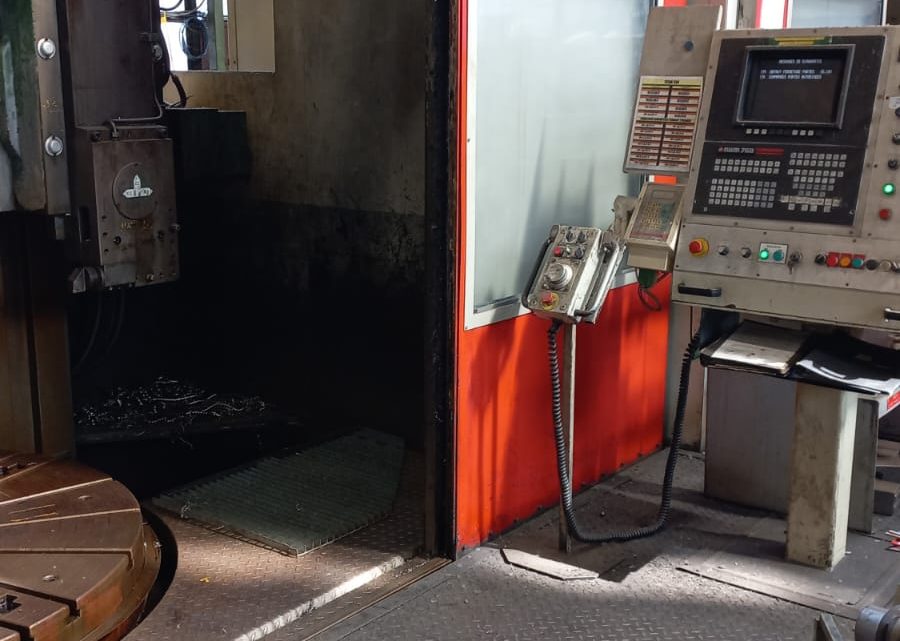
If equipped with a DRO or CNC controller (e.g., NUM 720), check screen operation, axes homing, backlash compensation and error history.
✅ Drive & Electrical Systems
• Motors & drives:
Inspect servo motors, cables, drives, and cooling. Older electrics can be expensive to replace.
• PLC/CNC software version:
Legacy software might lack support or compatibility with modern CAM systems. Confirm upgrade paths.
2. Operational Performance
✅ Test Running
• Live trial machining:
Run sample parts under real load; check surface finish, cycle time, and thermal stability.
• Idle tests:
Watch for unusual vibration, noise, or axis lag — signals of hidden faults.
✅ Accuracy & Repeatability
• Geometric inspection:
Measure straightness, circularity, and repeatability after extended cycling to ensure precision.
• Tooling alignment:
Verify turret or ram alignment with the table center; misalignment increases scrap.
3. Documentation & History
✔ Maintenance Records
• Previous servicing, parts replaced, breakdown records — these directly affect reliability and resale value.
✔ Usage Log
• Hours counter and workload history (continuous heavy use vs. light use) provide clues about future lifespan.
✔ Certifications & Compliance
• CE marking or other conformity documents can ease export/import and legal use in regulated industries.
4. Seller Verification & Warranty
✔ Seller Reputation
• Choose professional dealers or sellers with references — avoid unclear ownership history.
✔ Inspection Guarantee
• Prefer sellers offering independent inspection or short warranty on major components.
5. Total Cost of Ownership
Price vs Condition
• Compare similar machines on the market — SC 22 lathes vary in price depending on condition, control type, and service history.
Transport, Installation & Retrofit
• Heavy VTLs require specialized rigging and installation planning. Factor in logistical costs before purchase.
Parts & Service
• Confirm availability of spare parts for BOTH mechanical and electronic systems (older CNCs might require custom parts).
6. Fit for Application
Compatibility with Production Needs
• Max swing, table diameter, turning height (~2200 mm × 1500 mm typical) must match your workpiece dimensions.
• CNC axis capabilities should deliver the tolerance and surface finish your parts require.
Quick Professional Checklist
| Area | Essential Checkpoints |
|---|---|
| Structural | Cracks, wear, alignment |
| Precision | Guideways, backlash, DRO/CNC function |
| Electrical | Motor, drives, cabling, control software |
| History | Service records, hours, usage |
| Performance | Test run, accuracy tests |
| Documentation | Manuals, certifications |
| Logistics | Transport, install, leveling |
| ROI | Spare parts & service availability |
Pro Tip
Always have a trusted technical inspector or CNC specialist evaluate the machine onsite before finalizing the purchase — sight unseen purchases of large VTLs are risky due to hidden wear that can drastically increase refurbishment costs.